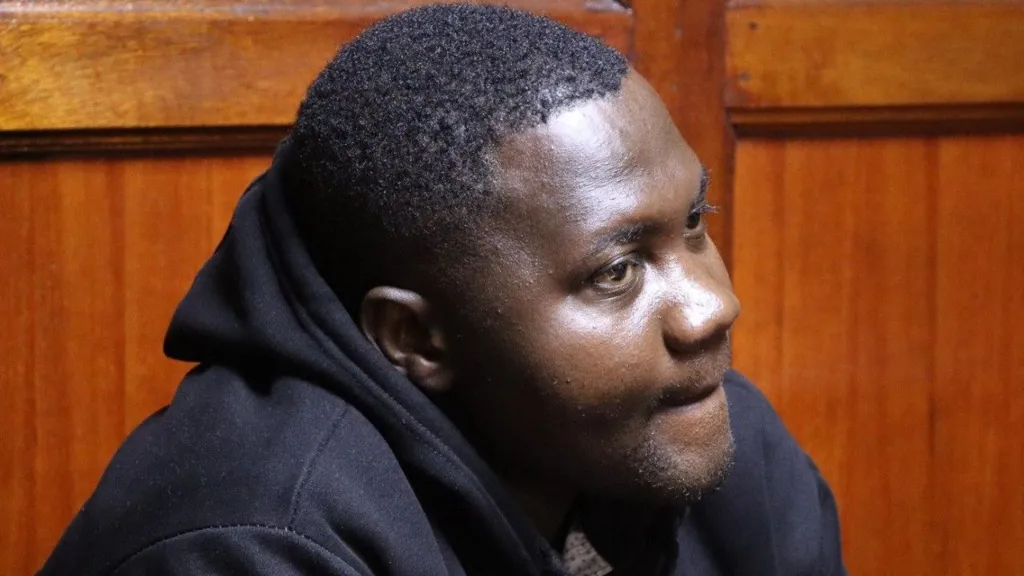
A Kenyan police officer has been arraigned in court following the controversial death of blogger Albert Ojwang while in police custody, a case that has triggered widespread public outrage and calls for police accountability.
Albert Ojwang, a 31-year-old blogger, died last weekend after being held at Nairobi’s Central Police Station. Authorities had initially claimed he sustained fatal injuries by repeatedly banging his head against the wall of his cell. However, that narrative was swiftly challenged by an independent autopsy and watchdog findings, sparking protests across the capital.
Medical experts refuted the police version, concluding instead that the cause of death was likely due to an assault. The Independent Policing Oversight Authority (IPOA) launched an inquiry into the circumstances surrounding Ojwang’s death, which has since seen at least 23 individuals questioned, including 17 police officers. Five officers have already been suspended from active duty as investigations proceed.
Police Constable James Mukhwana, who appeared in court after his arrest, is being held in custody until his bail hearing scheduled for next week. Prosecutors told the court that “preliminary investigations reveal the officer, along with others still at large, was likely involved in the planning and execution” of the blogger’s death.

Allegations Of CCTV Tampering Emerge
Court documents also allege that PC Mukhwana was part of a cover-up attempt that involved disabling CCTV surveillance at the police station to conceal evidence. The officer has not yet entered a plea, but his lawyer appealed for bail, noting that the constable had “willingly submitted himself to the authorities when summoned.”
Ojwang had been detained for a post on the social media platform X, in which he allegedly criticised Deputy Inspector-General of Police Eliud Lagat. Following his arrest, authorities claimed he was found unconscious in his cell and later died in the hospital. But an autopsy ruled out suicide, intensifying public anger and raising fears of police brutality.


Inspector-General of Police Douglas Kanja later backtracked on the initial police account and issued an apology, stating the earlier version was based on “misinformation” from junior officers.
Local media reported that a technician suspected of disabling the station’s CCTV system was also arrested on Friday, potentially deepening the conspiracy claims surrounding Ojwang’s death.
Public discontent reached a boiling point on Thursday as hundreds of demonstrators flooded the streets of Nairobi, demanding the resignation of Deputy Inspector-General Lagat. The official now faces increasing pressure from opposition leaders, civil society groups, and human rights advocates to step down or be suspended during the investigation.
President William Ruto has called for a full and speedy probe into the incident. On Friday, he reassured the public that his administration would “protect citizens from rogue police officers.”
Ruto, who took office in 2022, had pledged to reform Kenya’s law enforcement institutions and eradicate the culture of police brutality. However, the statistics paint a different picture. The Kenya Human Rights Commission reported nearly 160 incidents of extrajudicial killings and enforced disappearances across the country in 2024 alone.
According to the IPOA, at least 20 individuals have died in police custody within just the last four months, underscoring the urgency for real accountability and institutional reform.
READ ALSO: President Mahama Vows Transformative Development for Northern Ghana