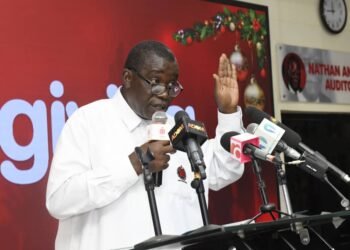

The Board Chairman of the National Youth Authority and Chairman of the NDC 2024 Youth Manifesto Committee, Julian Mawusi Cobbina, has underscored the need for both the government and the National Democratic Congress (NDC) to conduct regular communication and brand audits in the lead-up to the New Patriotic Party’s (NPP) early presidential primary scheduled for January 31, 2026.
In a detailed commentary on the shifting dynamics of Ghana’s political landscape, Julian Cobbina noted that the NPP’s decision to hold its presidential primary two years ahead of the 2028 general elections makes it imperative for the NDC to sharpen its strategic messaging.
He stressed that the political environment in the coming years will be defined by two major voter concerns: jobs and public trust.
“In 2028, the thorny issue about jobs and public trust will be the most important issues that will divide voters,” Julian Cobbina stated, adding that failure to address these matters with clarity and consistency risks alienating a critical segment of the electorate.
He pointed to a growing trend in Ghanaian politics where political operatives often resort to deflective rhetoric by highlighting the failings of past administrations, a tactic he believes erodes public trust among undecided voters.
“Anytime you see political operatives and activists brandishing the ‘this also happened under you’ card, there you note that public trust for the voters in the middle lane gets diminished and the choices get blurry to differentiate between the parties”.
Julian Mawusi Cobbinah

Julian Cobbina described these “middle lane” voters as predominantly young people who are breaking away from entrenched family voting traditions in search of a political alternative that offers tangible solutions.


He stressed that this demographic has a unique power to determine the outcome of future presidential elections. “This group have greater urge to sway every presidential election henceforth,” he said.
Opportunity to Build Long-term Loyalty
For the NDC, Julian Cobbina sees a rare opportunity to build long-term loyalty among these voters. He argued that the legacy of former President Nana Addo Dankwa Akufo-Addo has weakened the NPP’s appeal to the middle class and aspirational young people.
However, Julian Cobbina cautioned that capitalising on this opportunity requires more than simply pointing to the shortcomings of the current opposition party.
Instead, he emphasised the importance of aligning the NDC’s external communication with the findings of regular brand and communication audits, ensuring that messaging remains consistent, targeted, and impactful.
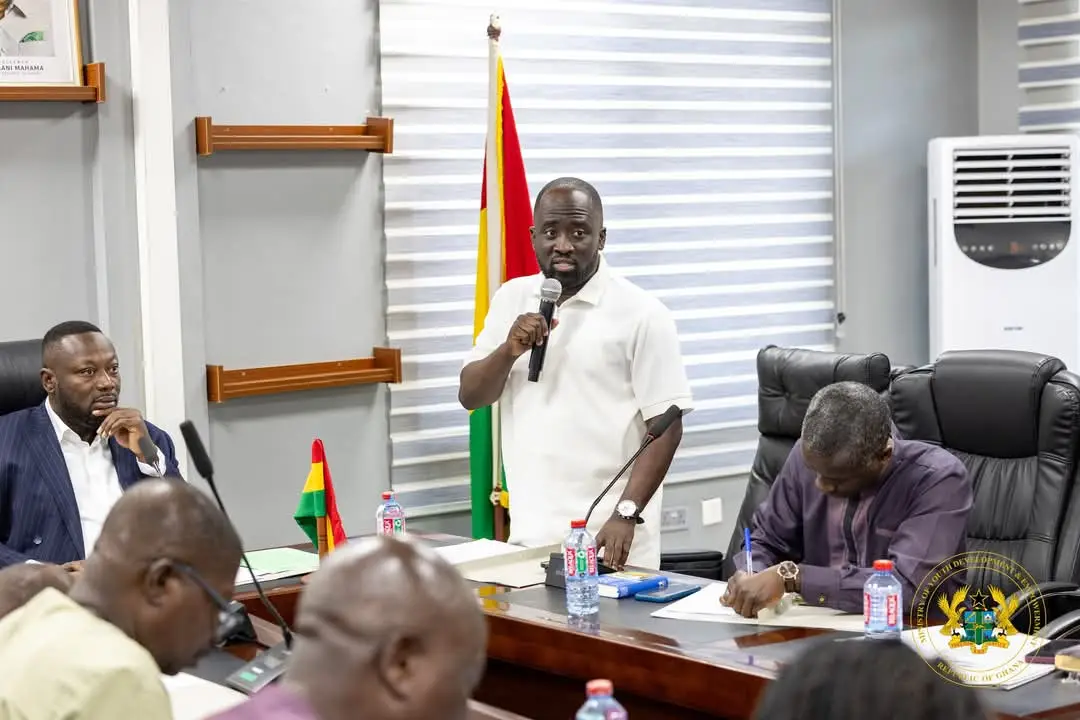
“As long as the NDC’s external communication works in line with its brand and communication audits by targeting this group, the NDC will be here for a long time.”
Julian Mawusi Cobbinah
Central to Julian Cobbina’s advice is the need for the NDC to make a sustained appeal to independent voters, whom he described as the “hypothetical ideal Ghanaian” — a citizen who is not driven by partisan loyalty but by a desire for good governance and national progress.
Winning the trust of this group, he argued, requires delivering on core promises, particularly those related to youth employment. “You should provide real jobs for young people,” Julian Cobbina urged, noting that job creation is not only an economic necessity but also a political imperative.
He suggested that employment policies targeting the skills and aspirations of the youth will serve as a cornerstone for building public trust and sustaining electoral success.
By focusing on tangible results rather than rhetoric, Julian Cobbina believes the NDC can position itself as the party of choice for a generation of voters seeking credible leadership and practical solutions.
He noted that this will demand consistency, transparency, and a willingness to engage in difficult conversations about governance and performance.

As the political calendar advances toward the NPP’s early 2026 primary, Julian Cobbina’s call for strategic preparation reflects a broader understanding of how timing and perception shape electoral outcomes.
With the political narrative likely to be influenced by the emergence of the NPP’s 2028 flagbearer, he stressed the importance of not leaving communication and brand positioning to chance. “The opportunity is there,” he remarked, “but it must be matched with strategy, discipline, and delivery.”
For Julian Cobbina, the path forward for the NDC hinges on a blend of targeted outreach, measurable results in governance, and a deliberate focus on the aspirations of independent and first-time voters. In his view, getting this combination right could secure the party’s relevance and dominance for decades to come.
READ ALSO: President Mahama Engages GCF on Boosting Climate Finance for Ghana