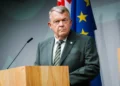
Mauritanian economist Sidi Ould Tah was officially sworn in on Monday as the ninth president of the African Development Bank Group (AfDB), succeeding Nigeria’s Akinwumi Adesina, who served two transformative terms. Tah’s election, held on May 29 during the Bank’s annual meetings, saw him secure 76.18% of the votes—underscoring broad confidence in his leadership.
Founded in 1964, the AfDB has grown into Africa’s largest development finance institution, shaping the continent’s economic trajectory and influencing global development conversations. Tah assumes office at what he described as a “pivotal moment” for Africa, marked by demographic transitions, climate shocks, and the accelerating pace of technological change.
In his inaugural remarks, Tah emphasized a leadership style rooted in listening, reform, and practical delivery. He pledged to fast-track ongoing reforms, deepen partnerships, and enhance engagement with governments, the private sector, and international partners. Importantly, he signaled AfDB’s openness to new financing actors, including sovereign wealth and pension funds, as Africa seeks innovative solutions to its development financing gaps.
Tah also committed to reviewing the Bank’s investment models, promising to introduce a new pillar dedicated to peace investments—a reflection of the growing recognition that sustainable development cannot thrive without stability. Addressing AfDB staff, whom he called the institution’s “most valuable resource,” he promised greater inclusivity in decision-making and announced plans for a town hall meeting in the coming weeks.
Lessons from Akinwumi Adesina’s Transformative Decade
Sidi Ould Tah’s predecessor, Dr. Akinwumi Adesina, exits with a legacy of bold reforms and institutional growth. Appointed in 2015, Adesina grew AfDB’s capital base from $93 billion to $318 billion in just a decade. His tenure was also marked by the launch of the Africa Investment Forum, which mobilized $180 billion in commitments, and the issuance of a landmark $3 billion COVID-19 social bond—one of the largest of its kind globally.
The Bank’s concessional arm, the African Development Fund, achieved a record replenishment of $8.9 billion under his stewardship. Beyond numbers, AfDB’s projects improved the lives of 515 million Africans—231 million of them women—through access to electricity, clean water, healthcare, ICT services, and sanitation.


World leaders, including WTO Director-General Ngozi Okonjo-Iweala and UN Secretary-General António Guterres, praised Adesina for advancing food security, scaling climate finance, and guiding Africa through pandemic recovery efforts. His decade at the helm elevated the AfDB’s reputation on the global stage, positioning it as a trusted voice for Africa in development finance.
While inheriting a stronger balance sheet and elevated international credibility, Tah faces significant headwinds. Rising debt burdens, tightening global financing conditions, fragile investor appetite, and intensifying climate shocks all threaten to reverse Africa’s recent gains. Moreover, demographic pressures—Africa’s population is projected to double by 2050—pose both opportunities and risks.
In response, Tah underscored the importance of focus and discipline, cautioning that the Bank “should not aim to be everything to everyone, but focus on areas where it can move the needle most.” His message highlights a pragmatic vision: consolidating AfDB’s comparative strengths while leveraging partnerships for broader impact.
READ ALSO: Mahama Lifts Ban on Land Transactions, Orders Strict Compliance with New Regime