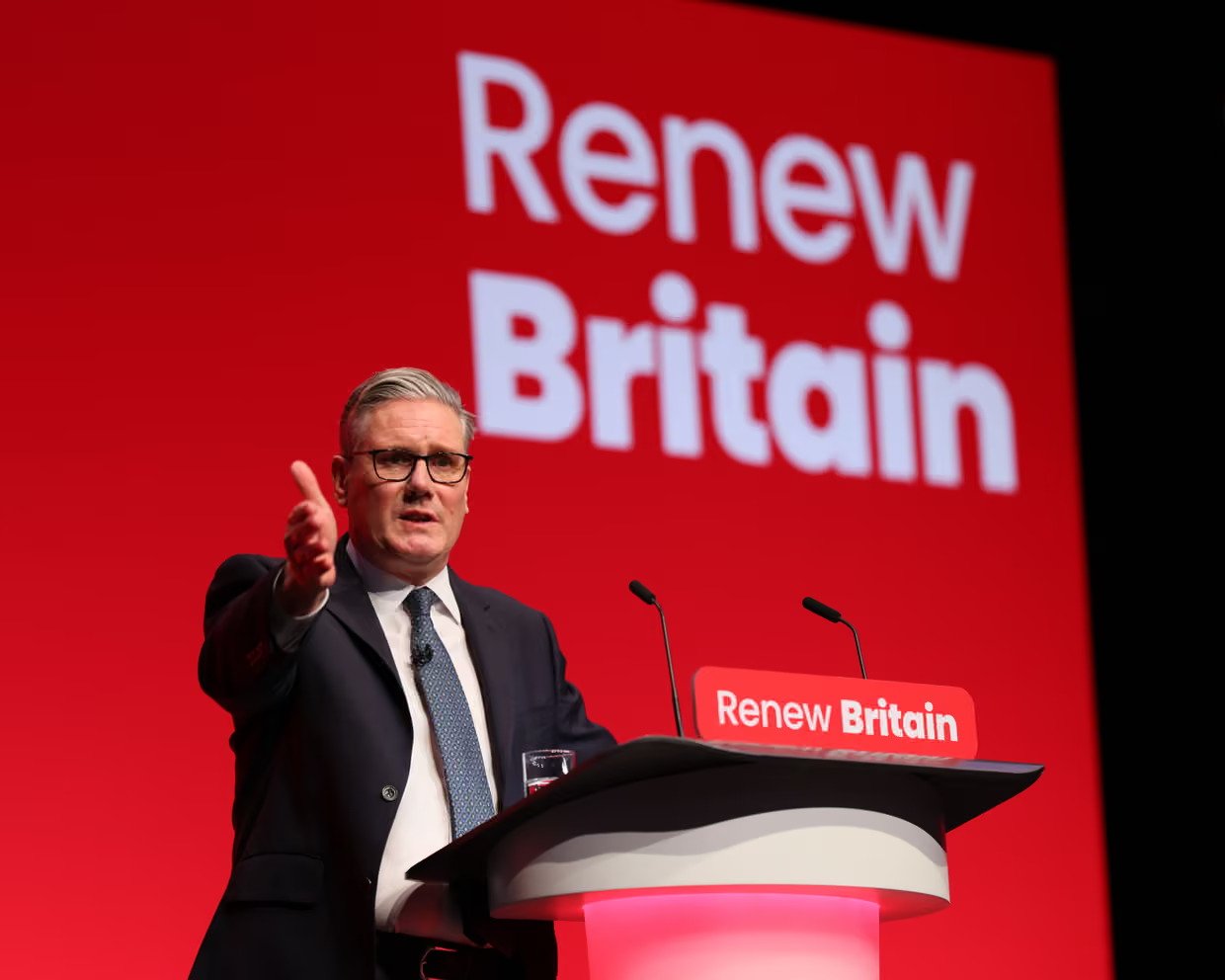
Prime Minister Keir Starmer has warned Britain is at a crossroads, declaring that the country faces a “defining choice” between national renewal under Labour or “division and decline” under Nigel Farage.
Speaking at the Labour Party’s conference in Liverpool, Starmer said the contest with Reform UK was nothing short of a “fight of the soul of our country”. He painted Labour as the party of stability, while branding Farage a “snake oil merchant” who thrives on grievance politics.
The prime minister acknowledged past failings, telling delegates that establishment politicians had “placed too much faith in globalisation” and that Labour itself had at times “become a party that patronised working people”. His remarks came after a politically difficult month marked by doubts over his leadership and sinking approval ratings.
Seeking to reassure his party’s grassroots, Starmer told activists that public concerns about migration were “reasonable” but stressed that there was “a moral line” that Farage and others had crossed. He warned against quick-fix promises from “snake oil merchants” of both the right and the left, dismissing proposals such as unfunded tax cuts, “a wealth tax that somehow solves every problem”, and the Brexit claim that leaving the EU would provide £350m weekly for the NHS.
Starmer Warns Of Rising Populist Threat
Framing the moment as historic, Starmer said Labour’s fight was “every bit as big as rebuilding Britain after the war”. He told the conference: “We can all see that the country faces a choice, a defining choice, Britain stands at a fork in the road, we can choose decency, we can choose division, renewal or decline.”
He went further, condemning extremist views that those who had lived in Britain for generations should be deported, calling them “an enemy of national renewal”.


“If you incite racist violence and hatred, that is not expressing concern: it’s criminal,” Starmer said to loud applause. He stressed that Labour is “proud of our flags”, but cautioned that if they were displayed alongside xenophobic graffiti, telling people of Asian heritage to “go home”, it was not patriotism but racism.
Starmer accused Farage of being unpatriotic: “Farage doesn’t like Britain, doesn’t believe in Britain,” he said, arguing that Reform UK wanted to create “a competition of victims”. Labour, he insisted, must always remain the party of change, not the defender of a failing status quo.
The prime minister criticised successive governments for complacency, saying they had “placed too much faith in globalisation” and relied on “lazy assumptions that immigration is all we need to give us workers … it doesn’t matter if industry leaves, it doesn’t matter if we don’t train our young people, it doesn’t matter if wealth creation is hoarded by just a few communities.”
“Let us spell it out: controlling migration is a reasonable goal, but if you throw bricks and smash up private property that’s not legitimate, that is thuggery.
“We will crack down on illegal working, we will remove people with no right to be here and we will secure Britain’s borders. But there is a line, a moral line – and it isn’t just Farage who crosses it, there are also people who should know better sowing fear and discord across our country.”
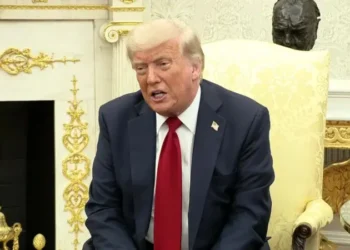
Prime Minister Keir Starmer
Reform UK Set To Respond
Farage is expected to respond directly to Starmer’s remarks in a live broadcast, likely accusing the prime minister of endangering Reform UK activists by labelling his immigration agenda racist.

Starmer, meanwhile, sought to highlight his government’s record. Drawing on a style reminiscent of Gordon Brown’s 2009 conference speech, he listed achievements including the nationalisation of British Steel, scrapping zero-hours contracts, and rebuilding schools.
He also promised a reorientation of education policy, vowing to replace the New Labour target of 50% university attendance with a new goal: two-thirds of young people achieving either a degree or a “gold standard apprenticeship”.
The prime minister said Britain needed a “more muscular state” capable of cutting unnecessary bureaucracy, boosting investment outside London and the south-east, funding public services, and strengthening workers’ rights.
READ ALSO: Govt Announces GHS 5 Increment for Prisoners’ Feeding