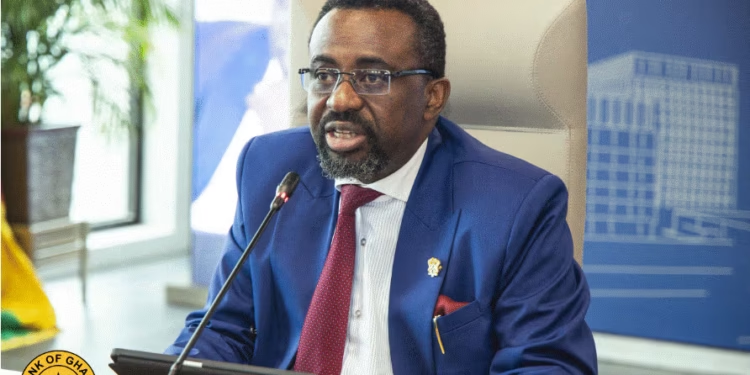
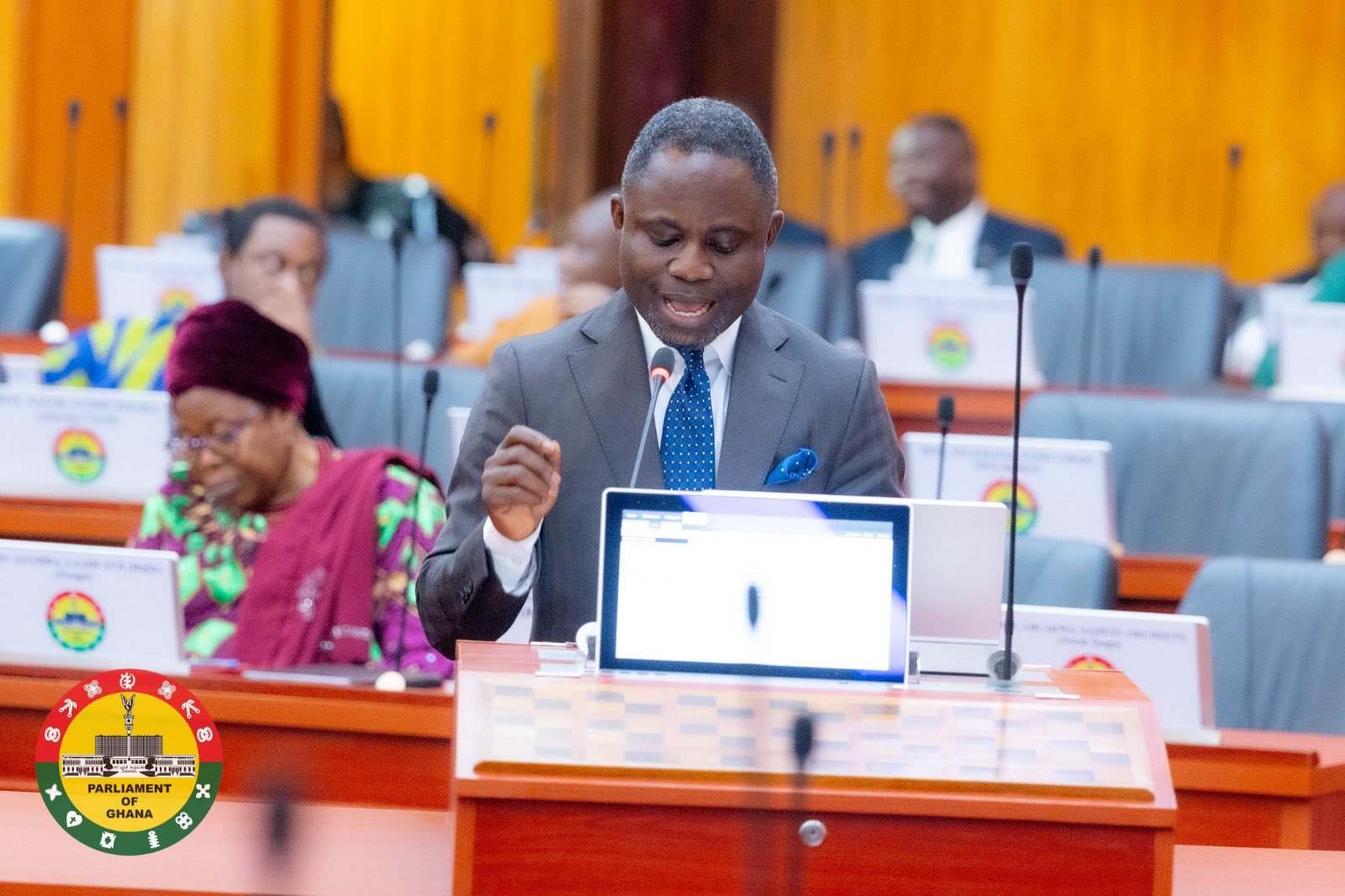
Health Minister, Hon. Kwabena Mintah Akandoh, has revealed alarming details about a software vendor allegedly holding Ghana’s national health data “hostage,” describing the situation as a national security and data sovereignty crisis that his ministry inherited upon assuming office in 2025.
Speaking on the floor of Parliament, the Minister disclosed that the Government of Ghana, under the previous NPP administration, in 2019 entered into a $100 million agreement with a company called Lightwave to connect 950 health centers nationwide under a health information digitization project.
The project, he said, was aimed at streamlining healthcare delivery through electronic medical records and digital infrastructure. However, years later, the project remains incomplete, with significant financial losses and worrying data control issues.
According to the Minister, the contract, which was initially supposed to expire in 2022, was extended twice—finally ending on December 31, 2024, only fews after the President Mahama’s administration assume office.
“By the end of 2024, out of the 950 health centers, only 450 had been connected. Out of the $100 million, €77 million had already been paid—over 77 percent—while less than 50 percent of the work had been done”.
Health Minister, Hon. Kwabena Mintah Akandoh
Hon. Akandoh described the contract as one riddled with poor oversight, weak accountability mechanisms, and grave implications for national data security. He explained that the agreement included milestone clauses that required the vendor to hand over completed infrastructure and related systems to the state after each phase.

However, those terms were not fully honored. “It is unconscionable,” he told Parliament, “that any government official would sign an electronic agreement that makes an individual responsible for the country’s data and denies the state access to its own health information and systems.”


The Minister stated that the arrangement effectively placed the entire health data system in the control of the vendor. Even more troubling, he said, was the discovery that Ghana’s medical data and servers were not hosted locally but in India.
“Mr. Speaker, what this vendor was doing to the state was that anytime he made a demand and it wasn’t met, he switched the system off. For your information, the server isn’t located here in Ghana but far away in India.”
Health Minister, Hon. Kwabena Mintah Akandoh
Forensic Audit Exposes Glaring Irregularities
According to the Minister, upon taking office, the new administration conducted a forensic audit of the contract and infrastructure. The findings, according to the Minister, exposed glaring irregularities in both hardware and software delivery.
“The audit revealed gaps in software, hardware, and infrastructure. The contract stated that HP laptops were to be supplied, but when you visit the facilities, you find different brands, and where the state demanded 20, fewer than 20 were supplied. There were quality issues and quantity issues”.
Health Minister, Hon. Kwabena Mintah Akandoh
He added that over $18 million had been spent on hardware, yet the discrepancies were massive. To compound matters, a payment of over $10 million made in March 2024 was supposed to cover the connection of 157 additional health facilities, but only seven had been verified.
Despite these challenges, the Health Minister maintained that the government had chosen a pragmatic approach rather than allow the health system to collapse. “Because there was no active contract when we assumed power, we decided to sign a two-year license renewal agreement to ensure continuity and avoid disruption,” he said.

However, even during renewal negotiations, the vendor resisted clauses related to data ownership. “The seller indicated that he didn’t want to hear about data in the agreement and even insisted that the Ministry should verify 461 facilities instead of 450,” Hon Akandoh revealed, calling the demands unreasonable and contrary to the state’s interests.
Hon. Akandoh assured the nation that his ministry had found a sustainable solution and developed a robust delivery plan to reclaim ownership and control over Ghana’s health data systems.
“Ladies and gentlemen, the good news is that we now have a solution and a delivery plan. In the first week, we are connecting over 100 facilities; in the third week, another 100. I can assure you that, in the shortest possible time, we will have all 450 facilities covered”.
Health Minister, Hon. Kwabena Mintah Akandoh
Commitment to Data Protection
The Minister emphasized that the government’s priority is not only to restore connectivity but also to ensure that Ghana’s health data is hosted within the country and protected under strict cybersecurity and data management laws.
He further noted that the lessons learned from the Lightwave contract will inform future technology partnerships within the public sector to prevent similar lapses.
“We are religiously guided by this experience. We will implement the necessary solutions to ensure that what we inherited never happens again. Tomorrow, as I have indicated, we will present full documentation, conclusive evidence, and our next steps to the people of this country.”
Health Minister, Hon. Kwabena Mintah Akandoh
The revelations have sparked wide public and parliamentary debate, raising questions about accountability in previous government technology contracts and the urgent need to safeguard national digital assets.
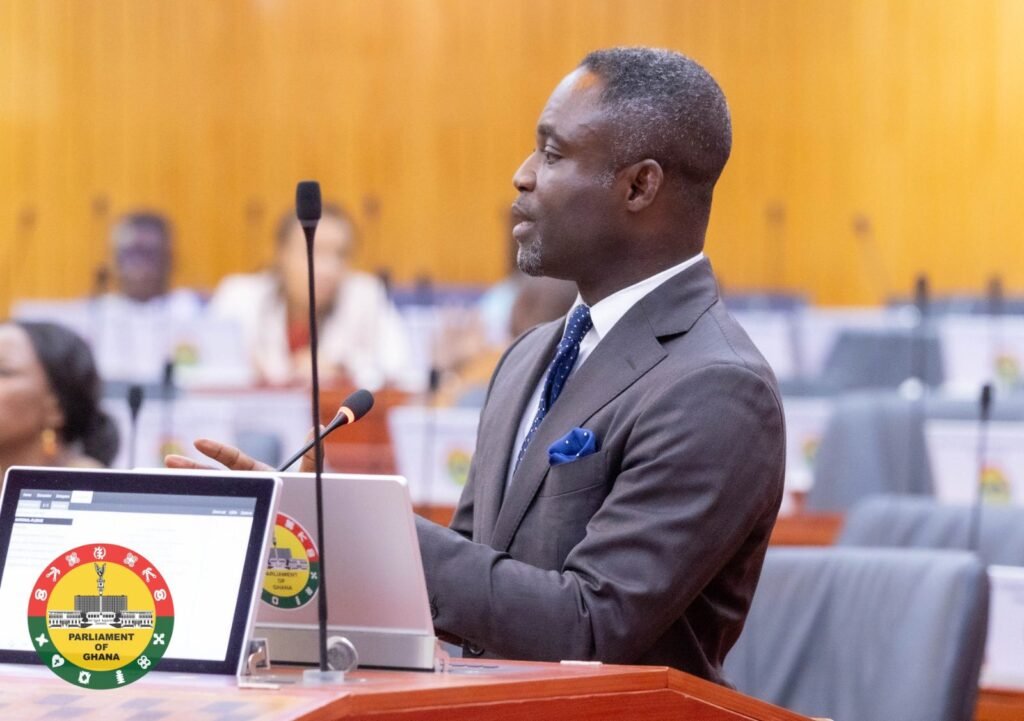
Reacting to the revelations, Dr. Kwame Sarpong Asiedu, Democracy and Development Fellow at the Ghana Centre for Democratic Development (CDD-Ghana) and a renowned pharmacist, expressed shock over the discovery that Ghana’s health records were being stored on servers outside the country.
“How do we allow our health records, which contain most of our medical and geographical information, to be stored in India, with our Ministry of Health having no access? Who signed these contracts? It seems we see our data protection laws as advice.”
Dr. Kwame Sarpong Asiedu, Pharmacist and Public Health Fellow at the Ghana Center for Democratic Development (CDD-Ghana)
Dr. Asiedu warned that beyond the contractual breaches, such negligence could have far-reaching implications for both national security and individual privacy.
He urged the government to take swift action to localize all critical national data storage systems and strengthen the enforcement of Ghana’s Data Protection Act to ensure that no private entity or foreign operator could hold the country’s sensitive information hostage again.
The Health Minister’s disclosure underscores the critical importance of transparent procurement, local data hosting, and stronger institutional oversight in protecting the integrity of Ghana’s health systems.
READ ALSO: PAC Orders Probe into ECG’s GHC189 Million Overspending