Africa’s oil and gas industry is entering a phase of renewed growth and strategic transformation, with the continent projected to maintain strong liquid production levels while expanding its role as a global gas supplier, according to the African Energy Chamber’s (AEC) 2026 Outlook.
The report reveals that liquids, including crude oil and condensates, have accounted for over 60% of Africa’s total hydrocarbon output over the past five years.
“By 2026, liquids production is expected to be 63%, with natural gas production accounting for the remaining 37%.
“By 2030, liquids production is expected to remain stable, supported by the further development of mature fields and potential new upstream projects.”
AEC’s State of African Energy 2026 Outlook
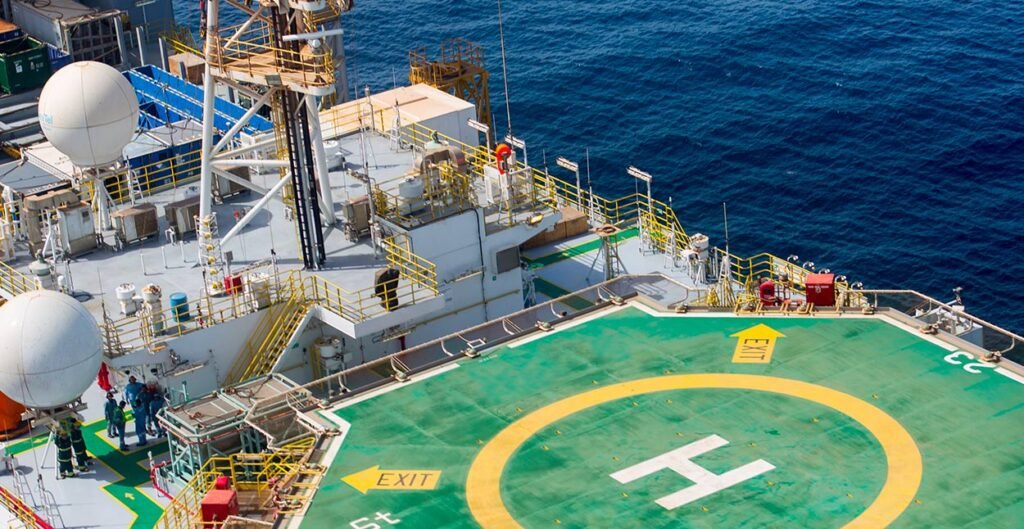
The Chamber explained that growth in Africa’s liquid output will hinge on investment flows, regulatory stability, and operational efficiency, particularly in bringing new discoveries online.
The report observed that while liquid hydrocarbons will remain a vital part of Africa’s production mix, natural gas is poised to drive the next wave of growth, buoyed by rising global demand for cleaner energy and the development of major Liquefied Natural Gas (LNG) export facilities.
The AEC report emphasises that growth in liquids output “will depend on investment flows, regulatory stability and operators’ efficiency in bringing new discoveries online.”


Meanwhile, gas production is projected to see more rapid expansion, driven by “rising global demand for cleaner energy sources.”
The forecast highlights Africa’s growing role as a supplier of natural gas, especially via new LNG export infrastructure planned in countries such as Mozambique, Nigeria and Senegal.
Africa’s Growing Role as a Global Gas Supplier
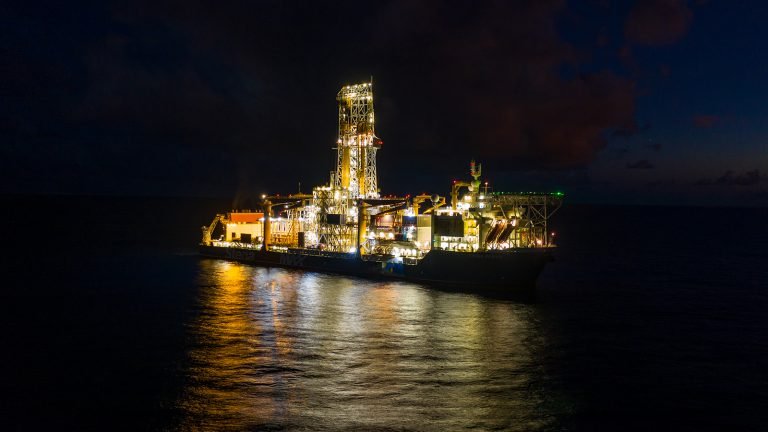
The AEC’s 2026 Outlook underscores Africa’s strategic role in supplying natural gas to Europe and Asia, regions that continue to diversify away from traditional suppliers.
“Africa’s strategic role as a gas supplier, especially to Europe and Asia, is likely to expand, underpinned by new LNG export infrastructure in countries like Mozambique, Nigeria, and Senegal.”
AEC’s State of African Energy 2026 Outlook
The report also reveals a significant structural change in Africa’s oil and gas governance. National Oil Companies (NOCs) now account for roughly 53% of the continent’s total oil and gas output, compared to about 30% for International Oil Companies (IOCs).
This marks a growing shift toward resource nationalism and strategic autonomy, as African governments empower NOCs to take on larger operational roles in exploration and production.
“Countries across the continent are increasingly empowering their national oil companies to take on more operational roles, moving beyond regulatory oversight to active participation in exploration and production activities.”
AEC’s State of African Energy 2026 Outlook
Nigeria’s Nigerian National Petroleum Company Ltd (NNPCL) is cited as a key example, with the company expanding its technical and operational capacity to manage major assets either independently or through joint ventures.
This evolution, the AEC said, reflects a continent-wide trend toward strengthening local expertise and ensuring that a greater share of resource value remains within Africa.
Spotlight on Top Producers: Algeria and Nigeria
Among Africa’s leading hydrocarbon producers, Algeria and Nigeria stand out as key contributors to the continent’s output in the short to medium term.
In Algeria, production remains steady, with 2024 output estimated at 3.3 million barrels of oil equivalent per day (MMboe/d). The state-owned Sonatrach remains the dominant operator, accounting for about 75% of liquids and 80% of gas production.
“In 2026, oil production is anticipated to remain stable at 1MMbbl/d, while gas production is expected to be 10 billion cubic feet per day (Bcf/d).”
AEC’s State of African Energy 2026 Outlook
The Chamber noted that Algeria is also advancing gas decarbonisation efforts, including the installation of photovoltaic systems at Eni’s Bir Rebaa North complex, reflecting the growing integration of renewables in upstream operations.
Meanwhile, Nigeria continues to consolidate its position as Africa’s largest oil producer, averaging about 2.3 MMboe/d over the past five years.
The Nigerian Upstream Petroleum Regulatory Commission (NUPRC) targets at least 2.1 MMbbl/d by the end of 2025, with ambitions to reach 3 MMbbl/d by 2030.
“Nigeria’s crude oil production target for the end of 2025 is at least 2.1 MMbbl/d.
“This figure includes both crude oil and condensates and reflects the government’s ambition to strengthen Nigeria’s position in the global oil market.”
AEC’s State of African Energy 2026 Outlook
On the gas front, Nigeria’s Seplat-Renaissance ANOH project is projected to reach a peak of 595 million cubic feet per day (MMcf/d) within the next five years, while TotalEnergies’ Ubeta onshore gas project and the Ntokon offshore oil project are expected to begin production by the end of the decade.
Africa’s Energy Future: Stability and Opportunity
Overall, the African Energy Chamber’s 2026 Outlook presents a cautiously optimistic picture of Africa’s upstream future.
While mature fields and new projects are expected to sustain production, the balance between hydrocarbons and renewables will define the next phase of the continent’s energy evolution.
Regulatory stability, technological innovation, and strengthened local capacity will remain decisive factors in determining whether Africa can fully unlock its hydrocarbon potential while navigating the global energy transition.