
Investigative journalist and anti-corruption campaigner Manasseh Azure Awuni has called on the President of the Republic of Ghana, His Excellency John Dramani Mahama, to take action over the worsening situation of food glutting in the country.
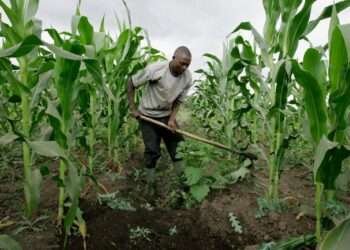
Manasseh stated that this issue has become a major problem for farmers across the country, as they lament the many bottlenecks they face in the field as farmers, and does not expect their produce to be abandoned as a result of lack of market.
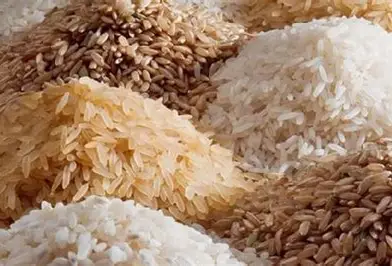
“Rice farmers are threatening to boycott the National Farmers’ Day next month. Why? Their produce for the last farming season is glutting, and they dread the fate of this year’s harvest.” He stated.
He recounted his engagement with the farmers to ascertain their challenges, noting how dire the situation is and how they urgently need the intervention of government.
“I recently interviewed farmers and farmer groups as part of a research project. They painted a distressing picture of how they take loans at killer interest rates to farm but are unable to sell their produce because of the influx of cheap imported rice nearing expiration.”
Manasseh Azure Awuni, Investigative journalist and anti-corruption campaigner

Manasseh noted that the government responded to the concerns of the farmers by instructing the National Buffer Stock Company (NAFCO) to purchase the surplus foodstuffs to prevent glut; however, that has not been to the satisfaction of the farmers, as they have since raised a number of loopholes with the government’s initiative.
The farmers have complained that the government’s allocated amount to the National Buffer Stock Company (NAFCO) is so inadequate, given that it is not only one product (rice) that is without a market, adding that “the prices NAFCO is proposing to buy their maize and rice will cripple them.”


Another challenge the farmers, including the rice growers and millers’ association, have against the government’s proposal is that they have claimed that none of their members have yet secured a supply contract from NAFCO since the announcement, and they still cannot tell who NAFCO is buying from.
Manasseh emphasized that what the farmers are asking for is not something that should be beyond the government’s ability to achieve, as he argued that the government should, through the purchase of foodstuffs for prisons, armed forces, boarding schools, and special initiatives, such as the School Feeding Programme, direct that all such purchases be made on the locally produced food that is being abandoned.
“The government can direct all these institutions to buy local rice instead of rebagging expired imported rice to feed our students, as we witnessed in the dying days of the Akufo-Addo regime.
“This way, our rice and maize farmers will not only get an adequate market for their sweat, but they will also be encouraged to produce more, employ more people, and reduce the pressure on the local currency.”
Manasseh Azure Awuni, Investigative journalist and anti-corruption campaigner
He noted his experience in America’s State of Nebraska, where research in agriculture is a priority and farming is considered a serious business. “The farmer I interviewed said farmers here receive help from their government when things go wrong.” He added.
“Ghanaian farmers cannot compete with their counterparts in countries where farming receives immense support from the government. Some farmers get subsidies and cheap credit to produce in large quantities and dump them in countries like Ghana, where some of the importers evade taxes and sell cheaply.”
Manasseh Azure Awuni, Investigative journalist and anti-corruption campaigner
He, however, emphasized that even though Ghana does invest in subsidies, “the implementers are often most interested in the procurement side of the intervention, who gets what contract to supply fertilizer, and how to game the system to build political war chests.”
“In the end, the intended beneficiaries get very little, and the nation touts its impact more in words than in output.” He added.

He further placed a direct call to the president to take action in order to salvage the situation, emphasizing the need for farmers to recoup their investments to be able to continue in business.
“Mr. President, you may also consider lifting the ban on the export of grain. Rising prices are an incentive for a farmer to produce more the next season.
“If the cost of production exceeds the revenue a farmer makes in a season, he or she will have no motivation to expand production in the subsequent season. So, allow the market forces to work when they favor the farmer.”
Manasseh Azure Awuni, Investigative journalist and anti-corruption campaigner
He emphasized that President Mahama has what it takes to make farming a lucrative venture, adding that there should be a collective effort to make “our farmers succeed so that we can point the “galamseyers” to a viable and decent alternative use of our fertile lands.”
“Our rice farmers now have improved varieties that can compete favorably with imported rice. Our children must not feed on expired or expiring rice, while rice producers in Ghana die of heartache resulting from unpaid loans and mounting interest.”
Manasseh Azure Awuni, Investigative journalist and anti-corruption campaigner
He therefore called on the president to act on the proposed measures, emphasizing that the president, being the son of a successful rice farmer, should salvage the problem of the rice farmers in honor of his late father and Ghana as a whole.
READ ALSO: Natural Resource Governance Should be a Bee in Every Ghanaians’ Bonnet – Sophia Akufo