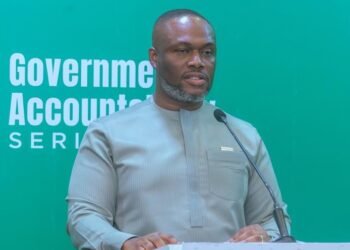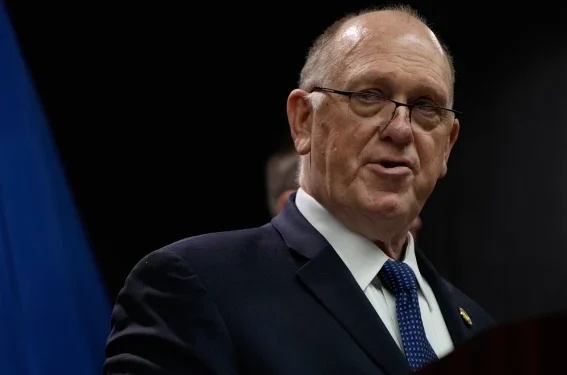

A growing storm is quietly building within Ghana’s technology policy landscape, and according to technology policy writer Sitsofe Mensah, the country is on the brink of drafting itself into a full-blown “regulatory war.”
In a detailed critique of the Ministry of Communications, Digital Technology and Innovation’s (MoCDTI) ongoing legislative work, Mensah warned that Ghana is “importing the EU’s AI Act without importing the parts that make it workable,” creating a risky convergence of laws that could paralyze innovation, crush startups, and undermine investor confidence long before implementation begins.
Mensah delivered this caution in a commentary examining Ghana’s Emerging Technologies Bill (ETB), Innovation and Start-Up Bill (ISB), and proposed amendments to the Cybersecurity and Data Protection frameworks.
Drawing inspiration from the European Union’s own regulatory evolution, he argued that Ghana is failing to adopt the lessons Europe is already learning the hard way.
According to Mensah, the European Commission recently introduced a “Digital Omnibus proposal,” its own attempt to fix complications arising from the landmark AI Act. In a surprising but pragmatic concession, Brussels admitted its original framework created “heavy administrative burdens,” especially for small and medium-sized enterprises (SMEs).
The EU has now begun patching its laws to simplify compliance and protect its innovation pipeline. To Mensah, this development is not merely a European issue; it rings as a direct warning to Ghana.



“Ghana’s Emerging Technologies Bill is importing the EU’s philosophy wholesale,” he stated, adding that in its current form, it risks importing “the very friction that the EU is now desperately trying to fix.”
For him, the problem is not Ghana’s ambition to create strong, rights-based digital regulations, but the absence of coherence, sequencing, and safeguards essential for such frameworks to function.
Start-Up Paradox and Bias Paradox
Mensah’s first major concern is what he calls the “Start-Up Paradox.” He noted that the government is advancing two flagship bills—the Innovation and Start-Up Bill (ISB) and the Emerging Technologies Bill (ETB)—that appear to be working against each other.
While the ISB seeks to support emerging businesses through incentives and simplified processes, the ETB proposes expansive compliance demands based on the EU’s high-risk categorization model.
“What good is a tax holiday, if a start-up is bankrupted by compliance costs before it ever earns a cedi?” With the EU now scrambling to create “regulatory privileges for SMEs,” Mensah argued that Ghana must build these protections into its legislation from the start.
His second concern—the “Bias Paradox”—points to a technical and legal contradiction at the heart of Ghana’s draft laws. While both the National AI Strategy and the ETB require AI systems to be “transparent, bias-free, and ethical,” the country’s existing Data Protection Act makes it extremely difficult to test for bias.
For instance, a developer seeking to identify discrimination in a loan algorithm would need to process sensitive data such as ethnicity and gender—a process fraught with legal risk without explicit authorization.

The EU anticipated this challenge and incorporated Article 10(5) into its AI Act, creating a narrowly defined “Bias Safe Harbor” that legally permits processing sensitive data solely for testing and correcting bias.
Mensah argued that Ghana copied the requirement to eliminate bias but forgot to copy the critical legal mechanism that enables it. The result, he said, is an unavoidable collision between the ETB and the Data Protection Act.
Legislative Collision
The third threat, Mensah argued, is even more concerning: a looming “Legislative Collision.” Ghana is on the verge of passing three different bills, each giving power to a different agency to regulate the same technologies.
The Emerging Technologies Bill proposes a new Emerging Technologies Agency; the Cybersecurity (Amendment) Bill expands the Cyber Security Authority’s mandate to certify AI systems; and the Data Protection (Amendment) Bill seeks to modernize Act 843 without integrating bias-testing provisions or clarifying overlaps.
“Instead of a regulatory framework, we are building regulatory cholesterol. It is a three-way battle over who governs AI, and it will choke innovation and create crippling uncertainty for investors before a single law is passed.”
Technology Policy Writer Sitsofe Mensah
Mensah then outlined a roadmap to avoid the impending chaos. He called on the Ministry of Communications, Digital Technology and Innovations (MoCDTI) to immediately harmonize the bills and introduce a formal “Statement of Interoperability” to clearly define which agency leads, which supports, and how overlapping functions will be aligned.
He also urged Cabinet to make interoperability a condition of approval and for Parliament to refuse to pass any of the three bills independently of the others. Most crucially, he insisted that Ghana must legislate its own equivalent of Article 10(5) to create a legal “Bias Safe Harbor.”

Without it, he argued, Ghana is building a compliance regime that is impossible to follow. Additionally, he believes the ETB must adopt SME privileges to align with the Innovation and Start-Up Bill, ensuring the regulatory system does not crush the very entrepreneurs it seeks to empower.
“A blueprint that forgets its own legal engine is a recipe for failure. A government that passes three conflicting laws at the same time is not regulating; it is creating chaos.”
Technology Policy Writer Sitsofe Mensah
In the end, Mensah’s warning is a call for alignment, not abandonment. Ghana’s ambition to build a modern, rights-based digital regulatory regime is commendable, but ambition without coherence risks collapsing under its own weight.
Unless policymakers urgently synchronize the emerging tech, cybersecurity, and data protection bills—and adopt the safeguards that make global models workable—the country may unintentionally stifle the very innovation it hopes to unleash.
READ ALSO: Benjamin Boakye Urges Africa to Rethink Fossil Dependency and Embrace Renewables