The Minister of Finance, Dr. Cassiel Ato Forson, has outlined an ambitious infrastructure agenda designed to consolidate stability, drive job creation, and transform the economy in the 2026 Budget Statement presented to Parliament.
Under the theme “Resetting for Growth, Jobs and Economic Transformation,” the budget introduced significant investments through the ‘Big Push Infrastructure Programme,’ which the minister described as the single largest commitment to physical infrastructure in recent years.
According to the Minister of Finance, the Big Push Infrastructure Programme reflects President John Dramani Mahama’s vision of translating fiscal stability into tangible development outcomes.
“With an envelope of the cedi equivalent of US$10 billion, this initiative is translating fiscal stability into physical progress, modernising roads, bridges, ports, and logistics corridors that drive inclusive growth, productivity, and job creation”
Dr. Cassiel Ato Forson, Minister of Finance
Dr. Forson stated that in 2025 alone, the government committed GHS 13.8 billion to strategic road projects under the Big Push Programme. He emphasised that implementation was ongoing across all regions, with projects prioritised based on economic returns, regional equity, and alignment with the government’s 24-hour economy policy.
He reminded Parliament that approval had been granted for multi-year commitments covering 33 road projects under the Public Financial Management Act, noting that most contractors had mobilised to site and construction was progressing steadily.

“We expect completion of most of these road projects by mid-2027,” he said, assuring that “contractors working on these road projects will be paid promptly.”


The Finance Minister reiterated that the overarching goal of the Big Push was to connect Ghana end to end and make infrastructure the backbone of industrialisation, trade, and employment creation.
“The Big Push is ultimately about people, making it easier for farmers to reach markets, workers to reach jobs, and families to travel safely and affordably. It is about connecting every Ghanaian to opportunity”
Dr. Cassiel Ato Forson, Minister of Finance
Accra-Kumasi Expressway
A central component of the programme is the Accra-Kumasi Expressway Project. Described as Ghana’s first modern six-lane bi-directional Class A expressway, the 198.7-kilometre road will connect the capital to the Ashanti Region through the Greater Accra and Eastern Regions.
Dr. Ato Forson said the expressway will reduce the current travel distance between Accra and Kumasi by over 50 kilometre – cutting it from 250 kilometres to 198.7 – and halve the journey time. It is also expected to reduce transport costs by 40 percent and create over 30,000 direct and indirect jobs during construction.
“Beyond mobility, it will stimulate industrial parks, logistics hubs, and service economies along its route, powering the 24-Hour Economy and strengthening Ghana’s competitiveness”
Dr. Cassiel Ato Forson, Minister of Finance
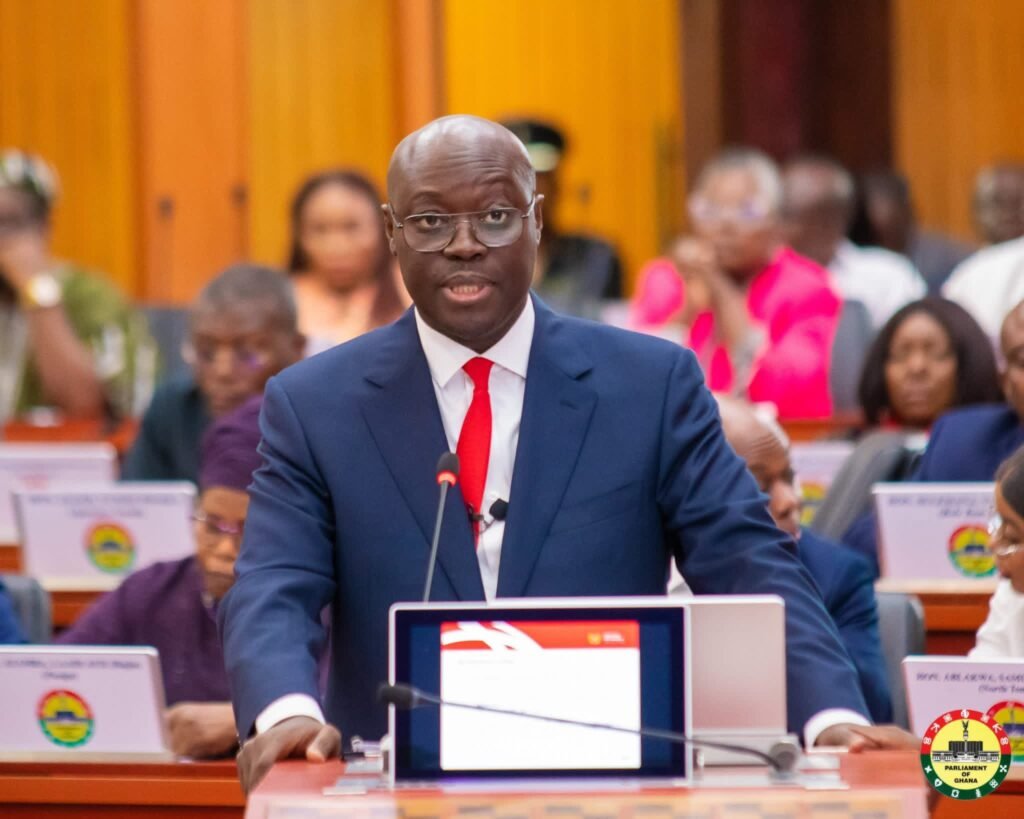
According to the Hon. Dr. Ato Forson, the project will include eight major interchanges at Accra Hub, Adeiso, Asamankese, Akyem Oda, Ofoase, Lake Bosomtwe, and Kumasi. It will also feature three major bridges over the Birim and Pra Rivers, as well as four full-service rest areas equipped with fuel stations, rest stops, restaurants, and emergency medical facilities to support 24-hour operation.
Two modern toll plazas will be installed at Accra and Kumasi with automated systems to improve revenue collection and reduce congestion.
Opening Afram Plains to Agribusiness
The Finance Minister further noted that Adawso-Ekye Amanfrom Bridge and related road networks also form a major part of the Big Push Infrastructure Programme.
The bridge, which will connect the Afram Plains, is expected to open up vast agricultural lands to commercial farming and facilitate access to markets. “This is urgently required to unlock the agricultural and economic potential of the Afram Plains enclave,” the Minister stated.
Dr. Ato Forson revealed that feasibility studies and designs for the two projects have been completed, paving the way for procurement and construction phases to commence.
Both projects, according to him, will play a pivotal role in supporting Ghana’s medium-term growth strategy, particularly under the Mahama administration’s drive to position infrastructure as a catalyst for sustainable industrialisation and employment.

“Our infrastructure drive is about laying the foundation for long-term prosperity, connecting regions, and creating jobs for our people,” Dr. Forson concluded.
The 2026 Budget presentation underscored that infrastructure remains a central pillar in Ghana’s growth reset, aiming to transform fiscal discipline into durable assets that power productivity, trade, and inclusive national development.
READ ALSO: Ghana Targets Energy Stability Through Reforms in 2026 Budget