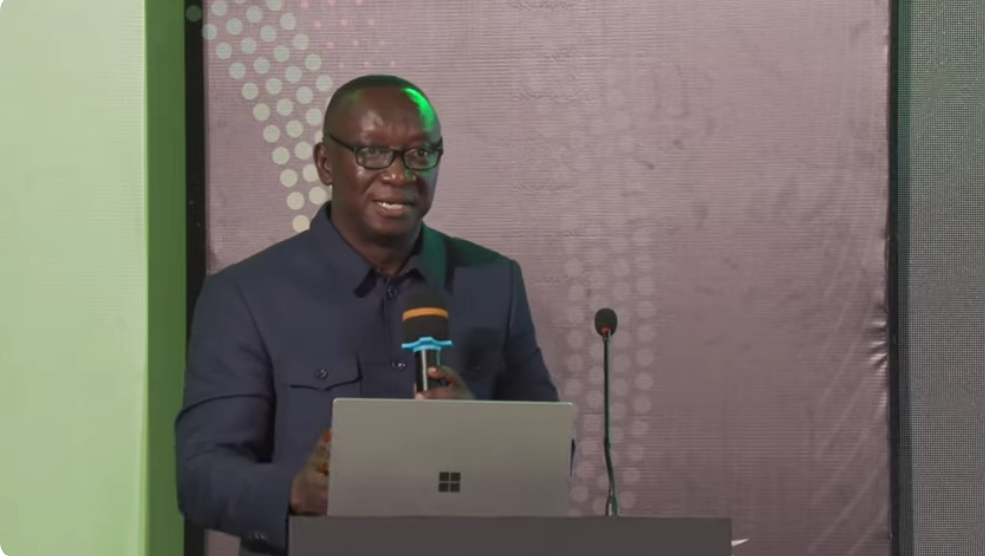
Mr. Samuel Arkhurst, Technical Coordinating Director and Director, Real Sector Division, Ministry of Finance, has clarified that the service sector in Ghana is an integral variable in the job creation agenda of the government.
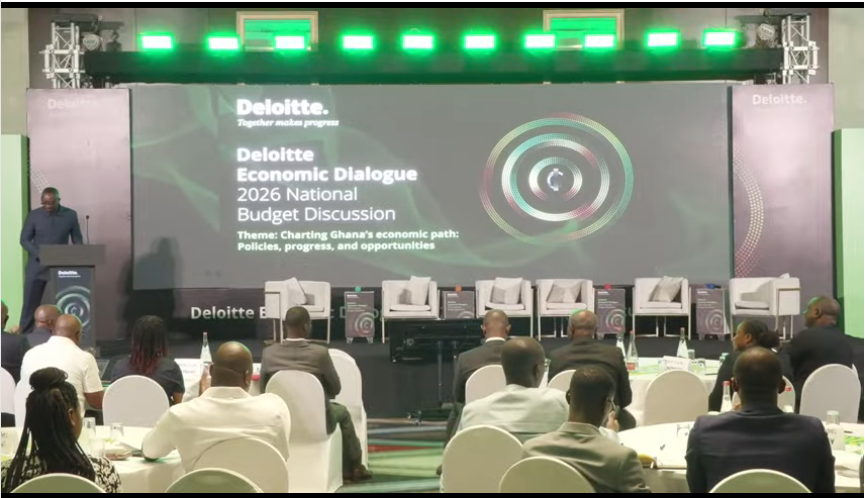
Giving the Keynote address on behalf of the Minister of Finance at the Deloitte Economic Dialogue – 2026 National Budget Discussion, on the theme, ‘Charting Ghana’s economic path: policies, progress, and opportunity,’ he said that the stage of growth and formation of a country determines its dominant sector.
“I am not sure anyone has said that the structure where your services are dominant presents a weakness in job creation. When countries are in their formation stage, they are predominantly agrarian.”
Mr. Samuel Arkhurst
Interpretation of Sector Contribution Statistics
According to him, previous calculations of growth, Gross Domestic Product (GDP), vary from the current. The components for the various sectors have also varied. The current rebase draws all the service components in the other sectors to project its dominance.
“When you look at the previous calculations on growth, that is, the previous GDP, when you take Cocoa, you would have seen Cocoa and marketing. Marketing is a service. When we did the rebasing, the services component of Cocoa was highlighted as part of the service.
“So, if I take the current classification and I send it to the past, you will be surprised that agriculture will not be 50%, because at independence, agriculture was 50% of GDP. But within it are some of these nuances.”
Mr. Samuel Arkhurst
According to Mr. Arkhurst, carefulness must precede the interpretation of the figures for the various sectors’ contribution to GDP. He added that assessing the agriculture sector’s contribution to GDP in the past to today’s calculation might relieve the sector’s dominance in terms of GDP contribution. This is because some of the components will be pulled out, and the sector’s position will be weakened.
Job Creation Power of the Service Sector
The representative of the Finance Minister sensitized Ghanaians not to “underestimate the job creation power of the service sector.” He added that the numerous online trading platforms existing today are all under the service sector.
He clarified that at independence in 1957, Ghana’s population was around 6 million. Currently, Ghana’s population is about six times larger. “With countries that move from one stage to the other, fewer of their people are in the primary sector, agriculture,” he mentioned.


“I am not sure that the basis for our argument is to go back to the agrarian stage, but the basis is to ensure that the contributors to the growth across all three sectors are maximized. We cannot chase people to leave online and go back to doing the things they did before. It is where the world is going.”
Mr. Samuel Arkhurst
He hinted that there is “a new dimension of GDP that is going to come soon, from digital AI.” Ghana’s GDP today does not measure the AI component of output. He revealed that “the growth Ghana experienced in 2025 as recorded by the 2026 Budget may be understated based on the current activities of things.”
“The figures as presented have a context, and understanding must fit into it. Future rebasing will factor some of the current elements.
“To answer how the government can create jobs along with the massive growth observed, that is what policy dimensions, with your help, is seeking to achieve.”
Mr. Samuel Arkhurst
Projected Sectoral Contributions to GDP in 2026 Budget
A question was asked of him why the sectoral contribution to GDP has been projected to remain largely the same over the period 2026 – 2029, amid the major transformational policies like the 24-Hour Economy policy. The agriculture, industry and service sectors are expected to contribute 22%, 31%, and 47% respectively to the GDP over the period 2026 – 2029, according to the 2026 Budget.
“Let’s redefine the question because when you said the sectoral, you only divided at the very high level of agriculture, industry, and services. When you go a bit into the disaggregation, there are major sectors that are sub to it and not all of them are performing higher because it is not affecting them.”
Mr. Samuel Arkhurst
He further clarified that “the 24-Hour economy will affect all three sectors. They all move together, becoming transformational. It’s the quantum leap that will be key on that score. So, if you want to relate that to the shares over time, don’t forget that these shares don’t change automatically. Also, be mindful of the statistical nature of what you are referring to.”

He pointed out that the current GDP is based on 2013 activities. The economy transforms every 10 years, and “the base must change to reflect the new direction of things.” Certain drags in the current calculations will change when the Ghana Statistical Service (GSS) changes the base and the calculation of the GDP.
“So, it is still consistent. What you are observing today will not be the same when all that information comes out,” he alluded. The key to understanding the sectoral contributions is to pay attention to the sub-sectors where various levels of drag and push give the outcome presented.
READ ALSO: Ghana’s T-Bill Market Faces Turbulence as Databank Predicts Prolonged Strain