Progress has defined Ghana’s economy in 2025 and has laid a strong foundation for the economic authorities to translate the gains through the 2026 Budget commitments to ensure growth and opportunities for Ghanaians.
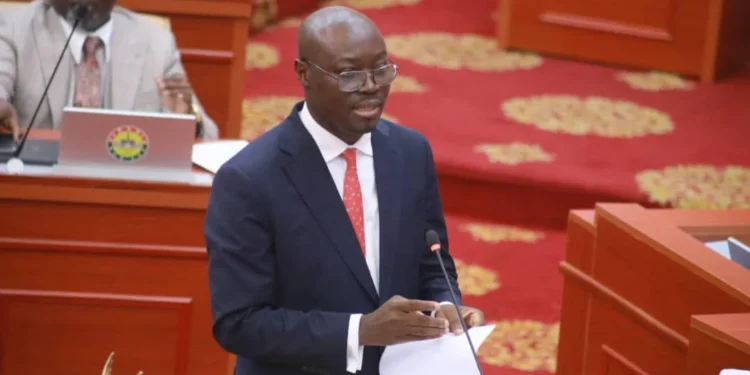
In their analysis of the 2026 Budget as presented by Dr. Cassiel Ato Forson, KPMG remarked that, as promising as the 2026 Budget is, its success will be achieved by effective execution of commitments and strict adherence to the objectives and timelines.
KPMG cautioned that investors and international companies often observe Ghana’s global ratings to make their investment decisions in the country. The firm, therefore, urged the government to continue its fiscal discipline and advance structural reforms to further the country’s growth in 2026.
“Execution will define success in 2026. The global outlook rewards predictability. Preserving fiscal discipline, strengthening institutions, and advancing structural reforms are essential to keep financing costs low and sustain investor confidence.”
KPMG
Backdrop of Ghana’s Stability
Though the strands of 2025 present some level of optimism in the Ghanaian economy, KPMG believes that it should be ‘cautious optimism.’ The global economy remains resilient amid slight growth declines, with a gradual decline in inflation, as the IMF projects 3.2% growth by the end of 2025, and 3.1% in 2026.
Trade tensions among countries, tighter financial conditions as aid and assistance to developing countries cease, and geopolitical uncertainty from shaky international relations risk the global economy.
Commodity prices are projected to decline slightly in 2026. Energy and agricultural prices are also expected to ease in 2026, while gold is estimated to remain steady in 2026. Cocoa prices, which went up this year, are estimated to be steady going into 2026.


The Sub-region is estimated to grow at 4.1% on average by the end of the year and 4.4% in 2026, as countries strive to reform, mobilize, and utilize domestic capital.
Defining Ghana’s economy in this context, KPMG declared that “Ghana has moved from stabilization to a reset.” According to KPMG, the 2026 Budget revealed a clear path “to consolidate macroeconomic stability, accelerate job creation, and protect social progress.” A single-digit inflation, a strengthened cedi on improved external buffers, and a public debt of about 45% of GDP by end-October reflect prudent fiscal management and discipline.
The 2026 Budget Opportunities for Ghanaians
According to KPMG, the 2026 Budget reflects credibility and continuity of the progress made in 2025. With the 2026 Budget representing a combined input of the government’s policy framework and the IMF program, it is set to translate the economy from recovery into renewal, the firm stated. The firm encourages the government to maintain and improve on the achieved policy targets.
“The commitment to fiscal sustainability is not to be negotiated, reinforced by an ambitious target of a 1.5% primary surplus of GDP for 2026 and legislative amendments to the Fiscal Responsibility Act. These measures indicate to domestic and international partners that Ghana has transitioned from crisis management to sustainable fiscal prudence, creating a reliable platform for investment and long-term growth.”
KPMG
The firm expressed its confidence in the ability of the 2026 Budget to improve productivity and create jobs. The objectives and framework for transformation, as revealed in the 2026 Budget, are in line with the continent’s strategy to ‘use-own resources’ to finance transformation.
“The Budget emphasizes program that convert stability into livelihood improvement. Investments in agriculture and agribusiness, energy reliability, infrastructure, and the 24-Hour Economy aim to unlock capacity and drive export-oriented growth.”
KPMG
The Budget has the potential to attract more investors and businesses in the 2026 financial year while increasing real growth and private consumption. Credibility, continuity, job creation, and productivity surge, if successfully consolidated, will stimulate growth and economic transformation.
Private capital mobilization, as assured by the government, will free the fiscal space for the private sector to champion the real growth of the economy, KPMG declared. The firm explained that to attract the private sector through investment into the infrastructure projects and initiatives, the government must create an enabling environment and maintain current economic resilience.
“The government is earmarking GH¢30.0 billion for strategic infrastructure development in power, roads, and digital connectivity under the ‘Big Push Program’ to accelerate productivity across all sectors. Ghana’s infrastructure ambitions will require blended finance and strong governance to attract investment.”
KPMG
The firm also outlined the significance of the government’s social protection initiatives. The women, children, and persons with disabilities (PWD) need to be cushioned. The initiatives are comforting and their translation into opportunities to benefit Ghanaians especially the rural communities.
“The government’s commitment to gender equality and economic empowerment is reinforced by an additional allocation of GH¢401 million to the Women’s Development Bank to finance women-led Micro, Small, and Medium Enterprises (MSMEs). Additionally, the budget advances specialized healthcare financing through MahamaCares, which seeks to guarantee sustainable funding for Non-Communicable Diseases (NCDs) and accelerate the construction of new regional and district hospitals.”
KPMG
According to KPMG, the policies in the 2026 Budget should be fulfilled to boost growth and improve the lives of all Ghanaians.
READ ALSO: Ghana’s Economy on a Fast Track to Historic Expansion in 2025