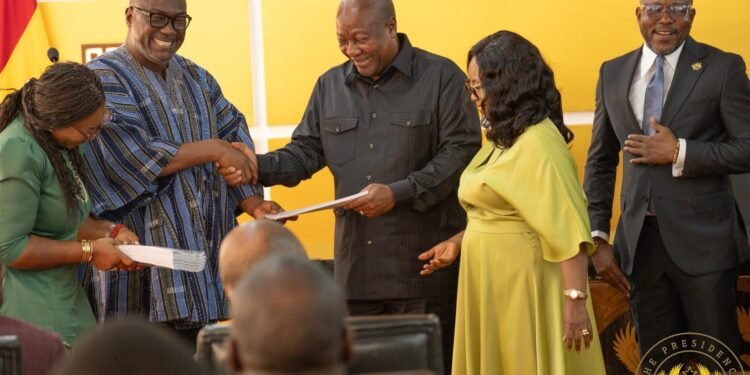

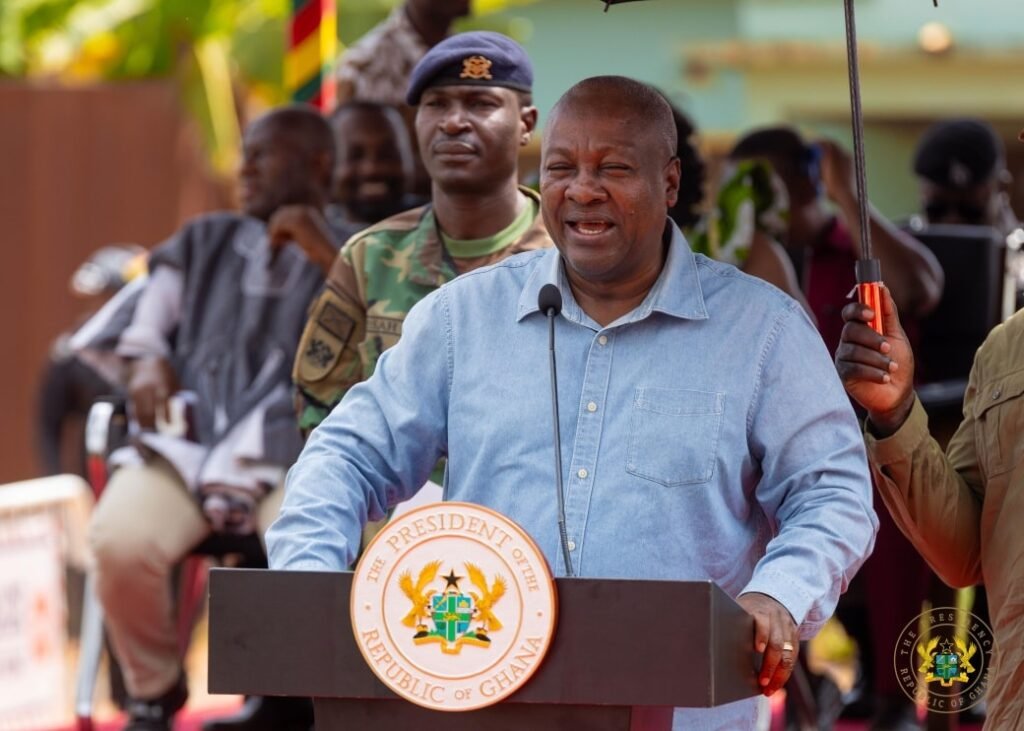
President John Dramani Mahama has launched the Vegetable Development Project at Kukuom in the Ahafo Region, describing it as a decisive intervention that will reposition Ghana as a net producer of tomatoes, onions, peppers, and other essential vegetables.
The initiative, a central pillar of the government’s Feed Ghana Programme, aims to modernise the vegetable subsector through technology, sustainable irrigation, and expanded market access while generating dignified jobs for thousands of Ghanaians, particularly young people and women.
Addressing a gathering of farmers, traditional leaders, government officials, and residents, President Mahama said the project marks the beginning of “a new chapter in our national agricultural renaissance.”
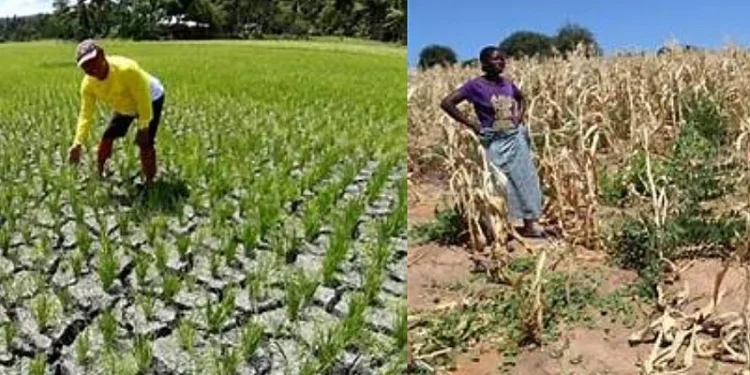
He emphasised that vegetables remain indispensable to households across the country, yet Ghana continues to rely heavily on imports due to inadequate domestic production, especially during the dry season.
“For many years, our inability to produce adequate volumes of these products has forced us to rely heavily on imports. These imports expose our economy to price fluctuations, foreign exchange losses, and unstable supply chains.”
President John Dramani Mahama
According to the President, the Vegetable Development Project is designed to correct this long-standing structural weakness. It seeks to create a competitive and sustainable vegetable industry built on improved seed varieties, climate-smart agronomy, stronger value chain systems, and reliable irrigation.
“So through this project, we aim to build a competitive and sustainable vegetable industry, anchored firmly on our own domestic production; to expand large-scale and small production of tomatoes, onions, and peppers using improved seed varieties and more than agronomic practices;
“To strengthen the entire value chain from input supply and production to aggregation, storage, processing, and marketing. to create dignified, predictable jobs, especially for young people, women, and adolescents with disabilities, to provide irrigation infrastructure required for all year-round production”.
President John Dramani Mahama
One of the major components of the project is irrigation expansion, which President Mahama described as “the backbone” of the entire initiative. He stressed that Ghana cannot achieve food security or reduce its reliance on imports without ensuring year-round production. “At the heart of this plan is a simple and undeniable truth: without water, vegetable production cannot thrive,” he said.


Solar-Powered Irrigation Systems
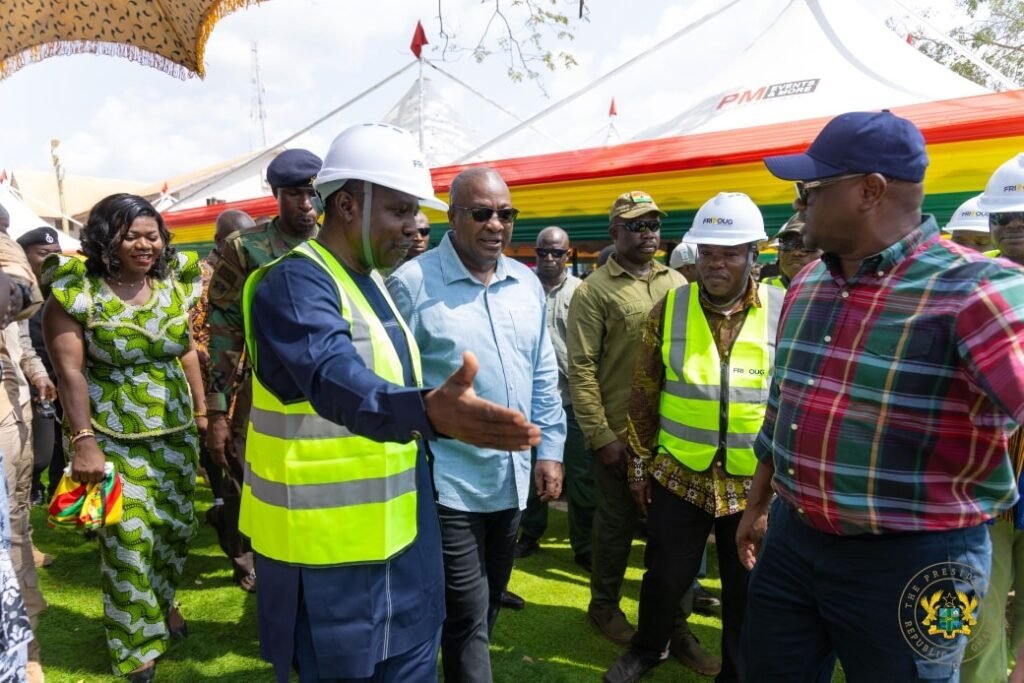
To address this, the project will deliver solar-powered irrigation systems covering 60 hectares of land across six communities: Kukuom, Nobeko, Dentano, Sankore, Sibrim, and Kwapong. These systems will provide a reliable year-round water supply while lowering energy costs and reducing carbon emissions.
Farmers in these communities have already begun receiving improved seed varieties, organic fertilisers, economic training, and digital advisory support to enhance their productivity.
President Mahama also announced that FarmMate, a committed off-taker, has been engaged to ensure that farmers have predictable and guaranteed markets for their produce.
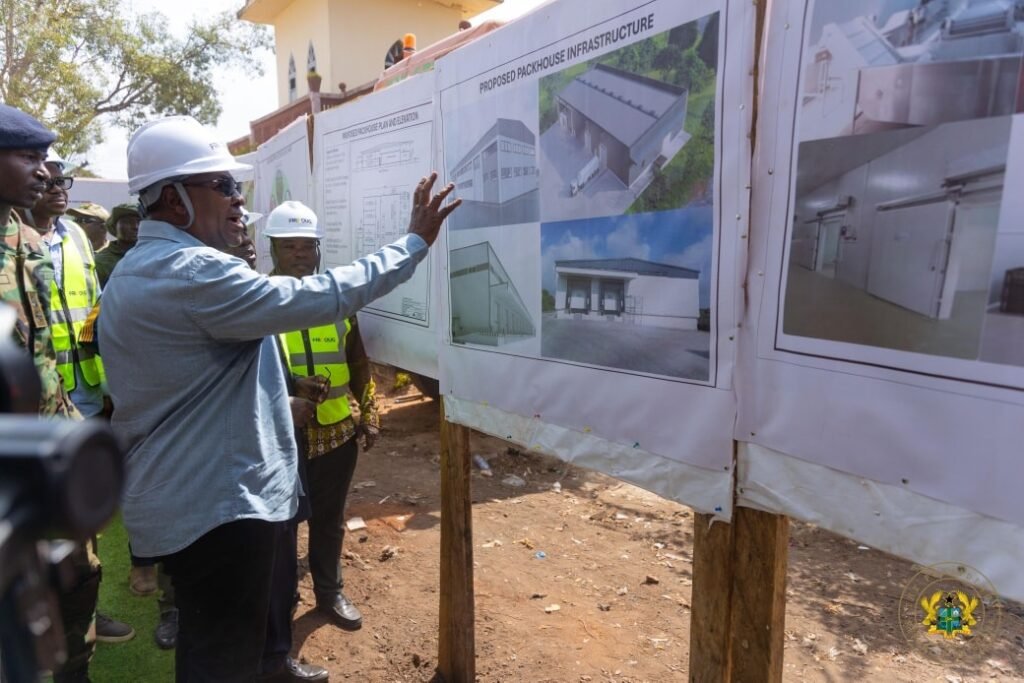
To further strengthen value chain activities, the project will include the construction of a modern packhouse to support grading, sorting, packaging, and cold chain management. The entire project is expected to be completed within 12 months.
He emphasised that the initiative is especially critical in northern Ghana, where water scarcity has long restricted dry-season vegetable production. By expanding irrigation access and developing robust market systems, the project aims to stabilise supply, reduce post-harvest losses, and enhance household incomes.
Agricultural Transformation Agenda
The President made it clear that the Vegetable Development Project is not a standalone effort but a key component of the broader Feed Ghana 2025–2028 Agricultural Transformation Agenda.
This national plan focuses on scaling up the production of rice, maize, soyabean, cassava, vegetables, poultry, and cashew, while modernising irrigation, strengthening cooperatives, and expanding the processing capacity needed to reduce losses across the value chain.
“We are laying the foundation for a 24-hour agricultural economy,” he said, describing a future where technology-enabled farming, reliable markets, and continuous production cycles drive food security and agro-industrial growth.
He added that the vegetable subsector remains one of the most lucrative areas of agriculture, given its labour intensity, short cropping cycles, and high potential for value addition.
President Mahama highlighted several strategic components of the government’s approach, including smart irrigation technologies, guaranteed market arrangements, cold-chain systems, and targeted support for women-led agribusinesses and youth entrepreneurs. “We strengthen the vegetable value chain, we strengthen household nutrition, we create jobs, we reduce imports, and we increase farmers’ incomes,” he said.
The Ahafo Region, he noted, was chosen for the launch due to its growing reputation as a centre for agricultural innovation and commercial-scale production. He praised the region’s commitment to sustainable farming practices and its rising contribution to national food supply.
The new solar-powered irrigation facilities in Kukuom, he said, would enhance rice and vegetable production while supporting farmers’ cooperatives and enabling producers to supply markets nationwide. President Mahama expressed deep appreciation to farmers across the country, whom he called “the backbone of our national development.”
He also commended the Minister for Food and Agriculture, Hon. Eric Opoku, for his leadership in driving the agricultural transformation agenda, as well as development partners and private sector stakeholders working with the government to build a modern agricultural economy.
He further reaffirmed his administration’s commitment to expanding rural infrastructure, strengthening storage and market systems, and pursuing an inclusive agricultural agenda that leaves no community behind. “We will feed Ghana, we will grow Ghana, and we will transform Ghana,” he declared, calling on all stakeholders to work with unity, discipline, and purpose.
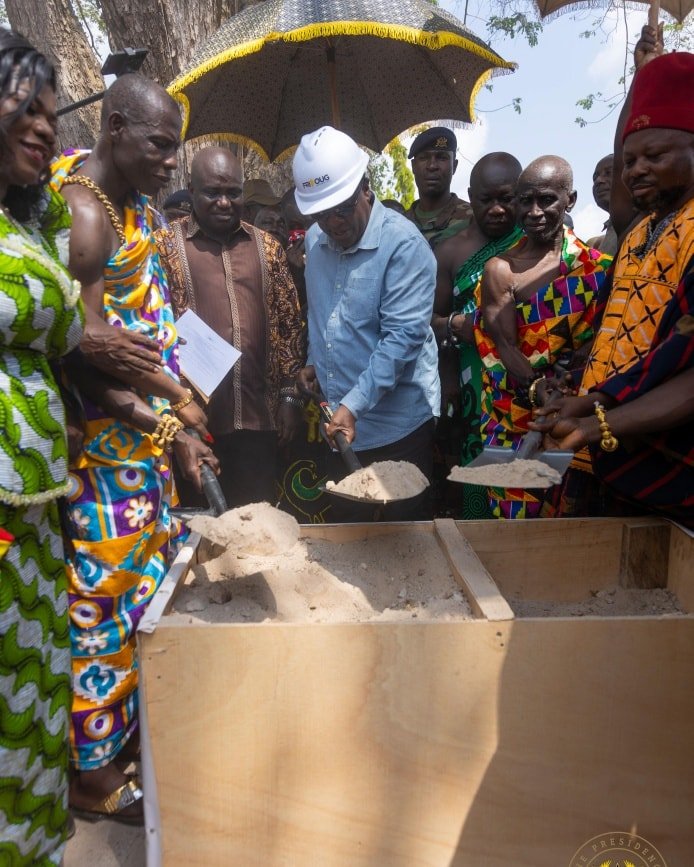
With those assurances, the President formally declared the Vegetable Development Project—named Yeridua—launched. The ceremony, held at Kukoum, marks one of the most significant steps yet under the Feed Ghana programme and signals the administration’s determination to turn the vegetable subsector into a powerhouse for national food security, job creation, and rural economic development.
READ ALSO: Government Must Partner Africa World Airlines for National Carrier Revival – CDD Fellow