The evolving conversation around Zipline’s role in Ghana’s health delivery system has intensified following a detailed analysis by IMANI Africa’s Vice President, Bright Simons, who placed the company’s struggles within the broader context of the Trump administration’s re-engineered global aid philosophy.
His commentary arrives at a time when President John Dramani Mahama’s government is reassessing the value and efficiency of external partnerships in critical sectors.
Simons outlined that the Trump administration did not simply dismantle development aid but reshaped it into a new ideological structure that prioritises strategic American interests while compelling recipient countries to demonstrate genuine commitment.
In his view, the new framework narrows U.S. support to essential sectors, particularly public health, and demands that beneficiary governments share the financial burden. His commentary stressed that the new approach insists on clear value for money, measurable local commitment, and a predefined transition toward full domestic responsibility for sustaining health interventions.
“The story of what the Trump administration has done to development aid is not, contrary to the public caricature, “he has destroyed everything.” The more accurate assessment is that MAGA (Make America Great Again) wants to build something new in the world of aid according to its ideology”
Bright Simons, Vice President of IMANI Africa
A central point in Bright Simons’ analysis was that Zipline became a test case for this redesigned aid architecture. According to him, the large grant “is actually quite well mapped to the AFGH strategy – where african governments must sign commercial contracts with Zipline that show that they really want this stuff, and then PAY for it.”

This shift, he argued, effectively pushed African governments – including Ghana – to abandon the traditional grant-dependent model and operate in a more transactional environment.


Ghana’s Arrears
According to Simons, Ghana has become the Zipline’s biggest African client since their partnership began in 2018 under the erstwhile NPP government.
Over the years, however, significant arrears have accumulated, worsening with the depreciation of the cedi and resulting in a current inability to settle obligations. He indicated that the unpaid bills, “valued at roughly $22 million in constant 2021 dollars,” forced Zipline to halt half of its operational bases in Ghana.
Simons highlighted the current government’s reassessment of what qualifies as essential medical deliveries – this reassessment has prompted a recalibration of Zipline’s workflows, as he noted.
“Zipline has been forced to downsize in Ghana by shutting down 50% of bases. This was a wise move as the new government in Ghana claims over 95% of items distributed by drones (like condoms and textbooks) are not “essential”
“The govt also says that 85% of clinics receiving deliveries from Zipline weren’t remote. The downsizing is thus one clear step towards aligning Zipline with Ghana’s priorities”
Bright Simons, Vice President of IMANI Africa
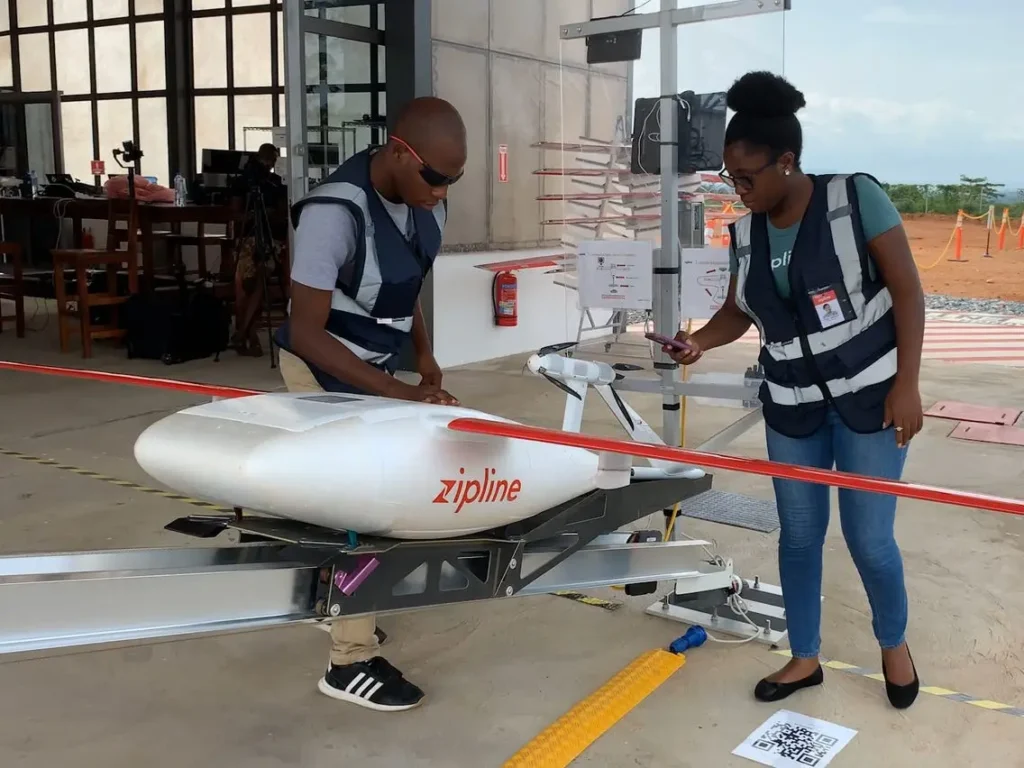
The reduced activity, he suggested, aligns the service more closely with national priorities, even as it exposes the fragility of the financial and policy foundation underpinning drone-supported health logistics.
The High Stakes
Bright Simons added that Trump’s $150 million grant to Zipline was conditioned on the company generating $400 million in contracts from African governments over a three-year period.
This ambitious target demands far greater commitments from African treasuries “than historically allocated to drone-facilitated medical logistics.” He pointed out that such conditionality requires African governments to articulate clear priorities backed by transparent, evidence-based planning – something he argued remains a challenge.
“In my experience observing policy in Africa, the hard part is always getting governments to base priorities on hard facts open to the public,” he added. The absence of rigorous national priority-setting, he warned, risks undermining the efficiency of global aid partnerships and weakening the continent’s bargaining power.
Simons’ commentary further recalled the Trump executive order of early 2025, which froze most U.S. foreign assistance and left Ghana facing a $156 million shortfall across key sectors including health, education, and agriculture.
This development, he argued, underscores the urgency of building resilient domestic systems capable of withstanding shifts in foreign policy. His caution was framed through an observation that connects public accountability to long-term national stability.
“Without ‘critical public audiences’ scrutinising government priority-setting, the result is always KATANOMIC,” he said.
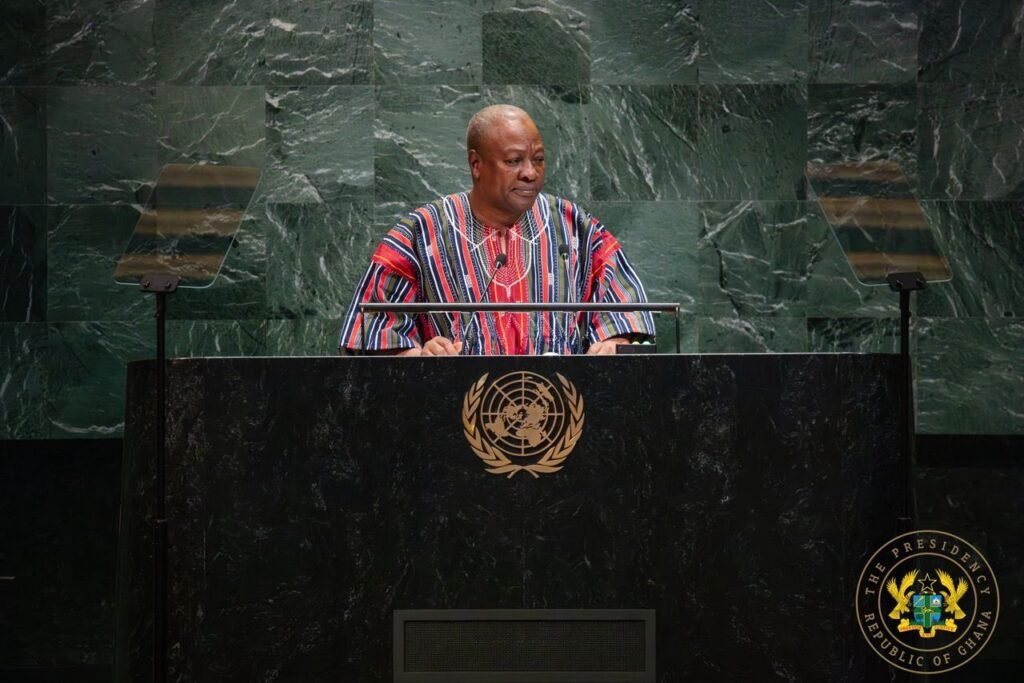
Simons’ analysis therefore suggested that Ghana’s ongoing reassessment of Zipline, and the larger debate on national priorities, should be rooted in transparent public engagement and a reassertion of sovereign decision-making.
As President Mahama’s administration navigates both fiscal constraints and growing public health demands, the Zipline controversy has emerged as a defining test of policy coherence, national identity, and strategic independence.
READ ALSO: Galamsey: UMaT Announces Technology to Clean Polluted Rivers