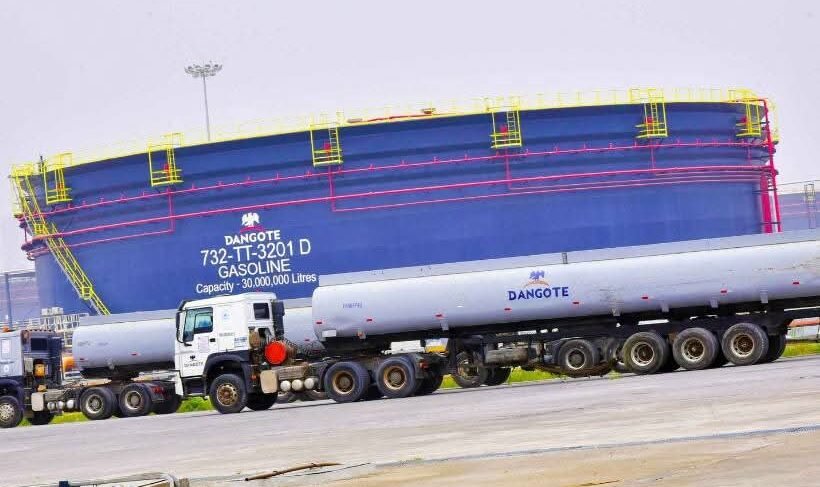
Dangote Petroleum Refinery has announced its readiness to fully meet Nigeria’s domestic petrol demand, pledging to supply an unprecedented 1.5 billion litres of Premium Motor Spirit (PMS) monthly beginning December 2025.
The commitment, equivalent to 50 million litres per day, is set to increase to 1.7 billion litres per month, or about 57 million litres daily from February 2026.
The announcement was communicated in an official letter from Dangote Refinery’s Chief Executive Officer, David Bird, to the Nigerian Midstream and Downstream Petroleum Regulatory Authority (NMDPRA).
The move marks a turning point in Nigeria’s decades-long reliance on imported petrol despite being Africa’s leading crude producer.
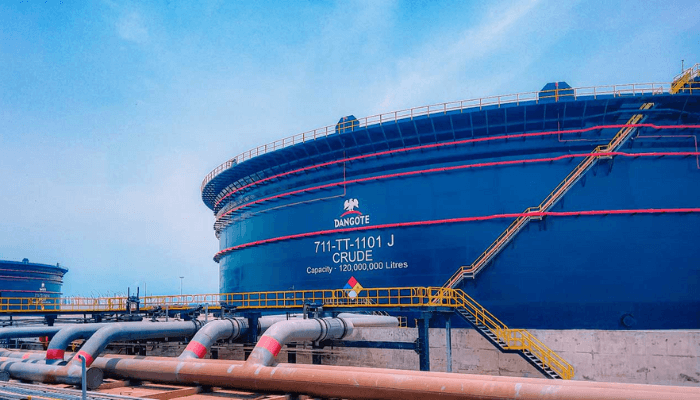
In the letter, Mr. Bird reaffirmed the refinery’s intention to anchor Nigeria’s fuel security and support the federal government’s “Nigeria First” policy, which prioritises domestic supply over imports.


“We are writing to confirm our commitment to supply Nigerian domestic PMS requirements.
“Dangote refinery is ready and able to supply 1.5 billion litres of PMS per month (50 million litres/day) in December and January, followed by 1.7 billion litres per month (57 million litres/day) from February 2026 onwards.”
David Bird, Dangote Refinery’s Chief Executive Officer
He urged the regulator to give its full backing, stressing that the refinery’s output is capable of ensuring national sufficiency.
“We will appreciate your usual consideration and support to secure Nigeria’s domestic fuel security and abundance.
“Please allow the ‘Nigeria First’ policy to work to the benefit of all Nigerians.”
David Bird, Dangote Refinery’s Chief Executive Officer
The pledge comes at a critical moment for the downstream sector, which continues to grapple with supply instability, rising consumption, and dependence on imported products.
Call for Transparency and Regulatory Collaboration

In an unusual step aimed at reinforcing public confidence, Dangote Refinery said it is prepared to open its facilities to NMDPRA officials beginning December 1 to allow real-time verification of production and stock volumes.
“We seek your support to host NMDPRA officials onsite at our refinery from 1st December to validate and publish our daily supply volumes.
“In the spirit of full transparency to the public, we are willing to publish our daily production and stock volumes (online and print media).”
David Bird, Dangote Refinery’s Chief Executive Officer
This level of transparency marks a significant departure from longstanding opacity in the downstream petroleum sector and suggests the refinery is seeking to establish credibility early as it enters the domestic market at scale.
Despite its readiness to take on national PMS supply, the refinery highlighted operational bottlenecks, particularly delays in vessel clearance processes, which it says are affecting efficiency and raising costs.
“We continue to experience delays in vessel clearance, which impacts not only the refinery operations but also our customers, adding unnecessary costs and inefficiencies.”
David Bird, Dangote Refinery’s Chief Executive Officer
The company called on the NMDPRA to ensure seamless importation of crude oil, feedstocks and blending components necessary to maintain uninterrupted operations.
Industry specialists say these challenges, if unresolved, could undermine the refinery’s ability to meet its ambitious supply commitments.
Boost for ‘Nigeria First’ Petroleum Policy
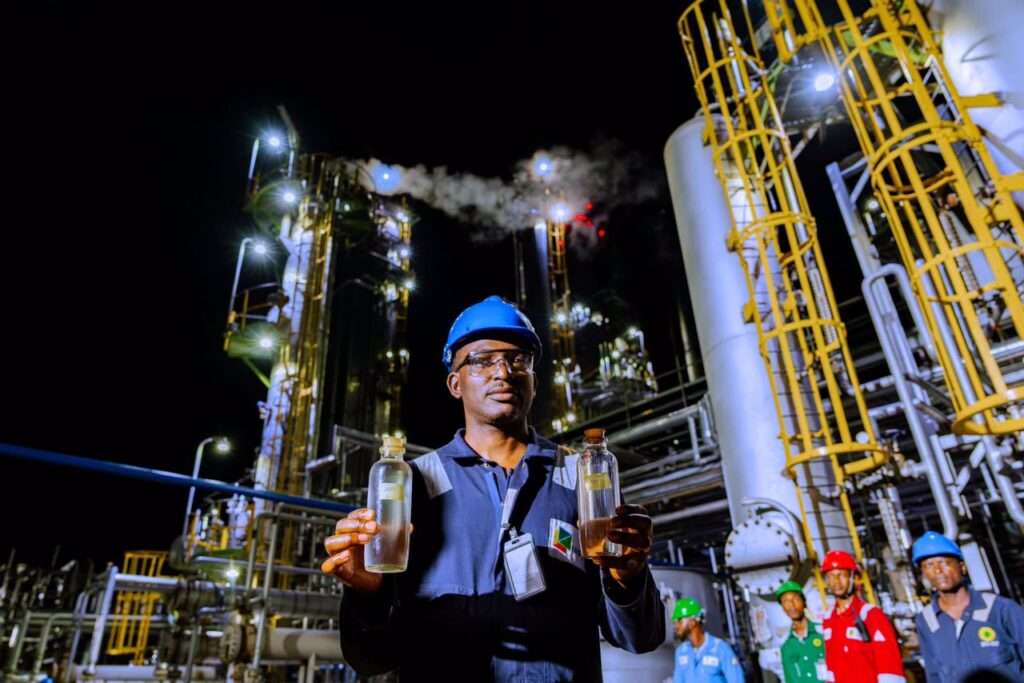
The refinery’s commitment represents a major milestone for the federal government’s broader effort to achieve fuel self-sufficiency and reduce Nigeria’s dependence on imports that have historically drained foreign exchange reserves.
Dangote Refinery, the largest single-train refinery in Africa, is expected to play a central role in the country’s energy transition strategy by replacing imported fuel with locally refined products.
The NMDPRA recently disclosed that Nigeria’s average daily petrol consumption rose to 56.74 million litres in October 2025. Of that amount, 27.6 million litres were supplied through imports, while 17.08 million litres were produced locally.
Government officials have stated that expanding domestic refining capacity is crucial to reducing the fiscal burden of fuel imports.
Analysts say Dangote’s pledge to supply more than the country’s daily consumption places Nigeria on the brink of full domestic sufficiency for the first time in decades.
The refinery’s readiness to shoulder the nation’s PMS needs could transform domestic fuel markets, reduce exposure to global price shocks, and ease pressure on Nigeria’s foreign exchange reserves.
It also aligns with long-standing economic goals to retain value within the country, support jobs, and stabilise energy markets.
While operational and regulatory challenges remain, Dangote Refinery’s announcement represents one of the most significant developments in Nigeria’s energy sector in recent years, a shift that could redefine the country’s petroleum supply framework.
READ ALSO: Women Hold the Key to Ghana’s Rural Banking Transformation- Matilda Asante-Asiedu Declares