
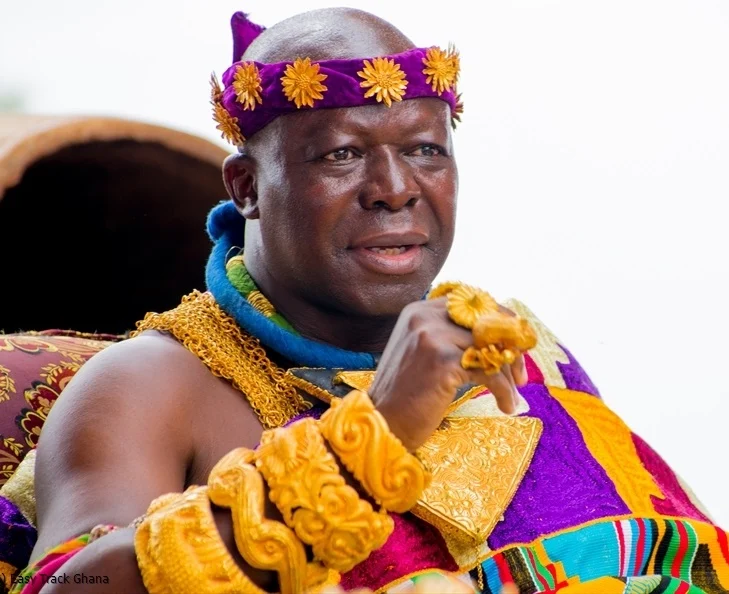
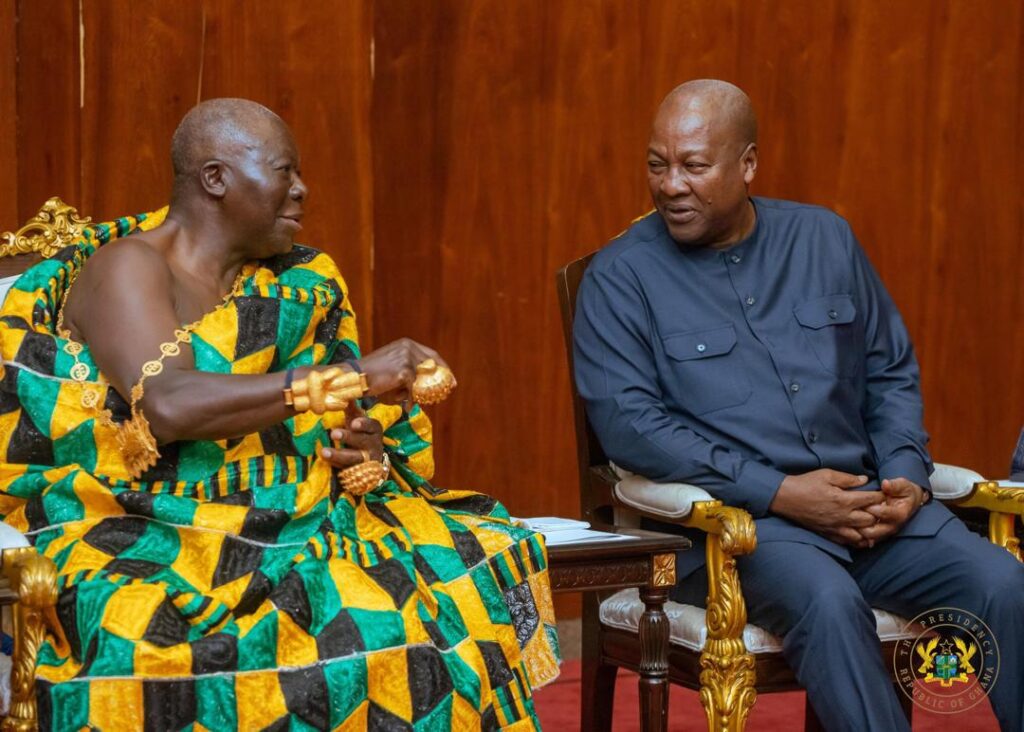
His Majesty Otumfuo Osei Tutu II, Asantehene, has completed the final phase of his months-long mediation process aimed at resolving the protracted Bawku chieftaincy conflict.
The process culminated on Monday, December1, 2025, at the Manhyia Palace Jubilee Hall in Kumasi, where the Asantehene brought the feuding factions together for their first face-to-face engagement under his mediation.
The meeting marked a major milestone in efforts to restore lasting peace in the Bawku traditional area, a region that has endured years of instability, community tensions, and intermittent violence.
For months, the Asantehene had held separate sittings with each faction, listening to their historical claims, grievances, and proposed pathways to peace. Monday’s joint dialogue was therefore positioned as a critical final step before the presentation of a full report to President John Dramani Mahama.
The Naayiri, Naa Bohugu Mahami Abdulai Sheriga, Overlord of Mamprugu, was represented at the meeting by a 30-member delegation led by Chief Tarana John Wuni Grumah, Paramount Chief of the Tarana Traditional Area. Dr. Issah served as spokesperson for the Mamprugu delegation.
On the other side, Naba Tambis Baalug, Paramount Chief of Pusiga, led the delegation representing the Bawku Naaba, Zugraan Asigri Abugrago Azoka II, and the Kusasi people, with former Member of Parliament Hon. Cletus Avoka speaking on their behalf. Both sides included chiefs, lawyers, academics, community opinion leaders, and youth representatives.


“The meeting was held in a cordial atmosphere with both sides emphasising the fact that they are one people who have no reason to be at war with each other”.
Kofi Badu, Chief of Staff, Manhyia Palace
Commitment to Co-existence
Otumfuo Osei Tutu II, who has positioned himself as a neutral arbiter guided by a commitment to national peace and social cohesion, commended both parties for the maturity exhibited throughout the discussions.
He reminded them that the success of any peace process will ultimately depend on their willingness to coexist. “Whatever the outcome of the mediation, they would have to live together as brothers and sisters,” he cautioned, urging traditional leaders and opinion influencers to actively prepare their followers to accept peace and permanently renounce violence.
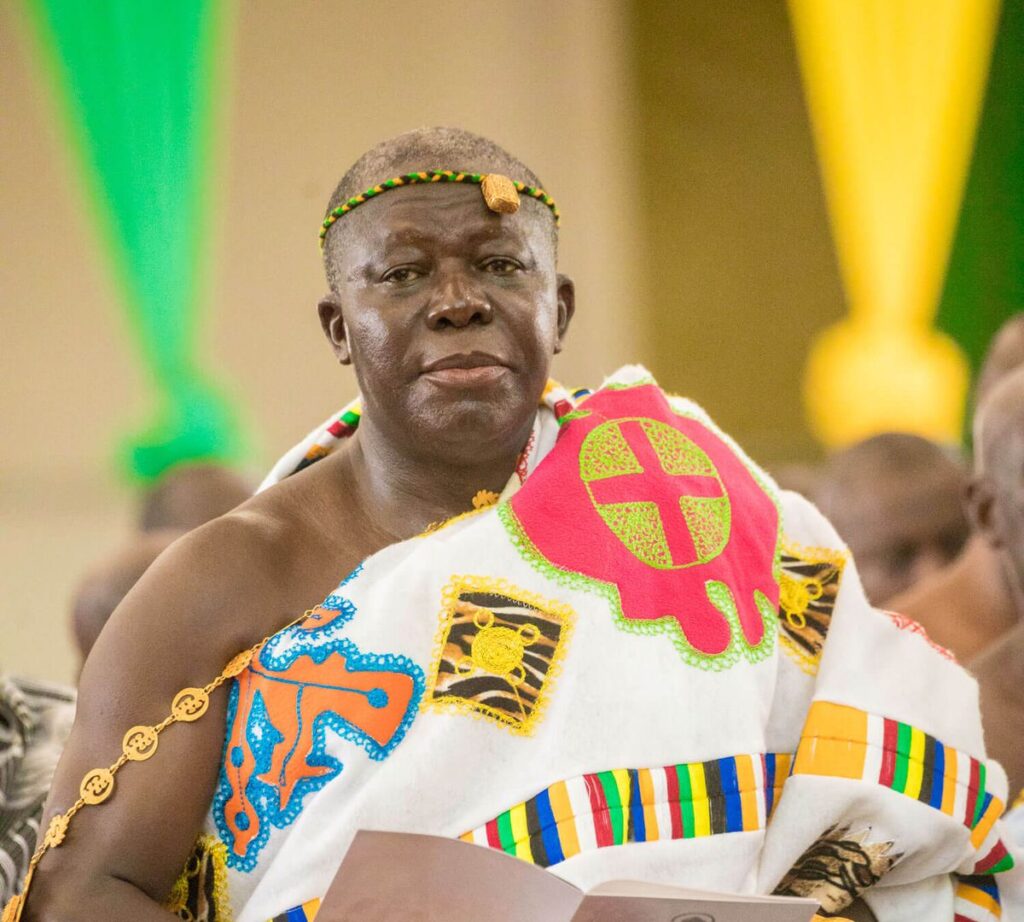
Over months of engagement, the Asantehene has taken a methodical approach, holding extensive private hearings to thoroughly understand the origins of the dispute, the evolution of the tensions, and the various interpretations of custom and tradition that inform the positions of both sides.
Monday’s meeting represented the final leg of this process, aimed not only at hearing the parties but at encouraging direct dialogue between them and setting the stage for a national-level resolution.
In his closing remarks, His Majesty announced that he will, in the coming days, submit a comprehensive report of the mediation process—including his proposals for resolving the dispute—to President John Dramani Mahama.
He expressed confidence that the President would “act expeditiously” and convene a formal meeting with all relevant stakeholders to communicate the outcome of the Asantehene’s intervention.
The Manhyia Palace statement, signed by Chief of Staff Kofi Badu, suggests a sense of urgency and optimism as the mediation enters the final phase. For years, successive governments and various peacebuilding agencies have attempted to address the Bawku conflict, with limited success.
Asantehene’s Significant Intervention
The Asantehene’s involvement has been widely regarded as a significant intervention due to his moral authority, traditional influence, and track record in conflict resolution within and beyond Asanteman.
While the content of Otumfuo’s recommendations remains confidential, expectations are high that the final report will offer a structured path toward de-escalation and sustainable peace.
Bringing both factions face-to-face at this stage underscores the Asantehene’s determination to build consensus, encourage reconciliation, and eliminate misconceptions that often thrive when parties engage separately.
The call to prepare communities for peace is expected to pose its own challenges. The Bawku conflict, driven by layered historical narratives, traditional claims, and community-level fears, has persisted for decades with periodic escalations.
Analysts argue that restoring trust at the grassroots will require deliberate sensitization, active involvement of youth leaders, and a clear demonstration of commitment from all sides once the President announces the final outcome.
For now, the mediation process has entered its final administrative phase, pending national review and action. As Ghana awaits the President’s next steps, the hope emerging from Manhyia Palace is that this round of dialogue—anchored in mutual respect, openness, and a shared desire for stability—will lay the groundwork for a peaceful and lasting resolution in Bawku.
READ ALSO: Lithium Agreement: The More We Sit, The More We Lose – IMRIG Director