President John Dramani Mahama has issued a strong warning that Ghana risks undermining its agricultural future if decisive steps are not taken to reduce the cost of agricultural financing.
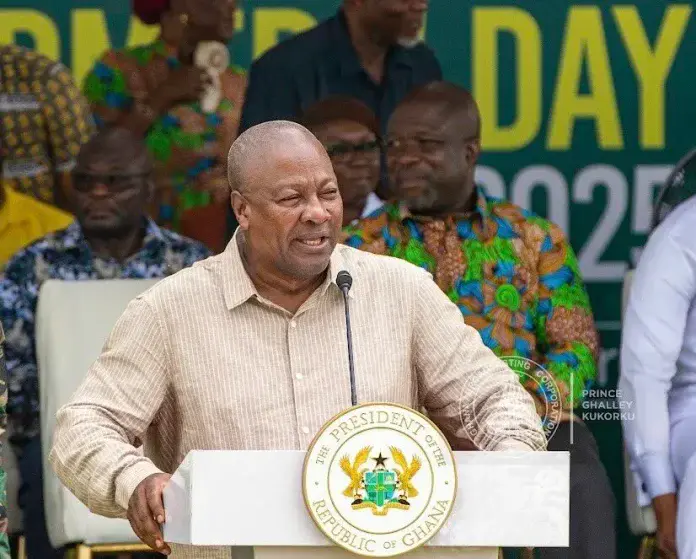
Speaking at the 41st National Farmers’ Day Celebration in Ho on Friday, December 5, he stressed that exorbitant lending rates are weakening the sector and pushing farmers deeper into debt rather than prosperity. His message was clear and urgent: cut interest rates now or jeopardize the foundation of Ghana’s food security.
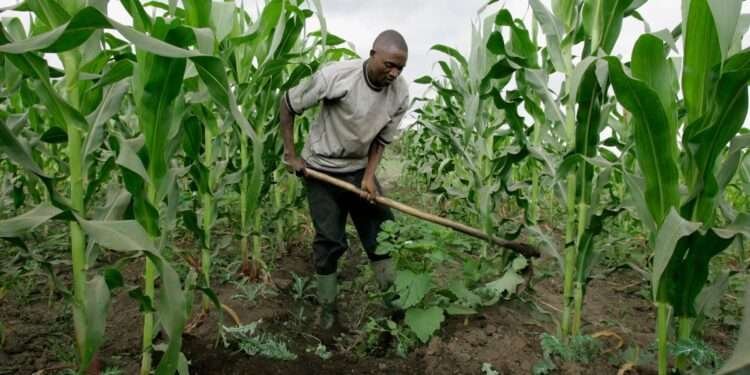
President Mahama did not mince words as he described the daily struggles of farmers who must rely on expensive loans to sustain their operations. According to him, high-interest loans remain one of the most debilitating obstacles confronting the farming community.
Many farmers secure loans with the hope of expanding their fields, buying improved seeds, or investing in modern tools, only to watch their profits disappear into bank repayments.
He drew national attention to the harsh reality by stating that many farmers end up “working for the banks instead of working for themselves.” This stark statement highlights the imbalance between the country’s aspirations for agricultural growth and the financial conditions farmers face.
The President emphasised that the current situation is unsustainable and unjust for farmers who play a pivotal role in feeding the nation.


The Vision for Single-Digit Interest Rates
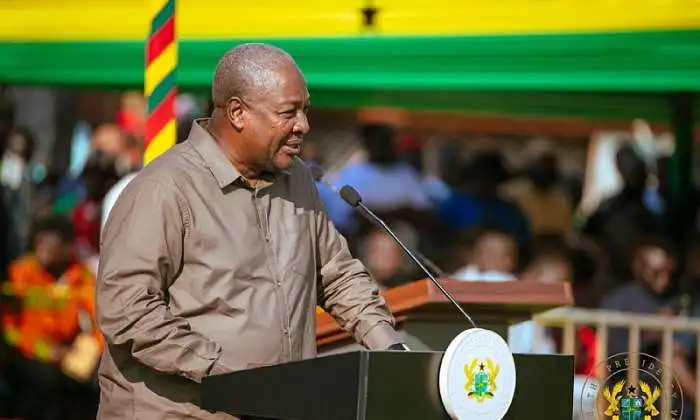
In his address, President Mahama passionately advocated for agricultural loans to be offered at single-digit interest rates. He affirmed that providing affordable credit is essential for transforming Ghana’s agricultural landscape and enabling farmers to scale up production without the fear of debt choking their progress.
“We must provide credit at single-digit rates so our farmers can grow to feed Ghana,” he said, reaffirming his commitment to creating a more supportive financial environment. For thousands of farmers listening, this message signaled hope for a future where the financial burden on farming households can be reduced significantly.
He further stressed that “Farmers should not be taking loans only to end up using all their profits to repay the banks.” This statement reflects a long-standing concern among stakeholders in the sector that credit policies must be restructured to favor productivity instead of perpetuating a cycle of dependency and hardship.
President Mahama explained that a shift toward lower interest rates would unlock greater productivity in the sector. Affordable financing would empower farmers to invest confidently in improved crop varieties, mechanised equipment, and irrigation systems. This, in turn, would boost yields, stabilise food supply, and reduce Ghana’s reliance on imports.
He also noted that strengthening agricultural financing is crucial for enhancing national food security. By giving farmers the capacity to operate efficiently and sustainably, Ghana can ensure that its food systems remain resilient in the face of climate change, market volatility, and population growth.
Encouraging Youth Participation in Agriculture
Another key point in the President’s message was the need to attract young people into agriculture. With the average age of Ghanaian farmers rising, he warned that the sector faces the risk of declining participation unless it becomes financially viable for the youth. High-interest loans, he argued, discourage many potential young farmers from venturing into the sector, as they fear being trapped in debt without guaranteed returns.
By offering single-digit interest rates, he believes the government can make agriculture a more appealing and promising field for the next generation. This shift is essential for long-term sustainability, innovation, and national development.
President Mahama reaffirmed his administration’s commitment to strengthening agricultural policies and removing barriers that hinder farmers’ growth. He highlighted ongoing and planned interventions aimed at reducing production costs, expanding mechanisation, increasing irrigation infrastructure, modernising the agricultural value chain, and enhancing market access for farmers.
These measures, he noted, are integral to building a dynamic and competitive agricultural sector that drives economic growth and ensures a stable livelihood for farmers across the country.
As the Farmers’ Day celebration honoured the dedication and sacrifices of Ghana’s farmers, the nation must do more to protect and empower those who feed the population. His call for single-digit interest rates on agricultural loans stands as a bold proposal that, if implemented, could reshape the sector and secure Ghana’s agricultural future.
READ ALSO:Developing Countries Restructure $90bn in Debt — But Rising Costs Spell Trouble for Ghana