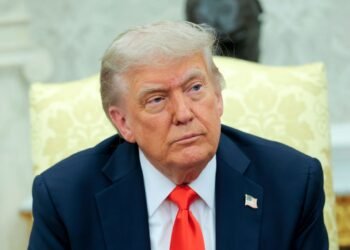
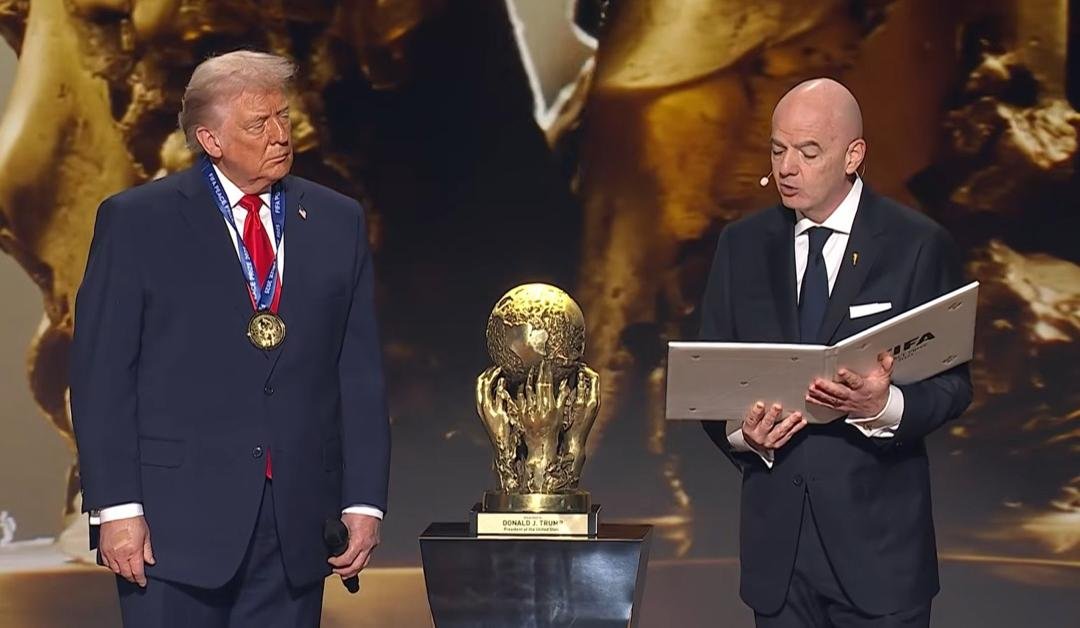
In a historic and highly symbolic moment at the official Final Draw ceremony for the 2026 FIFA World Cup in Washington, D.C., U.S. President Donald J. Trump was announced as the inaugural recipient of the newly established FIFA Peace Prize.
The recognition, unveiled by FIFA President Gianni Infantino, marked a dramatic intersection of global sport and geopolitics, honouring what FIFA described as President Trump’s “exceptional and extraordinary actions to promote peace and unity around the world.”
The ceremony, held on Friday, December 5, 2025, gathered football leaders, government officials, international dignitaries, and global media ahead of what is set to be the largest World Cup in history.
Before drawing the final match placements for the 48-team tournament, Infantino paused the event to present the new honour, emphasising its significance in FIFA’s efforts to position football as a unifying global force.
“Please welcome the very first winner of the FIFA Peace Prize, the 45th and 47th President of the United States of America, Mr. Donald J. Trump,” Infantino declared, before handing over the certificate bearing the 2025 accolade.
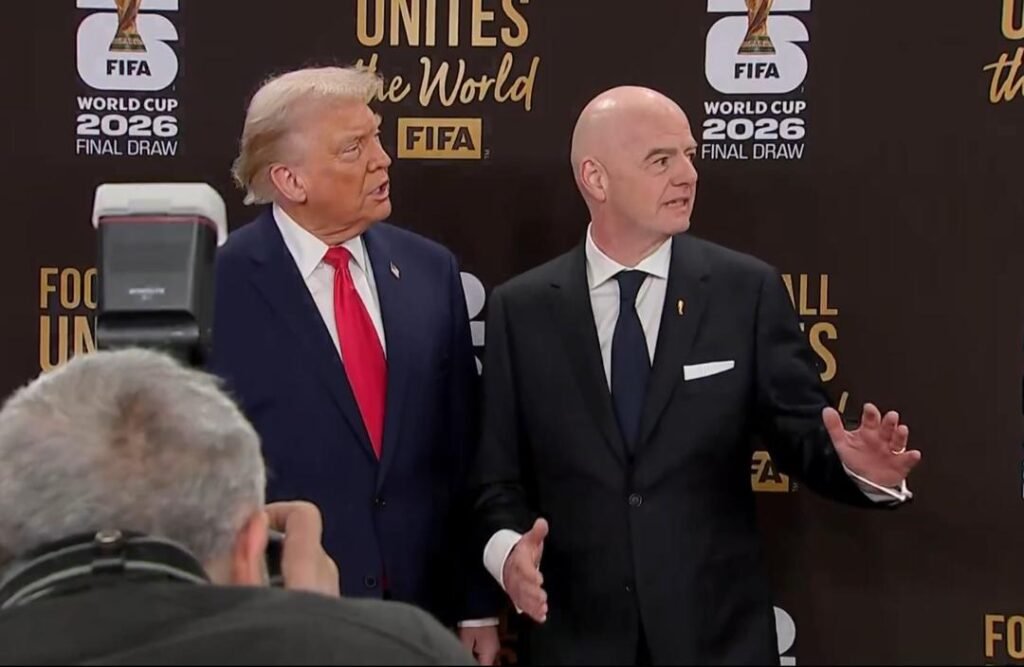
The award, framed under FIFA’s “Football Unites the World” initiative, signals an attempt by the organisation to broaden its influence beyond sport into global diplomacy and peace-building narratives.


“I present the 2025 FIFA Peace Prize… to Donald J. Trump, President of the United States of America, in recognition of his exceptional and extraordinary actions to promote peace and unity around the world. Friday, December 5th, 2025—this is the certificate; it’s yours.”
FIFA President Gianni Infantino
The announcement drew a mix of applause and audible surprise within the auditorium, reflecting both the global stature of the moment and the polarising nature of Trump’s international leadership record.
Stepping up to receive the award, President Trump delivered a brief but characteristic acceptance speech, calling the honour “truly one of the great honours of my life.” He framed the recognition in terms of his administration’s role in preventing conflict and fostering stability.
“And beyond awards,” he added, “Gianni and I were discussing this—we saved millions and millions of lives.” Though he did not elaborate on the specifics of these claimed peace achievements, the remark underscored Trump’s longstanding portrayal of his foreign policy decisions as pivotal to global security.
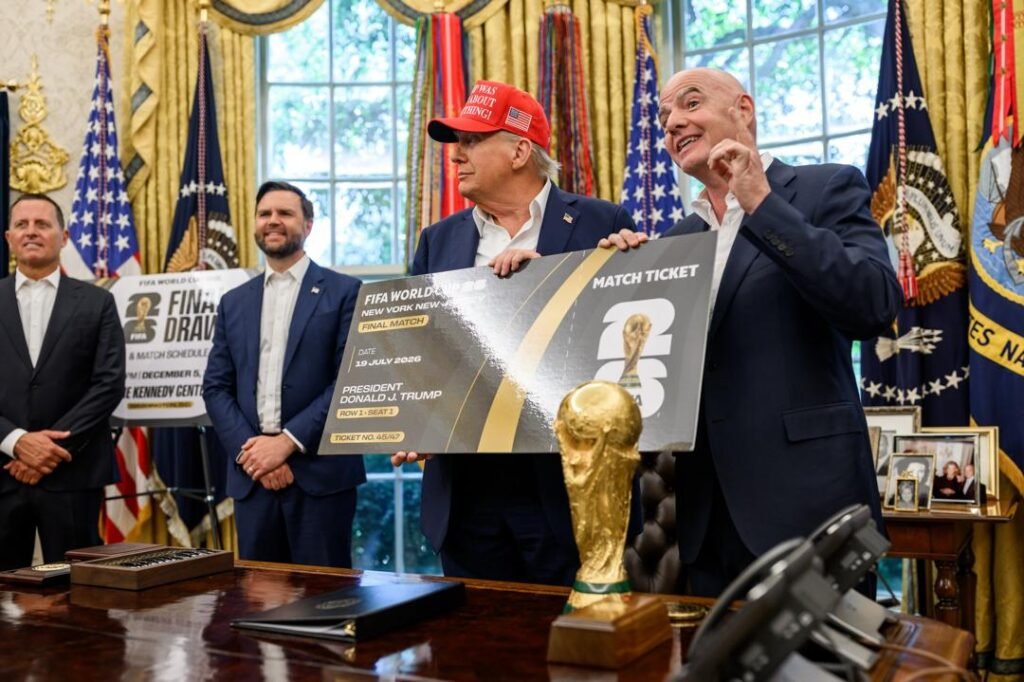
The World Cup context added another layer of significance to the award. The 2026 FIFA World Cup — the first to be hosted by three countries and the first to feature an expanded 48-team format — will take place across the United States, Mexico, and Canada from June 11 to July 19, 2026.
With 16 host cities and a new tournament structure that includes 12 groups of four teams each, the event is being marketed as a celebration of North American cooperation and global unity through sport.
FIFA’s decision to situate the peace prize announcement within this ceremonial milestone signals an intention to amplify the world’s focus on both global harmony and sporting excellence.
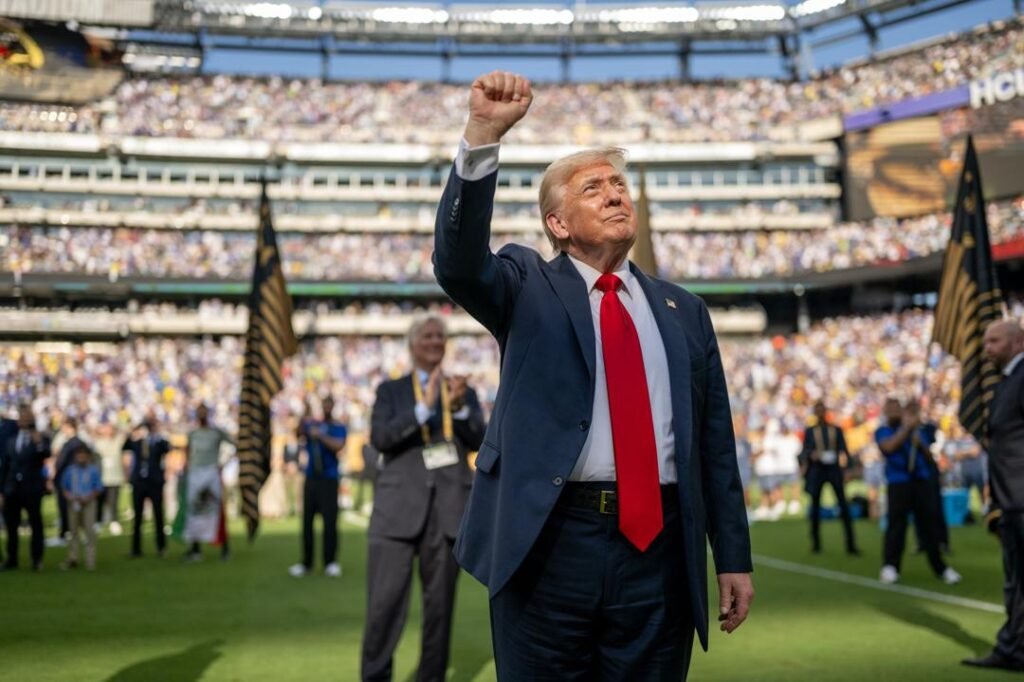
For the White House, the award comes at a time when the administration is actively shaping U.S. engagement ahead of the tournament, which will be the country’s first World Cup hosting role since 1994.
The Trump administration has repeatedly highlighted the World Cup as an opportunity to showcase American leadership, hospitality, and influence on the world stage. Receiving a global peace award tied directly to the event reinforces that narrative, connecting Trump’s foreign policy image with the international football community’s vision of unity.
FIFA’s introduction of the Peace Prize also raises broader questions about the organisation’s evolving role. In recent years, the governing body has invested extensively in campaigns promoting global solidarity, anti-discrimination efforts, and social impact initiatives.
By selecting a political figure—particularly one as globally influential and divisive as Trump—as its first recipient, FIFA appears to be signalling both an ambition to shape international discourse and a willingness to court controversy in the process.
Public reactions to the award are expected to be mixed, with supporters heralding the recognition as a reaffirmation of Trump’s global impact and critics questioning both the criteria and the political implications of FIFA’s choice. Nonetheless, the decision undeniably elevates the profile of the new FIFA Peace Prize, ensuring that the inaugural award commands global attention.
As the world looks ahead to the 2026 tournament, the ceremony in Washington has already set the tone for a World Cup steeped in symbolism and international engagement.
Whether the Peace Prize becomes an annual fixture or remains an occasional honour is yet to be seen, but its debut—bestowed on a sitting U.S. president during a defining moment for global football—reflects the powerful intersection of sport, politics, and global diplomacy.
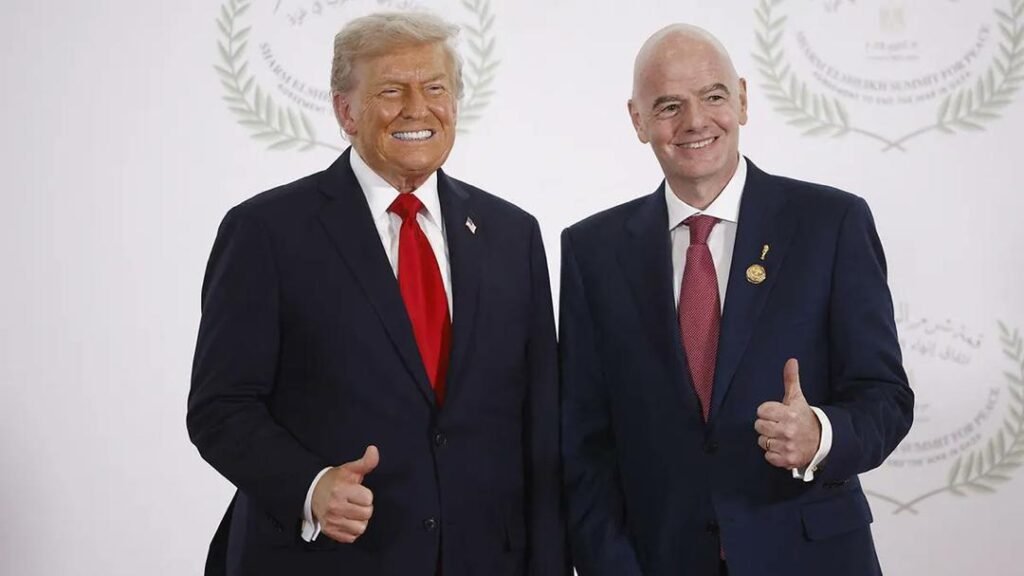
With the expanded tournament format promising more teams, more matches, and unprecedented global participation, FIFA’s hope is that football can indeed “unite the world.” And in presenting its first Peace Prize, the organisation is staking a bold claim on shaping that global narrative—one in which the U.S. President now figures prominently.
READ ALSO: Strengthen OSP, Don’t Repeal It – CDD Fellow Outlines Bold Turnaround Reforms