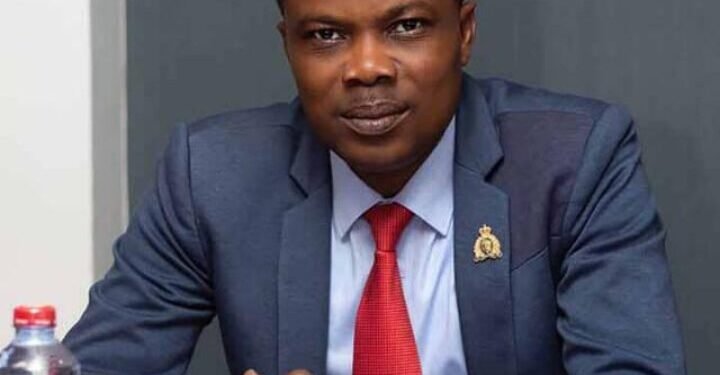
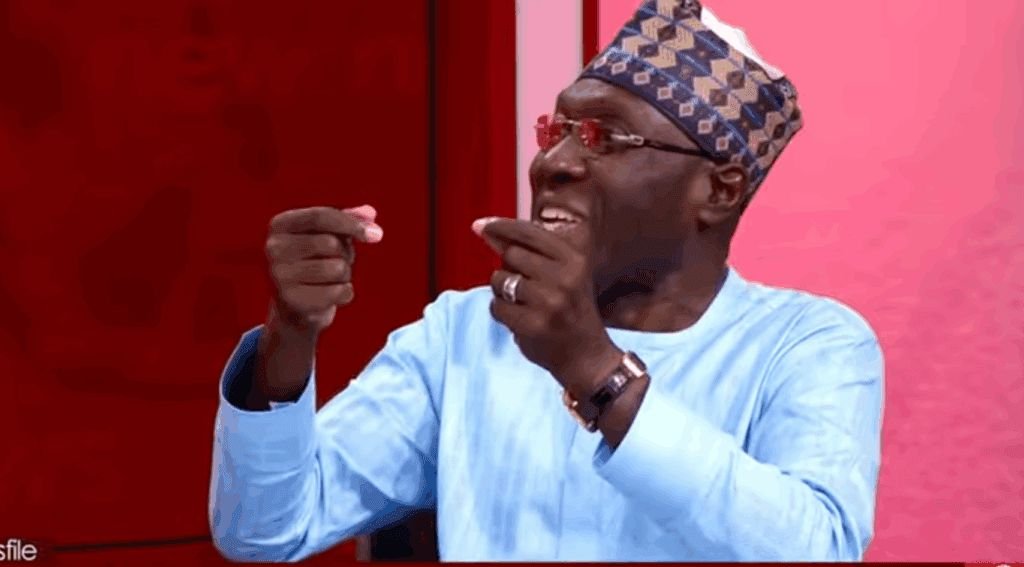
Former Minister for Lands and Natural Resources, Hon. Inusah Fuseinu, has strongly advocated for an immediate overhaul of Ghana’s approach to managing its newly discovered lithium reserves specifically the Ewoyaa project, calling for a fundamental shift away from the legacy of colonial-era resource exploitation contracts.
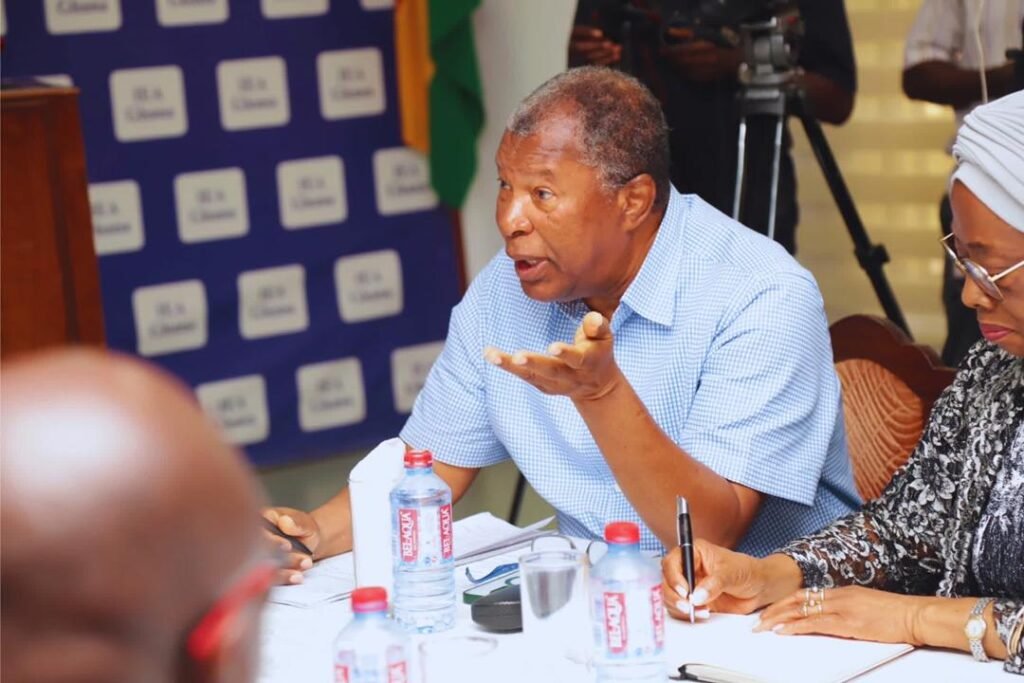
Speaking at the Institute of Economic Affairs (IEA) press briefing in Accra, the former Minister argued that the nation’s repeated tendency to enter into agreements with foreign investors that yield minimal benefit has demonstrated a lack of “experience” in managing its mineral wealth, urging the government to seize the golden opportunity presented by lithium to adopt an indigenous model of ownership.
“If we have been entering into contracts with foreign investors for the exploitation of our natural resources and it doesn’t bring benefit to us and we continue doing that, that doesn’t mean that we are experienced as a country in managing all of Mineral Resources.”
Hon. Inusah Fuseinu
The core of the Minister’s argument rests on the premise that Ghana’s continuous reliance on extractive models, which prioritize the foreign investor’s benefit over the welfare of the citizenry, amounts to a cycle of “refuting mistakes” without truly learning from them.
He pointed to the country’s over century-long history of gold mining dating back to the colonial Gold Coast which, despite the vast reserves exploited, has failed to deliver transformative development for the majority of the population.
This history, characterized by colonial policies that structured the mining sector primarily for the benefit of the British Empire, has left behind a damaging mindset, or “colonial legacies,” that the current administration must decisively move away from, especially with a “new critical mineral” like lithium.
The Ewoyaa project, held by Atlantic Lithium (and its subsidiary Barari DV Ghana Limited) and Piedmont Lithium, has been fraught with controversy, with stakeholders questioning the fiscal terms, including initial royalty rates and the overall state participation structure.


Call for Indigenous Ownership and Value Addition
Hon. Fuseinu’s analysis of Ghana’s historical resource management highlights the urgent need for a new direction rooted in the principle that “the natural resources are inherently the assets belonging to the people and the people must own it.”
The former Minister noted that the discovery of lithium, a critical mineral vital for the global energy transition, presents Ghana with a mandatory “indigenous responsibility” to re-evaluate its resource policy.
This departure from the status quo should involve a complete collapse of the current Ewoyaa agreement, which he asserts is “dented” by questions of legality and individual influence, thereby allowing the government to “open a new chapter.”
The advocacy for new terms is directly influenced by Ghana’s mining history. Since the mid-19th century, when commercial gold mining took shape under colonial rule, Ghana’s resource sector has been largely dominated by foreign entities.
Post-independence attempts to indigenize the sector, such as the establishment of the State Gold Mining Corporation and the acquisition of majority shares in foreign mines in the 1970s, were largely undone by the Structural Adjustment Programmes of the 1980s, which ushered in a renewed era of liberalization under acts like the Minerals and Mining Act of 2006 (Act 703).
While these reforms attracted significant Foreign Direct Investment, transforming Ghana into a major gold producer, critics including Civil Society Organisations (CSOs) and advocates for resource nationalism argue they failed to maximise national revenue, curb illicit financial flows, or adequately protect the environment and host communities.
This historical context provides the main reason for the push for a new, transformative direction in the Ewoyaa Lithium deal, ensuring that a resource critical for the future of energy does not repeat the mistakes of gold and manganese extraction.
The Economic Model of True National Benefit
To secure true national benefit, the former Minister proposes a model that goes beyond the traditional reliance on royalties and taxes.
He argued that under a model where “the people own it,” the state would be guaranteed revenue from multiple streams: standard royalties and taxes paid by the exploiting entity, plus the dividends generated from the state’s substantial equity participation.
This equity ownership, moving past a simple free-carried interest is presented as the key to moving Ghana’s resource wealth from a mere source of extraction rents to a creator of generational wealth.
Hon. Fuseinu emphasized that the failure to secure proper terms reflects the country’s consistent poor contractual policy.
He highlighted the apparent illegality within the original Ewoyaa arrangement where the initial agreement allegedly saw the state taking a 10% stake in the face of a legal regime that may not have fully supported it.
He reiterated his call for the government, and specifically the President, to see the lithium case as an ideal opportunity to apply a “listed agenda” to fundamentally change the way the country deals with its mineral resources, ensuring Ghanaian capacity and skills are built to “exploit our natural process by ourselves not in less values.”
The ultimate goal is to move the country towards a future where resource exploitation delivers wealth and development to the people and the national household, thereby avoiding the “tragedy of the emerging mineral resource boom.”
READ ALSO : Otumfuo to Present Bawku Mediation Report to Mahama on Dec. 16