Chief Executive Officer of the Ghana Chamber of Mines, Ing. Kenneth Ashigbey, has cautioned the government regarding the proposed transition from fixed mineral royalties to a sliding-scale regime.
This policy shift, which seeks to peg royalty rates to the fluctuating global prices of gold and lithium, could see rates climb as high as 12% when gold prices reach certain benchmarks.
According to Ing. Ashigbey, while the industry recognizes the state’s desire to maximize revenue from its natural resources, the current structure of the proposal threatens the long-term competitiveness and sustainability of Ghana’s mining sector.
“Already that amount, in the face of the fact that you also have a CIT of 35% and then you have to have dividends again… it would then not make us competitive. What we believe as an industry is that engagement needs to happen so that we can carry all of us along and be able to get to that sweet point.”
Ing. Kenneth Ashigbey
The proposed Legislative Instrument (L.I.), which the Ministry of Lands and Natural Resources intends to lay before Parliament, introduces a tiered system where the royalty percentage “slides” upward as commodity prices increase.
For instance, the industry lead noted that at current bullish gold prices, the royalty rate could immediately hit 11%, a significant jump from the traditional 5% fixed rate.
When combined with the existing 35% Corporate Income Tax (CIT) and the 3% Growth and Sustainability Levy (GSL), the average effective tax rate in Ghana would become one of the highest globally.


This fiscal pressure, Ken Ashigbey argues, leaves mining companies with diminishing capital for reinvestment and dividend payments to the state, which already holds a 10% carried interest in all large-scale mines.
Fiscal Competitiveness and the Risk of Capital Flight

The crux of the industry’s concern lies in the “dire” impact such a regime could have during price volatility.
Ken Ashigbey highlighted that the mining sector is capital-intensive and requires a predictable fiscal environment to thrive. By pushing effective royalty rates beyond 10% before even accounting for corporate taxes, Ghana risks becoming a less attractive destination for the high-risk, multi-decade investments that define the industry.
The Chamber argues that “the bullish market we currently have” should not be the sole basis for permanent fiscal changes, as price corrections could leave high-cost mines unviable.
Furthermore, the Chamber pointed out a significant imbalance in the current proposal: the exclusion of the small-scale mining sector. Despite contributing more than 50% of Ghana’s total gold output, the small-scale sector currently operates without a comparable royalty framework.
Ken Ashigbey urged the government to find a way to ensure this sector contributes its fair share, stating that “how we do it in such a way that they would also… be able to contribute” is vital for a truly inclusive and equitable national revenue strategy.
Government Objectives and the Need for Data-Driven Dialogue

From the perspective of the Ministry of Lands and Natural Resources, the sliding-scale proposal is a strategic move to ensure the state captures “windfall profits” during periods of high commodity prices.
The government seeks to address historical gaps where the state received the same 5% royalty regardless of whether gold was trading at $1,200 or $2,700 per ounce. By aligning royalties with market realities, the state aims to secure more revenue to fund critical infrastructure and stabilize the macroeconomy contributions that totaled approximately $17.7 billion from the industry last year.
However, the Chamber of Mines maintains that these objectives can only be achieved sustainably through “effective engagement” rather than unilateral legislative action.
Conscious engagement between the government, Civil Society Organizations (CSOs), and industry players allows for a deep dive into the data to assess the “total government take.”
Such a collaborative approach ensures that the industry can continue to expand and “employ a lot more people” while providing the state with consistent, long-term revenue.
Without this “sweet point” of mutual benefit, the aggressive pursuit of short-term revenue gains could inadvertently stifle the very industry that supports the cedi’s strength and Ghana’s broader economic stability.
Sustaining the Future of Ghana’s Extractive Sector
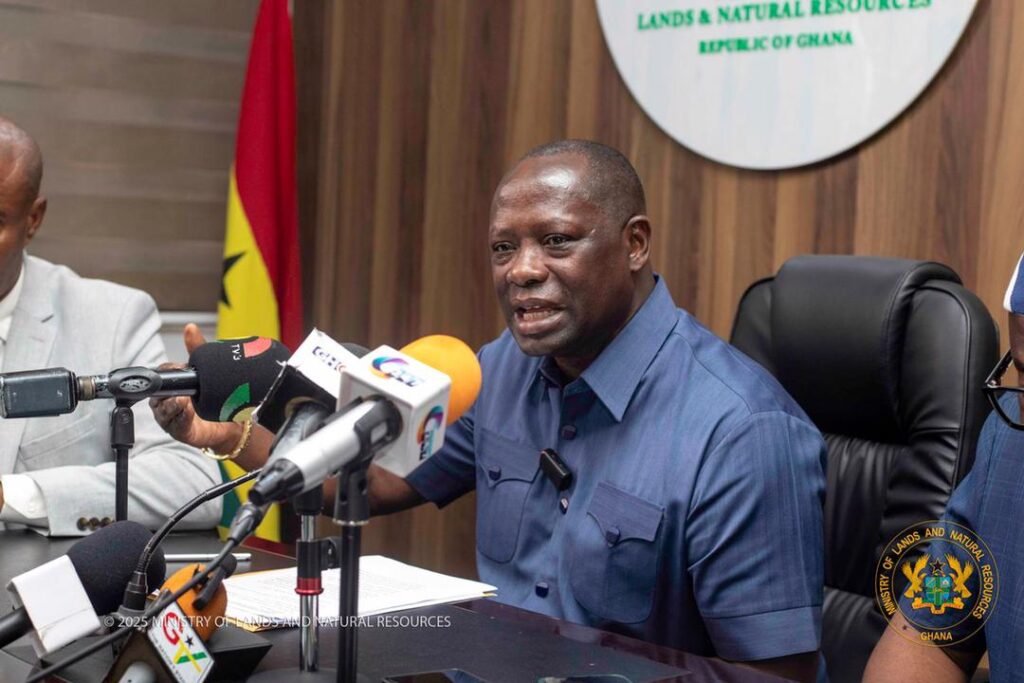
As the government prepares to finalize the L.I. for Parliament, the call for a pause and broader consultation remains the industry’s primary demand.
The objective is to move away from a system that reacts only to high prices and instead build a “sustainable, continuous revenue” model that survives market cycles.
Ing. Ashigbey’s advocacy emphasizes that for Ghana to remain the leading gold producer in Africa, its fiscal policies must balance the state’s immediate needs with the industry’s requirement for a return on investment.
Ultimately, the successful implementation of mineral reforms depends on transparency and stakeholder buy-in.
By bringing regulators and industry leaders to the table, the government can refine the sliding-scale bands to reflect the true cost of production, ensuring that when gold prices eventually dip, the impact is not “very, very dire” for the nation’s economic backbone.
READ ALSO: GAB Defends Banking Sector, Warns Against ‘Systemic Failure’ Narrative