
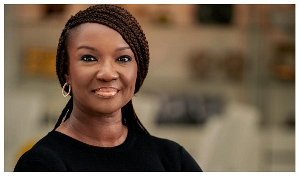
Senior Presidential Advisor and Aide Joyce Bawah Mogtari has praised President John Dramani Mahama and Finance Minister Dr. Cassiel Ato Forson for what she described as firm, disciplined leadership guiding Ghana through one of its most difficult economic periods in recent history.
According to her, the country’s gradual turnaround is rooted in clear direction at the top, difficult but necessary choices, and a renewed sense of responsibility across government.
Ms. Mogtari recalled President Mahama’s inaugural message that Ghana was “open for business,” arguing that the President has backed those words with action despite the severity of the challenges inherited.
She described the past year as exceptionally tough, marked by painful financial decisions and constrained options, but said there remains “enormous hope” within the system, driven largely by public goodwill and confidence in leadership.
She pointed to the scale of President Mahama’s electoral mandate as both a source of legitimacy and a heavy burden. Winning more than 56 percent of the valid votes and securing a supermajority in Parliament, she said, created a sense that the moment demanded decisive and responsible governance.
In her words, it was almost as though circumstances had aligned to place the country in the President’s hands at a time of deep economic distress. Ms. Mogtari said she often wonders how President Mahama has managed to withstand the pressures of the past year, particularly given the depth of Ghana’s indebtedness.


Ghana’s Liabilities
She stressed that the problem goes beyond external debt to include significant domestic liabilities. According to her, repeated audit reports across government agencies reveal large sums owed to contractors and suppliers, alongside procurement decisions that lacked clear justification.
She cited examples of agencies procuring items projected to last 10 to 15 years, questioning whether such goods would even remain usable over time. For her, these practices reflected a broader breakdown in discipline and checks and balances.
“Secondly, there was this irresponsibility in the system, if I can call it that. It was almost as if there were no checks and balances, and everybody was alone to themselves.
“If you made up your mind on Monday morning that this is what you wanted to do at a ministry, you are free to do so,and no one wil hold you responsible.”
Joyce Bawah Mogtari, Senior Advisor and Aide to President John Dramani Mahama
She described a system in which officials appeared free to take major decisions without adequate oversight, creating room for waste and inefficiency. Against that background, Ms. Mogtari said the contrast provided by focused leadership is striking.
She referenced the expansion of the Tema Meridian Port Services, particularly Phase Two of the project initiated during President Mahama’s first term, as an example of what sustained commitment to development can achieve. Visiting the area, she said, was humbling, noting the transformation from what existed previously to what stands today.
According to her, the project’s impact extends beyond infrastructure to employment and long-term industrial planning. She said workers and investors now see opportunities tied to the Tema expansion, the motorway corridor and the regeneration of the wider industrial city.
For the Senior Presidential Advisor, Ms. Mogtari, this illustrates how serious and committed leadership can inspire confidence and participation across sectors.

Zero Tolerance Against Corruption
She argued that the current administration operates under heightened public scrutiny, with little tolerance for missteps. In her assessment, there is a clear awareness among public officials that “the least whiff of scandal” could trigger serious consequences. This, she said, has made many appointees cautious and deliberate, working under pressure but also with a heightened sense of accountability.
Ms. Mogtari emphasized that leadership responsibility ultimately begins and ends with the President. She expressed sympathy for President Mahama over the volume of decisions and documents he must personally oversee, as well as the number of meetings he must now chair to ensure policies remain within what the economy can sustain.
She noted that Ghana’s engagement with the International Monetary Fund, the World Bank and other international partners adds another layer of scrutiny, with constant reviews, questions, and monitoring.
Turning to the Finance Minister, Ms. Mogtari described Dr. Ato Forson as disciplined and firm, even in the face of pressure from colleagues. Drawing on her long familiarity with his career, she said he understands the need for restraint at a time when fiscal discipline is essential.
“Look, I look at Ato Forson, and I think Ato Forson is a contemporary,” Ms Mogtari stated. According to her, Dr. Forson’s insistence on prioritizing key projects and avoiding inflated costs reflects a clear appreciation of the risks posed by overpricing, weak monitoring and corruption.

She referenced road projects undertaken by the previous administration, where payments were reportedly made without corresponding work, noting that in some cases communities themselves failed to demand accountability from contractors. For her, these examples underscore why strict oversight and discipline are non-negotiable.
Ms. Mogtari said the goodwill currently enjoyed by President Mahama brings enormous responsibility, including the obligation to act swiftly against any sign of wrongdoing. She said the President has made it clear that no appointee would be shielded from consequences, a stance she believes keeps officials alert and focused.
She concluded by stressing that ministers carry responsibilities comparable to the President’s, bound by their oaths of office to serve with diligence and integrity.
In her view, ministers must remember that accountability does not end when they leave office, and that they remain answerable to citizens for decisions taken while in power. For Ms. Mogtari, that shared sense of duty is central to restoring confidence in governance and sustaining Ghana’s recovery.
READ ALSO: Major OMCs Begin Festive Season Fuel Price Reductions