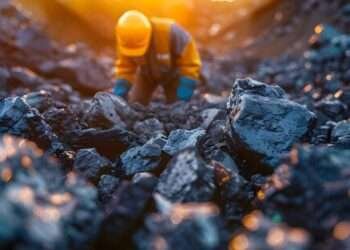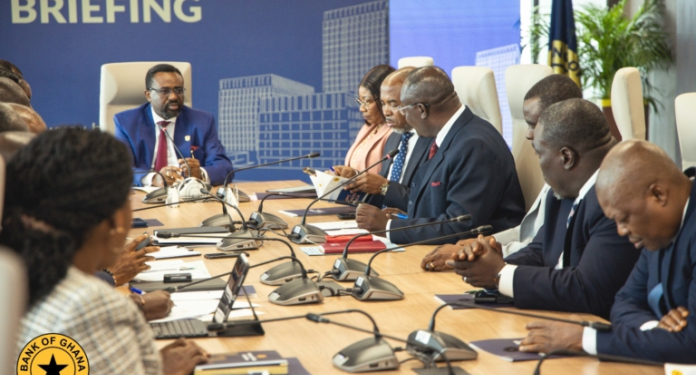
Minority Caucus on the Parliamentary Select Committee on Lands and Natural Resources has launched an attack on the ruling National Democratic Congress (NDC), alleging that the government has sanctioned a state-sponsored expansion of illegal small-scale mining, commonly known as galamsey.
During a press briefing in Accra, the Minority identified the constituencies of high-ranking government officials as the new epicenters of environmental degradation, suggesting that political protection has turned these areas into untouchable hubs for illicit mineral extraction.
Specific accusations were leveled against the Ellembelle and Bole Bamboi constituencies, which the Minority claimed have become the “headquarters of galamsey” under the current administration.
Ranking Member Hon. Kwaku Ampratwum Sarpong pointed out that these areas represented by the Minister for Lands and Natural Resources and the Deputy Minister respectively are witnessing an unprecedented surge in illegal activity that threatens the very fabric of local livelihoods.
This alleged “state failure” comes at a time when the nation’s water bodies are recording dangerous turbidity levels, leaving many communities without potable water.
“Reports from mining-affected communities point specifically to the Ellembelle and Bole Bamboi constituencies as areas where illegal mining activities have become deeply entrenched. These areas are now headquarters of galamsey. Farmers are losing their livelihoods, water bodies are suffering chemical contamination.”
Hon. Kwaku Ampratwum Sarpong
Structural Failures and Enforcement Gaps in the Mining Sector
Despite the establishment of the National Anti-Illegal Mining Operations Squad (NAIMOS), the Minority contends that enforcement remains “weak and selective.”


Hon. Ampratwum Sarpong highlighted a disturbing trend where NAIMOS officers have faced violent attacks from illegal miners, often resulting in the destruction of expensive operational equipment.
He noted that even when arrests are made, the “revolving door” of the justice system allows offenders to return to the pits within days.
This lack of consequence, he argued, stems from the fact that many of these operators are “party affiliates” and “foot soldiers” acting under the protection of “NDC bigwigs” who remain immune to investigation.
The current state of illegal mining in Ghana has reached a critical threshold in late 2025. While the government touts its “Tree for Life” restoration program and the revocation of Legislative Instrument (L.I.) 2462, the reality on the ground is a stark contrast.
Small-scale mining now accounts for over 50% of national gold production, yet only a fraction of these sites are licensed.
This “criminal industry,” as described by industry experts, is fueled by an influx of nearly 3,000 excavators annually, leading to the contamination of 60% of the country’s water bodies.
Critics argue that the government’s focus on auditing large-scale firms is a strategic diversion from the uncontrolled anarchy occurring in the artisanal sector.
The Barari DV Lithium Controversy and Fiscal Accountability
The press conference also pivoted to the contentious Barari DV lithium agreement, which has become a symbol of the Minority’s lack of confidence in the sector’s leadership.
After a massive public outcry and pressure from Civil Society Organizations (CSOs), the government was forced to withdraw the initial agreement which proposed a 5% royalty rate a significant drop from the 10% rate previously discussed.
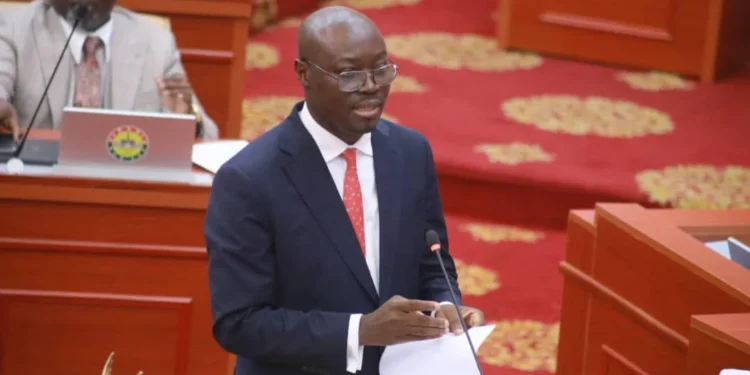
Although the Minister for Lands and Natural Resources, Hon. Emmanuel Armah-Kofi Buah, has recently resubmitted a revised framework, the Minority remains skeptical of the “renegotiated” terms and the transparency of the stakeholder consultations.
The Minority has demanded the immediate resignation of the sector minister, citing a “weakened negotiation position” that has embarrassed the state.

They argue that while the government blames declining world lithium prices for the lower royalty rates, this is a “betrayal of national interest” that favors foreign investors over local economic stability.
With the cedi’s recent volatility and the urgent need for mineral-led recovery, the caucus insists that the handling of “green minerals” must not follow the destructive path of the gold sector.
As Parliament rises for recess, the call for a “non-partisan national vision” on extractives grows louder, leaving the administration in a defensive posture against accusations of “selective enforcement” and “political infiltration” in Ghana’s most vital economic corridor.
READ ALSO: IPC Reports Famine Averted in Gaza After Improved Food Access