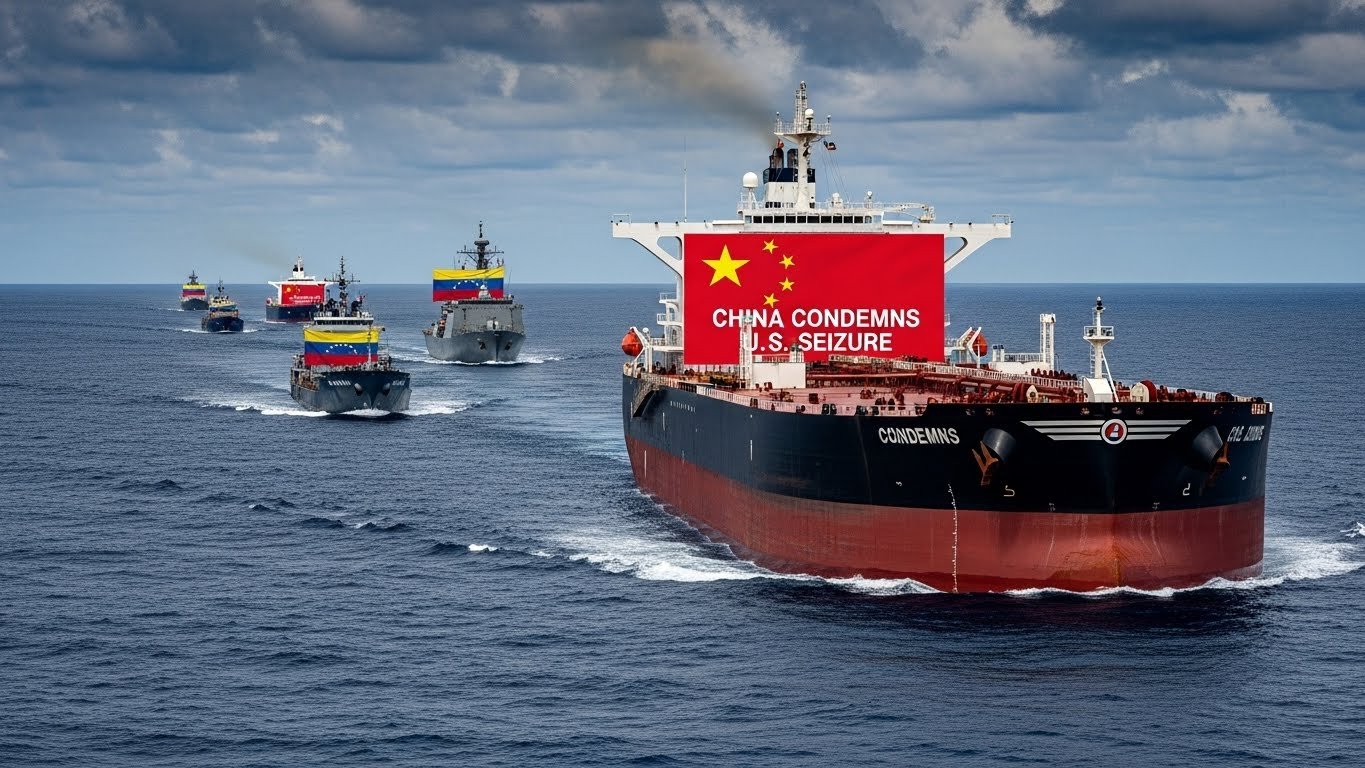
China has sharply criticized the United States over its escalating pressure on Venezuela’s oil exports, following the seizure of oil tankers linked to Caracas.
Beijing described the U.S. actions as a violation of international law and an infringement on Venezuela’s sovereignty, signaling growing geopolitical tension around global energy supply routes.
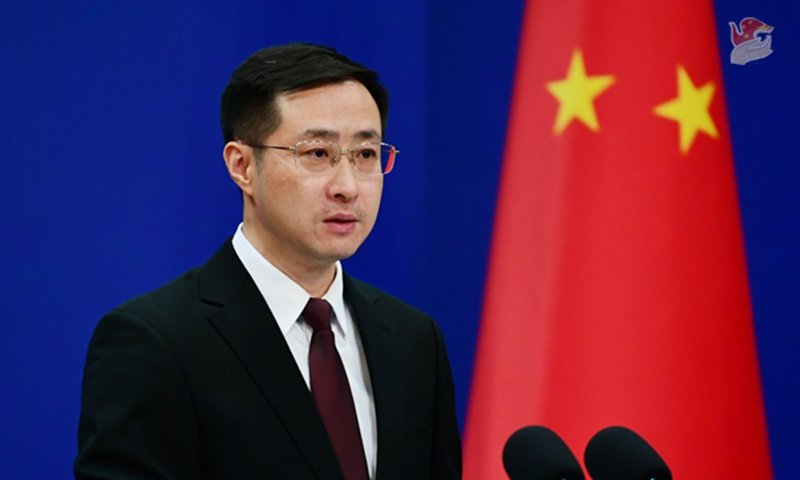
Speaking at a regular press briefing on Monday, Chinese Foreign Ministry spokesman Lin Jian condemned what he called Washington’s unilateral approach to enforcing sanctions against Venezuela’s oil sector.
“The US practice of arbitrarily seizing other countries’ vessels grossly violates international law,” Lin said, adding that China firmly opposes such actions.
China’s criticism comes amid renewed U.S. enforcement efforts targeting vessels accused of helping Venezuela evade international sanctions. According to Lin, Beijing rejects any actions that undermine the sovereignty and security of other nations.


“China opposes any move that infringes upon other countries’ sovereignty and security, and all acts of unilateralism or bullying.”
Chinese Foreign Ministry spokesman Lin Jian
He emphasized that disputes over sanctions and trade should be resolved through dialogue and established international mechanisms rather than coercive measures.
China has long argued that unilateral sanctions imposed outside the framework of the United Nations lack legal legitimacy, a position it has reiterated in previous disputes involving Iran, Russia and other sanctioned states.
U.S. Seizures Intensify Pressure on Caracas

Over the weekend, U.S. authorities seized a second oil tanker offshore Venezuela and began pursuing a third vessel in the Caribbean believed to be linked to the Venezuelan government.
The moves mark a significant escalation in Washington’s efforts to disrupt what it describes as an illegal network of tankers transporting Venezuelan crude.
A U.S. official told ABC News that the Coast Guard is “in active pursuit of a sanctioned dark fleet vessel that is part of Venezuela’s illegal sanctions evasion.”
The official added that the vessel was “flying a false flag and under a judicial seizure order,” underscoring Washington’s determination to enforce sanctions on Venezuela’s oil exports.
The so-called “dark fleet” refers to tankers that operate with limited transparency, often switching off tracking systems or changing flags to avoid detection.
The intensified U.S. pressure on Venezuela’s physical crude supply had immediate repercussions in global oil markets. Oil prices rose by about 1.5 percent early on Monday, reflecting concerns that tighter enforcement could further constrain supplies from one of the world’s largest proven oil reserve holders.
Market analysts note that while Venezuela’s output remains well below historical levels, disruptions to its exports can still influence prices, particularly at a time when geopolitical risks are already elevated across several major producing regions.
China’s Strategic Interest in Venezuelan Crude
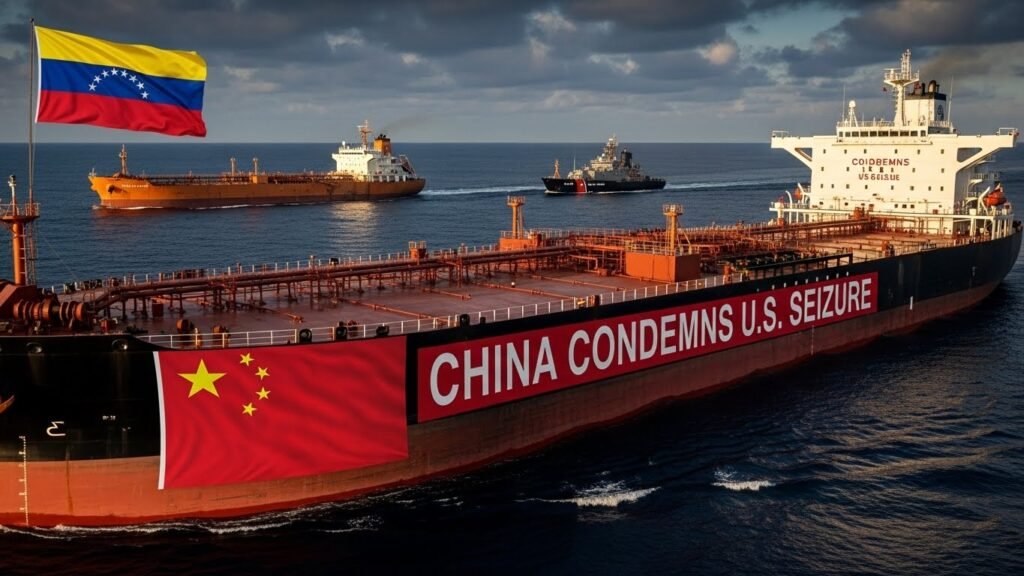
China has emerged as the largest customer for Venezuelan crude, largely through shipments carried by a shadow fleet of tankers. These flows have become a crucial economic lifeline for the government of President Nicolás Maduro, helping to sustain state oil company PDVSA amid sweeping U.S. sanctions.
“Venezuela has the right to independently develop mutually beneficial cooperation with other countries,” Lin said, reiterating Beijing’s position that legitimate trade should not be obstructed by external pressure. He added that China supports Venezuela in “defending its own legitimate rights and interests.”
The Chinese government has consistently framed its energy relationship with Venezuela as lawful and commercially driven, pushing back against U.S. claims that such trade undermines international sanctions regimes.
China’s criticism also highlights what it views as inconsistencies in U.S. sanctions enforcement. While Washington is cracking down on tankers carrying Venezuelan crude to Asia, it continues to allow limited exports to the United States under special licenses.
U.S. energy major Chevron is permitted to operate in Venezuela through joint ventures with PDVSA and export a portion of the crude it produces to the U.S. Gulf Coast.
This arrangement, approved under a specific license, has drawn criticism from Caracas and its allies, who argue it reflects selective enforcement driven by U.S. domestic energy considerations.
Meanwhile, the broader U.S. blockade of Venezuela-linked tankers is increasingly paralyzing crude shipments to China, threatening a key source of revenue for the Maduro administration.
As U.S. enforcement actions continue and oil markets react to supply risks, the standoff over Venezuela’s crude exports is likely to remain a flashpoint in U.S.-China relations.
With global energy demand still strong, the outcome could have implications far beyond the Caribbean, shaping trade flows and diplomatic dynamics in the months ahead.
READ ALSO: Developing Countries Restructure $90bn in Debt — But Rising Costs Spell Trouble for Ghana