Gold Fields Ghana Limited has reinforced its position as a cornerstone of the national economy by remitting over GHC 1.19 billion to the Government of Ghana during the third quarter of 2025.
This substantial financial inflow, sourced from the company’s flagship Tarkwa and Damang mines, underscores a steadfast commitment to bolstering the state’s revenue mobilization and broader economic development goals.
The remittance is a direct result of consistent capital investment and optimized production cycles at both mining sites, which continue to drive the company’s fiscal performance despite the inherent volatilities of the global commodities market.
“These remittances reflect our continued contribution to national revenue mobilisation and economic development. Sustained investment and ongoing production at both our Tarkwa and Damang sites remain the bedrock of this success.”
Gold Fields Ghana Limited
Breaking down the fiscal components, the company’s corporate tax contributions for the period reached GHC 656.9 million, with the Tarkwa operation providing the lion’s share of GHC 619.9 million.
Royalties followed closely at GHC 291.1 million, while the government’s 10% free-carried interest yielded dividends of GHC 90.1 million.
Beyond these primary pillars, Gold Fields fulfilled GHC 161.5 million in other statutory obligations, including withholding tax, VAT, and Pay-As-You-Earn (PAYE) contributions.


These figures demonstrate that the “extractive sector remains a vital lifeline for the Ghanaian treasury,” especially as the company balances payroll obligations for a massive local workforce with complex contractor-related tax requirements.
The company also noted that its operations continue to be guided by environmental, social and governance (ESG) principles, aimed at delivering long-term value for stakeholders, host communities and the Ghanaian economy.
Driving Local Economic Value and Social Impact

The economic footprint of Gold Fields extends far beyond direct cash transfers to the central government, manifesting strongly in local “host community procurement” which hit a staggering GHC 2 billion this quarter.
By engaging 1,430 local suppliers, the firm has effectively localized the mining value chain, ensuring that a significant portion of mineral wealth remains within its operational areas.
This is complemented by a total in-country procurement spend of GHC 2.9 billion, a move that provides critical liquidity to Ghanaian businesses and supports the government’s drive for industrial linkages.
Employment data further highlights this inclusive growth strategy, with host community members constituting approximately 70% of the total workforce at the Tarkwa and Damang mines.
On the social front, the company invested GHC 29.7 million into socio-economic development projects during the quarter.
These funds were directed toward healthcare, education, and infrastructure, reinforcing the “social license to operate” that is essential for modern mining.
By prioritizing the recruitment of locals and the empowerment of community-based businesses, Gold Fields is successfully bridging the gap between large-scale industrial activity and grassroots prosperity.
The Extractive Sector as Ghana’s Economic Backbone
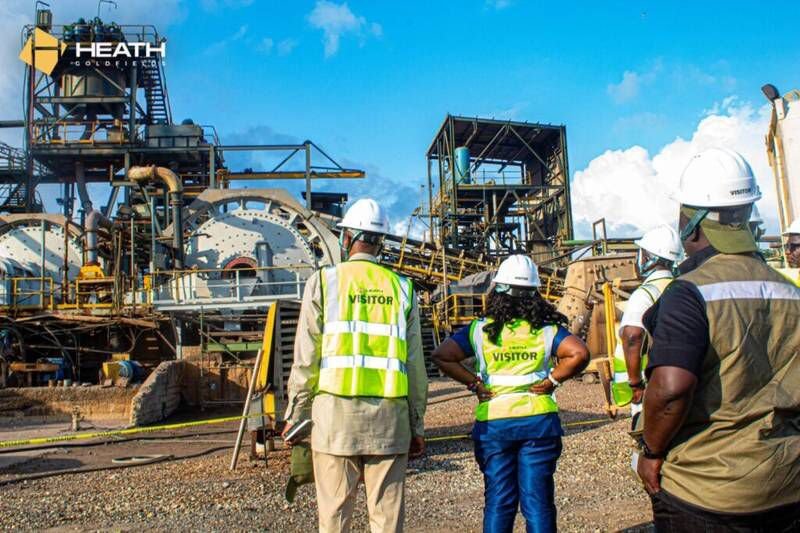
Historically, the mining sector has been the most significant contributor to Ghana’s Gross Domestic Product (GDP), and 2025 continues this trend with the industry injecting over US27 million Tarkwa-Damang road and the US$13 million T&A Stadium.
As of late 2025, the mining industry remains the largest source of domestic tax revenue, with total fiscal contributions from Chamber of Mines members exceeding GHC 17 billion annually. This revenue is vital for stabilizing the Cedi and funding the government’s ambitious developmental agenda.
For Gold Fields, maintaining a “tier-one mining jurisdiction” in Ghana involves not just high production, but a rigorous adherence to ESG standards.
By integrating local content and environmental stewardship into its core business model, the company ensures that its 31% share of global production continues to benefit the Ghanaian people for generations to come.
READ ALSO: GITFiC Urges Africa to Ditch Debtor Status and Claim Equal Partnership in Global Economy