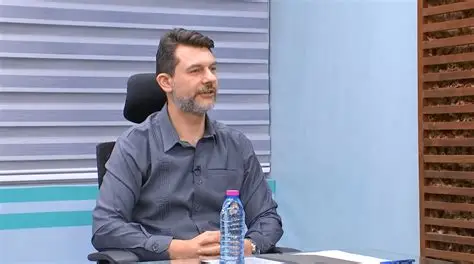
In a move to resolve the chronic governance fatigue that has plagued Ghana’s Fourth Republic, University of Ghana law lecturer Professor Kwadwo Appiagyei-Atua has thrown his weight behind the Constitutional Review Committee’s (CRC) most disruptive proposals.
Speaking in the wake of the CRC’s final report to President John Dramani Mahama, his endorsement centered on a radical shift to a five-year presidential term and a clean break that would legally bar Members of Parliament (MPs) from serving as Ministers – a reform he argues is essential to reclaiming the independence of the legislature.
“You spend maybe about a year before elections campaigning. When it comes to office, the constitution is bloated with the government’s responsibilities – it takes a very heavy toll on the president. It takes a very heavy toll on the president to do all of this, to do that – it may take about one year to complete that and to settle in”
Professor Kwadwo Appiagyei-Atua, University of Ghana Law Lecturer
The professor pointed out that with the first year of any new administration effectively “cannibalized” by the heavy toll of appointments – from cabinet ministers to municipal heads – the President is exhausted by the process of simply settling in to do much else.

By the time the administration finds its rhythm, the fourth year arrives, and the machinery of state is once again sacrificed to the pressures of the next election cycle. For him, a four-year term incentivizes “short-termism,” where governments prioritize populist, quick-fix projects over long-term structural reforms that require more than 24 months of focused implementation.
Ending the Ministerial Ambition
Beyond the calendar, Prof. Appiagyei-Atua advocated for a total divorce between the Executive and the Legislature.
Currently, the dual-role system – where the majority of Ministers must come from Parliament – is seen as a primary driver of weak oversight. When MPs view their seats as mere stepping stones to ministerial appointments, the check on executive power is compromised.


“Separating the legislature from the cabinet or from the executive is very, very important. When you are a member of parliament, you focus your energy on parliament – and serve the interests of your constituents and the country. MPs should focus their energy on parliamentary duties and oversight rather than seeking executive appointments”
Professor Kwadwo Appiagyei-Atua, University of Ghana Law Lecturer

Central to his explanation was the protection of the lawmaker. Prof. Appiagyei-Atua emphasized that the special immunities and privileges enjoyed by MPs are not perks, but tools of constitutional defense. For the legislature to truly oversee the executive, it must be shielded from executive overreach, particularly from the police and investigative bodies that answer directly to the President.
By aligning the five-year term with a stricter separation of powers, the Professor believes the CRC is offering a roadmap to reduce corruption. With more time to govern and a more independent Parliament to watch the purse strings, the state can finally move away from “transactional politics,” toward sustainable development.
As the national debate over the CRC’s final report intensifies, the Professor’s endorsement provides the intellectual anchor for a vision of Ghana where the President has the time to lead, and the Parliament has the courage to follow – at a distance.

“The move is aimed at strengthening governance by reducing conflicts of interest and ensuring that ministerial positions are based on expertise rather than political connections. Implementing such a reform would strengthen the separation of powers, enhance accountability, and improve the quality of governance in Ghana”
Professor Kwadwo Appiagyei-Atua, University of Ghana Law Lecturer
READ ALSO: Trump To Invite Kazakhstan and Uzbekistan To Next G20 Summit