
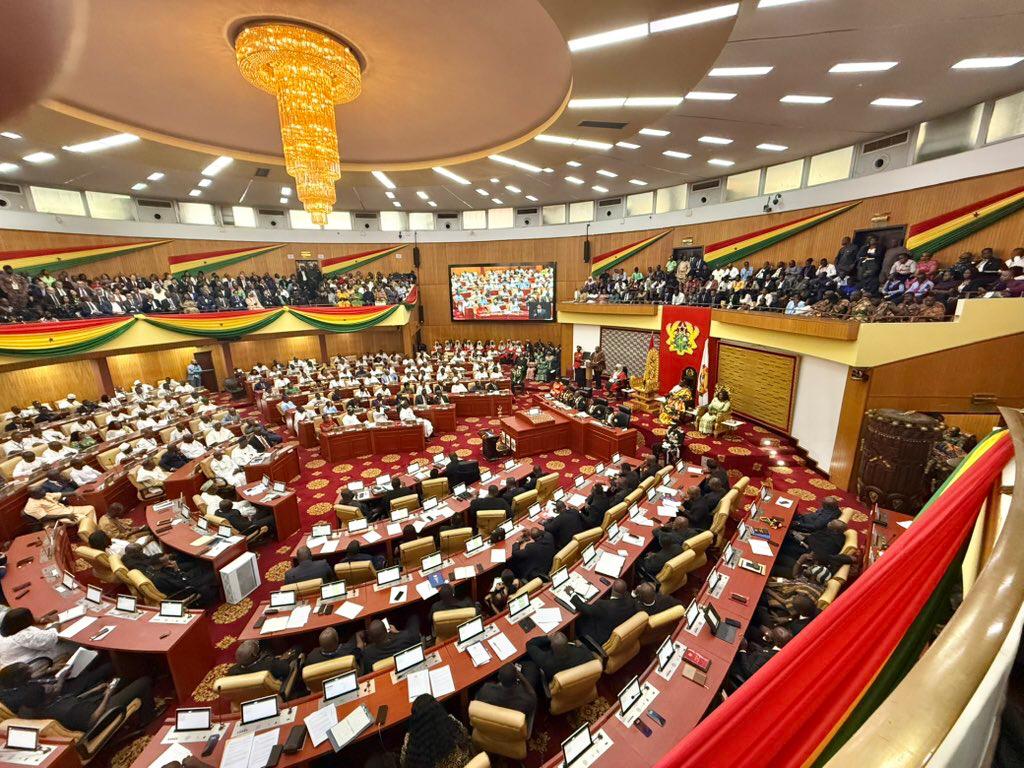
Ghana’s Constitutional Review Committee has proposed far-reaching reforms aimed at tightening conflict-of-interest rules for Members of Parliament, recommending a complete ban on MPs serving on public boards and other state-funded governing bodies.
The proposals form part of the Committee’s final report submitted to President John Dramani Mahama on December 22, 2025, following nearly eleven months of nationwide consultations and technical review of the 1992 Constitution.
The recommendations focus on amendments to Article 98 of the Constitution and are intended to draw a clearer line between the legislative responsibilities of MPs and the administrative and commercial interests of the state.
According to the Committee, the growing overlap between parliamentary duties and appointments to public boards has created persistent ethical concerns that undermine public confidence in governance.
Under the proposed amendment, a Member of Parliament would be barred from being appointed to the management or governing council, board of directors, or procurement committee of any entity that is funded wholly or partially from public funds, or in which the Government of Ghana holds an interest.

The Committee argues that such appointments expose MPs to divided loyalties and compromise Parliament’s oversight role over public institutions. The report further recommends restrictions on MPs engaging in professional or commercial representation that places them on the opposite side of the state.


Specifically, an MP would not be permitted to represent, or belong to a firm that represents, a party in any legal or commercial matter where that party’s interests are adverse to those of the Republic of Ghana.
The Committee says this provision is designed to prevent situations in which legislators are seen to profit from insider access or privileged knowledge obtained through public office.
Prohibition of Inducement
In addressing inducements and gifts, the Committee proposes stricter constitutional prohibitions. MPs would be barred from accepting or agreeing to accept, whether directly or through a third party, any offer of cash or in-kind gifts of substantial value, benefits, inducements, or rewards from persons or entities with an interest in the outcome of parliamentary business.
These include Bills, investigations, nominations, appointments, or resolutions before Parliament or any of its committees. The Committee extends responsibility beyond legislators themselves by recommending parallel restrictions on external actors.
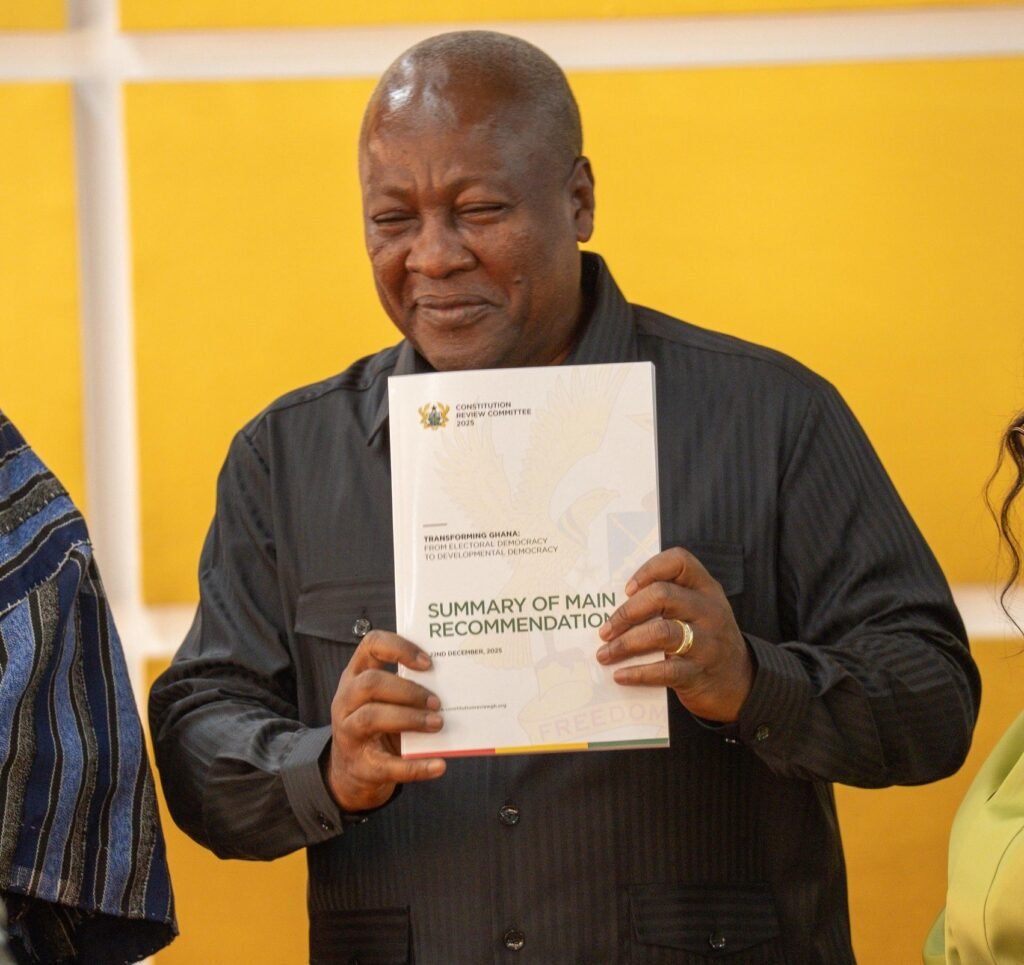
Under the proposal, no person or entity with an interest in parliamentary outcomes would be permitted to offer cash, gifts, or inducements to a Member of Parliament or to staff working in an MP’s office. The intention, according to the Committee, is to address both sides of influence-peddling and reduce opportunities for covert lobbying and corruption.
In its report, the CRC explains that the proposals are rooted in concerns raised during public consultations across the country. Civil society groups, professional associations, and ordinary citizens repeatedly cited the perceived conflict between MPs’ lawmaking duties and their involvement in state boards, procurement decisions, and government-linked commercial activities.
Enforceability and Uniform Application
The Committee notes that while existing laws and codes of conduct touch on conflicts of interest, constitutional clarity is required to ensure enforceability and uniform application.
The Committee, chaired by constitutional law professor H. Kwasi Prempeh, maintains that the recommendations are not intended to punish MPs but to protect the integrity of Parliament as an institution.
It argues that a legislature free from competing financial or administrative interests is better positioned to hold the Executive accountable and to legislate in the public interest.
President John Dramani Mahama, who received the report, has already indicated that its proposals will not be shelved. He announced that a dedicated Implementation Committee will be established in early 2026 to begin the process of translating the CRC’s recommendations into formal constitutional amendment proposals.
That process is expected to involve the Attorney-General’s Department, Parliament, and other key stakeholders. The proposed restrictions on MPs’ appointments are among several recommendations in the CRC report aimed at strengthening democratic accountability and restoring public trust in state institutions.

Coming against the background of long-standing public debate over conflicts of interest, the proposals are likely to generate intense discussion within Parliament, where many MPs currently serve on boards or maintain professional practices alongside their legislative roles.
If adopted, the amendments would mark a significant shift in Ghana’s constitutional governance framework, redefining the boundaries of parliamentary conduct and reinforcing the principle that public office should not be used for private gain.
With the country preparing for the next phase of constitutional reform, the CRC’s proposals have placed ethical governance and institutional integrity firmly at the center of the national conversation.
READ ALSO: IMF Projects a 5% Convergence Growth for GDP Components in 2029