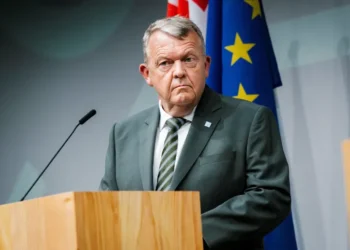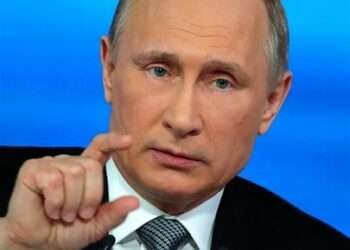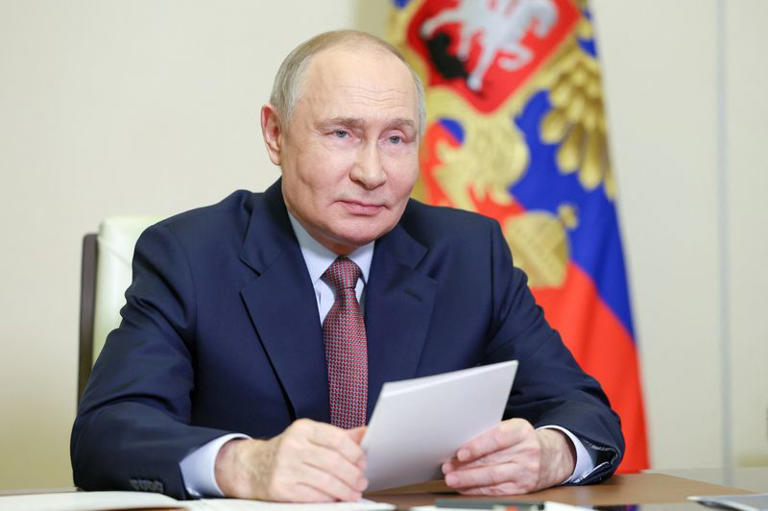
Kurt Volker, the former US Ambassador to NATO has cast doubts on the likelihood of Russia’s President Vladimir Putin accepting a deal to end the ongoing war.
Speaking to a news agency, he said that the chances of Putin accepting a full peace deal are “probably zero.”
He stressed that Putin has maximalist demands that “he has never changed and never will.” “So that’s not something Ukraine can ever agree to,” Volker said.
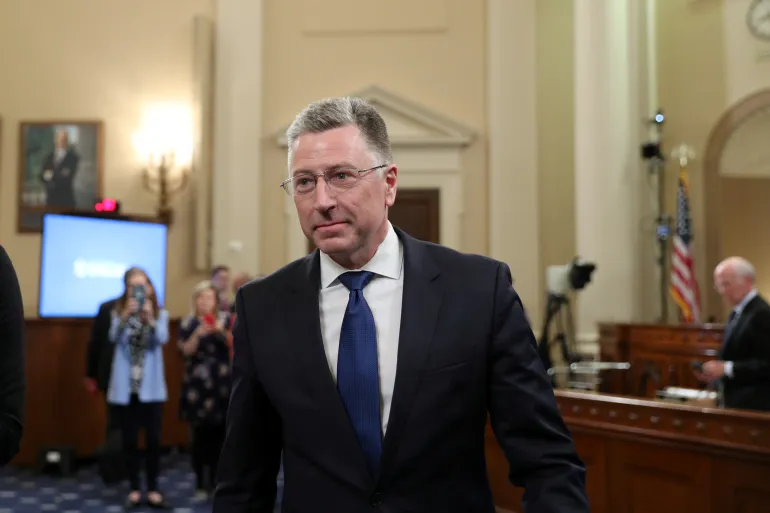
Nonetheless, Volker, former US special envoy for Ukraine during President Donald Trump’s first term, is more confident about the prospects of a ceasefire in the coming year.
“The chances of getting a ceasefire where the fighting stops and we can help Ukraine start to rebuild, Ukraine survives and there’s a dispute over disputed territory that is unresolved – I’d put that at 75 sometime next year.”
Kurt Volker
Meanwhile, Heino Klinck, former Director of US Army International Affairs, said that both Moscow and Kyiv accept that only diplomacy will bring an end to this conflict.
Klinck believes that Russia has “made little progress” since the start of the war and “now realise that they are not going to be able to defeat Ukraine militarily, as they had planned to do.”


“I think that we are closer to some sort of imperfect deal than we have been previously, both from Ukraine’s perspective and the Russian perspective.”
Heino Klinck
These remarks followed two-track negotiations in the US city of Miami, with US President Donald Trump’s envoys Steve Witkoff and Jared Kushner meeting Ukrainian and Russian delegations separately.
Ukraine’s President, Volodymyr Zelenskyy said on Monday that revised drafts of US ceasefire proposals looked “quite solid at this stage.” “There are some things we are probably not ready for, and I’m sure there are things the Russians are not ready for either,” he said.
He claimed “nearly 90 percent” of Ukraine’s demands had been incorporated into the draft agreements, alluding to a 20-point plan.
Witkoff hailed “productive and constructive” discussions with both sides, but there were no signs of a breakthrough.
However, Russian Deputy Foreign Minister Sergey Ryabkov was quoted by state media as saying there had been “slow progress.”
Russian Strikes Trigger Ukraine Power Cuts

Meanwhile, Russia has hit regions across Ukraine with missiles and drones, killing at least three people and triggering emergency power outages as United States-led talks to end the nearly four-year conflict dragged on.
In a social media post, Zelenskyy said that a four-year-old in the Zhytomyr region was among those killed during the Russian attacks that took place “in the midst of negotiations aimed at ending this war.”
“This Russian strike sends an extremely clear signal about Russia’s priorities,” he said, urging Ukraine’s Western partners to increase pressure on Moscow.A woman in the Kyiv region and another person in the Khmelnytskyi region were also killed.”
Volodymyr Zelenskyy
Ukraine’s power operator Ukrenergo said that the “massive missile and drone attack” had caused fires in several regions, leading it to impose “emergency power outages” across the country, where winter temperatures are currently dipping towards freezing.
Prime Minister Yulia Svyrydenko said that energy infrastructure in Ukraine’s western regions suffered the most damage in the overnight attacks, which included dozens of missiles and more than 600 drones.
As a result of the attacks, NATO member Poland said that Polish and allied aircraft were deployed to protect its airspace after Russian strikes hit areas of western Ukraine near its border. “These measures are preventive in nature and are aimed at securing and protecting the airspace,” Poland’s operational command said in a statement.
Poland scrambles jets during major Russian missile-and-drone barrages on western Ukraine, when strikes are deemed to pose a heightened risk near its border.
READ ALSO: Risk, Governance, Capital Buffers Take Centre Stage In Sweeping Banking Reforms From 2026