The Ministry of Fisheries and Aquaculture Development has signaled a decisive shift in Ghana’s maritime sovereignty, framing 2026 as the year of the “artisanal resurgence,” under the government’s National Reset Agenda.
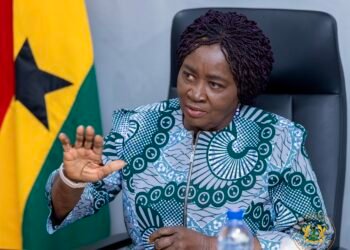
During a high-stakes working visit by Vice President Jane Naana Opoku-Agyemang, the Ministry detailed a comprehensive overhaul of the sector’s legislative and logistical framework – most notably the extension of the Inshore Exclusive Zone (IEZ) to 12 nautical miles to protect local fishers from industrial encroachment.
“Vice President of the Republic, Professor Jane Naana Opoku-Agyemang, has paid a working visit to the Ministry of Fisheries and Aquaculture to receive briefings on the Ministry’s mandate, ongoing programmes, and key initiatives aligned with the Government’s National Reset Agenda”
Ministry of Fisheries and Aquaculture Development
Welcomed by the Minister for Fisheries and Aquaculture, Hon. Emelia Arthur, the Vice President reviewed a 2025 performance report that paints a picture of a ministry in “emergency recovery mode.”
With the passage of the Fisheries and Aquaculture Act, 2025 (Act 1146) and the ratification of the WTO Agreement on Fisheries Subsidies, the Ministry has successfully moved to insulate Ghana from the threat of international trade “red cards” while formalizing the nation’s first Marine Protected Area (MPA) in the Greater Cape Three Points region.
According to the Ministry, for years, Ghana’s waters have endured the violent overlap between industrial trawlers and artisanal canoes within the 6-mile zone. By pushing the IEZ to 12 nautical miles, the Ministry is creating a legal and physical sanctuary for local fishers.
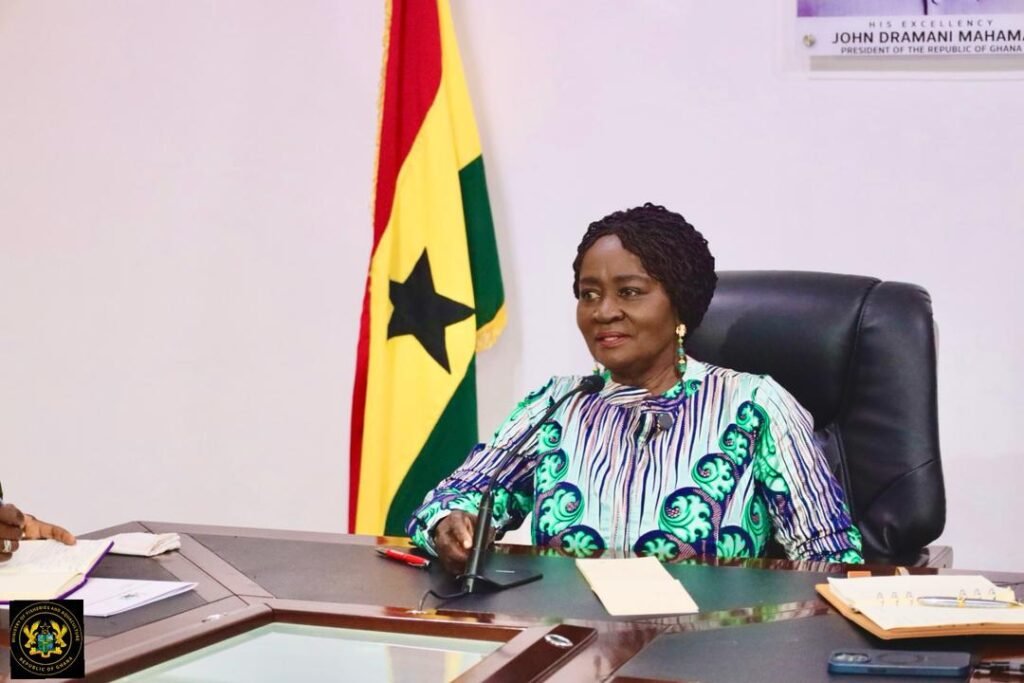
Minister Emelia Arthur emphasized that this extension, coupled with the resourcing of the Fisheries Enforcement Unit, is designed to end the era of industrial bullying that has depleted Ghana’s small pelagic stocks.


Hon. Emilia Arthur noted that this regulatory tightening is not merely environmental; it is a survival strategy for the over 3 million Ghanaians whose livelihoods depend on the sea. The Ministry’s 2025 achievements include the reconstitution of 351 Landing Beach Committees (LBCs), a move intended to return governance of the shoreline to the communities themselves rather than political intermediaries.
“The passage of the Fisheries and Aquaculture Act, 2025 (Act 1146) provides a strengthened legal framework for sustainable fisheries management. This, alongside the approval of the National Blue Economy Strategy, positions Ghana to harness the full economic potential of our ocean, coastal, and inland water resources.
“We are committed to building a sustainable, inclusive, and economically vibrant fisheries and aquaculture sector for the benefit of present and future generations”
Hon. Emelia Arthur, Minister for Fisheries and Aquaculture
Breaking Premix Cartels
Parallel to the maritime defense is a digital assault on the “premix black market.” The Ministry reported a massive logistical reset of the premix fuel distribution chain, aimed at eliminating the hoarding and middleman fees that have historically doubled the price of fuel for fishers.

Between February and November 2025, the Ministry supplied over 28.7 million liters of premix fuel, backed by the onboarding of five new Bulk Distribution Companies (BDCs) to ensure competitive supply.
The technological solution to this chronic leakage has been the expansion of automated premix fuel dispensing sites from 42 to 57. By automating the point of sale, the Ministry is effectively removing the human element that allowed for diversion.
This fiscal discipline allowed the government to facilitate the payment of GHS 91.2 million in legacy under-recovery debts, stabilizing the supply chain for the 2026 peak season.
“Additionally, 351 Landing Beach Committees were reconstituted and inaugurated nationwide to strengthen grassroots governance in the fisheries sector”
Ministry of Fisheries and Aquaculture Development
Academic Anchors
Beyond immediate enforcement, the Ministry revealed that it is investing in “intellectual infrastructure.”
The Anomabo Fisheries College, a project that had stalled for years, is now 70 percent complete, with its governance structure and curriculum already developed. The Ministry views the college as the training ground for a new generation of “scientific fishers who can navigate the complexities of the Blue Economy Commission.”
Vice President Opoku-Agyemang, in her assessment, noted that the “National Reset” in this sector is as much about food security as it is about conservation. She highlighted the Ministry’s collaboration with international partners like Oceana and Bloomberg Ocean Initiative as a sign that Ghana is reclaiming its leadership role in West African ocean governance.

As the Ministry enters 2026, the focus remains on the “Blue Reset” – a blend of high-tech automation at the pump and high-stakes enforcement at sea.
The visit provided an opportunity for the Ministry to present a comprehensive overview of its 2025 achievements and outline its strategic priorities for 2026.
Vice President Opoku-Agyemang commended the Ministry for the breadth of work undertaken and emphasized the importance of fisheries and aquaculture to food security, livelihoods, and economic growth under the National Reset Agenda.
READ ALSO: Lands Ministry to Revoke 50 Large-Scale Mining Licenses