The Ghana Gold Board (GoldBod) has moved decisively to correct what it describes as growing misconceptions in the media regarding its trade operations and financial performance, insisting that the institution has recorded strong profits rather than losses in 2025.
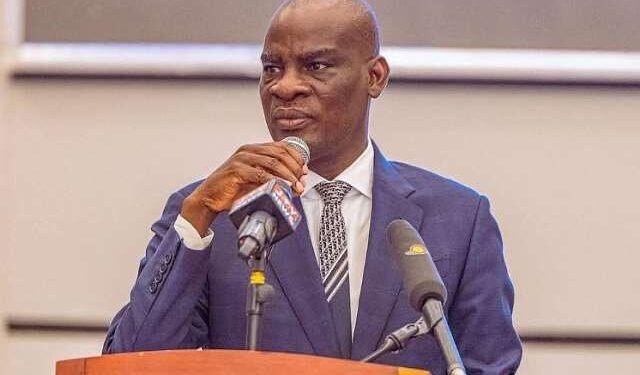
In a detailed statement issued by its Chief Executive Officer, Mr. Sammy Gyamfi, Esq., the Board said recent commentary had misrepresented both its role in Ghana’s gold trading architecture and the financial outcomes of its operations.
“While the Ghana Gold Board values and appreciates feedback and constructive criticism, it is important to clarify certain misconceptions making rounds in the media space about the trade operations of the GoldBod.”
Mr. Sammy Gyamfi, Esq. Chief Executive Officer of GoldBod
Contrary to claims of financial underperformance, GoldBod stated categorically that it has not incurred any losses since beginning operations. According to Mr. Gyamfi, the Board is on track to declare a substantial income surplus for the year.
“First and foremost, the Ghana Gold Board has made no losses. Rather, the GoldBod has made significant profit or surplus under its gold trading programs in the year 2025.”
Mr. Sammy Gyamfi, Esq. Chief Executive Officer of GoldBod
He disclosed that unaudited financial statements published on the Board’s website indicate an expected surplus of not less than GH¢600 million for the year, underscoring what he described as prudent management and operational efficiency within the young institution.
Clarifying GoldBod’s Role Versus the Bank of Ghana

A key area of confusion, according to GoldBod, relates to its responsibilities under Ghana’s gold purchase and reserve-building initiatives. Mr. Gyamfi emphasized that in 2025, GoldBod’s role has been limited to local purchasing, assaying and exporting gold on behalf of the Bank of Ghana (BoG).


“The selling or trading of gold purchased by GoldBod to off-takers lies in the exclusive domain of the Bank of Ghana,” he explained, distancing the Board from decisions related to gold sales and pricing at the international level.
This clarification follows reports suggesting that GoldBod’s activities may have contributed to losses under the BoG’s Gold for Reserves Programme. Mr. Gyamfi firmly rejected such assertions.
GoldBod also dismissed claims that it charges so-called “offtaker fees” that allegedly contributed to a reported $214 million loss at the central bank. According to the Board, no such fees exist under its operational framework.
“For the records, there is nothing like ‘GoldBod offtaker fees’ under the ASM gold trading program. That assertion is incorrect.”
Mr. Sammy Gyamfi, Esq. Chief Executive Officer of GoldBod
He explained that GoldBod does not deal directly with off-takers and does not charge fees to them. All offtake agreements, he noted, are negotiated and implemented by the Bank of Ghana, including discounts related to freight, insurance and refining costs.
Mr. Gyamfi further pointed out that the financials of the Gold for Reserves and Gold for Forex programmes for 2025 are yet to be audited, making any claims of confirmed losses premature.
Statutory Fees Explained
To further address public concerns, GoldBod outlined the only charges it receives in the course of its operations. These include a statutory assay fee of 0.25 per cent and a service charge of 0.5 per cent, both paid by the Bank of Ghana.
“These fees are not new. In fact, they were inherited by the GoldBod from a 2023 Gold Purchase Agreement between the Bank of Ghana and the defunct PMMC,” Mr. Gyamfi said, adding that there has been no increase in these charges in 2025.
As a non-subvented state agency, he explained, these statutory fees form the bulk of GoldBod’s internally generated funds, supporting its day-to-day operations.
Beyond operational clarifications, GoldBod highlighted what it described as its most significant contribution to Ghana’s economy: foreign exchange generation.
“It remains an indisputable fact that the GoldBod has generated over $10 billion dollars in foreign exchange for the country in 2025 alone.”
Mr. Sammy Gyamfi, Esq. Chief Executive Officer of GoldBod
He added that GoldBod also purchases 20 per cent of the gold output of nine large-scale mining companies for the BoG, contributing to a historic rise in Ghana’s foreign reserves to about $12 billion in 2025.
According to the Board, these inflows have helped strengthen the cedi, reduce debt servicing costs, keep inflation in single digits and ease the overall cost of living.
Looking ahead, GoldBod revealed that a major transition is underway. From January 2026, the Board will fully take over the ASM gold trading programme, assuming responsibility not only for purchasing but also for trading and selling gold.
He expressed confidence that with government-allocated revolving seed capital, GoldBod is well-positioned to deliver even greater returns for the Ghanaian economy.
READ ALSO: Black Boxes From Jet Crash That Killed Top Libyan Military Officials In Turkey Recovered