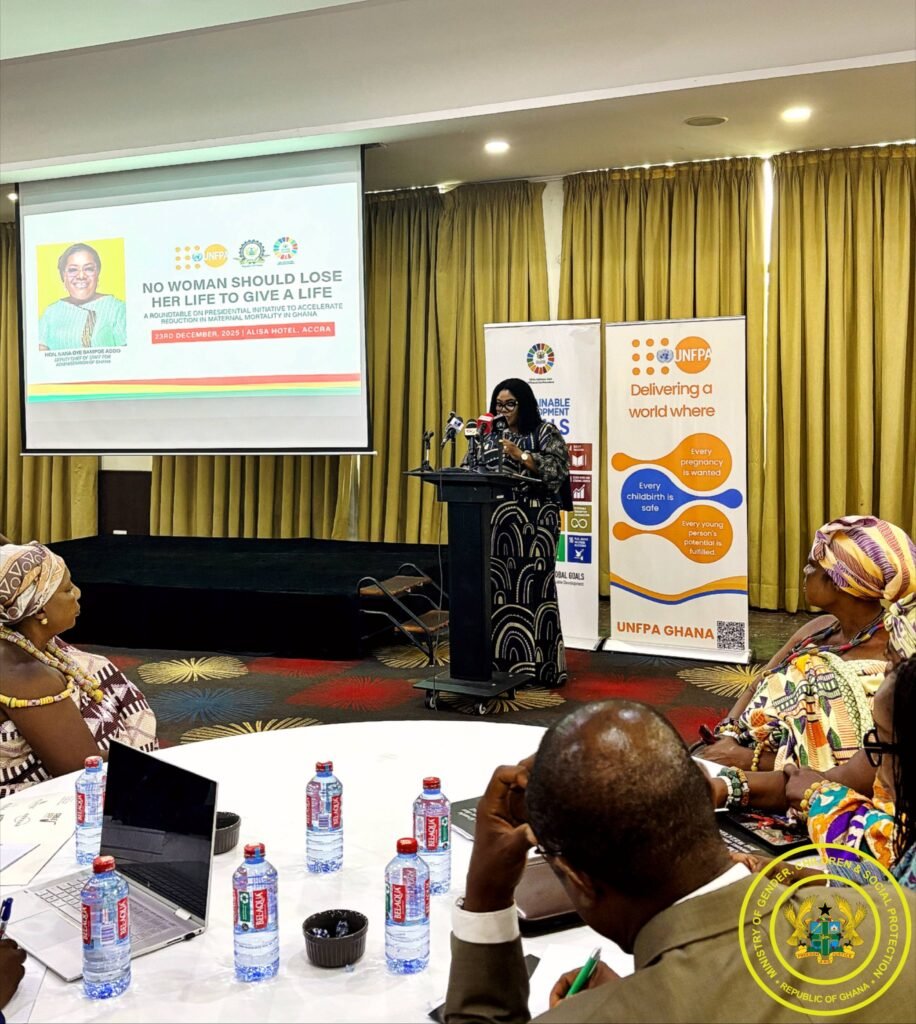
The Minister for Gender, Children and Social Protection, Hon. Dr. Agnes Naa Momo Lartey, has joined a high-level national assembly of stakeholders to intensify the country’s campaign against preventable maternal deaths.
Participating in a specialized roundtable convened by the Office of the President, the Minister asserted that the survival of women during childbirth is a fundamental matter of justice and national progress.
“This initiative, organized through the SDGs Advisory Unit in partnership with the United Nations Population Fund (UNFPA) and the National Development Planning Commission (NDPC), seeks to create a unified framework for lowering mortality rates across all sixteen regions”
Ministry of Gender, Children and Social Protection
According to the Ministry, the engagement brought together a diverse cohort of health experts, traditional rulers, religious leaders, and civil society actors for discussions centered on a presidential mandate to ensure that no woman loses her life while bringing another into the world.
Hon. Dr. Lartey emphasized that while medical interventions are crucial, the social protection dimensions – such as equity and community accountability – “are equally vital in addressing the root causes of the maternal health crisis.”
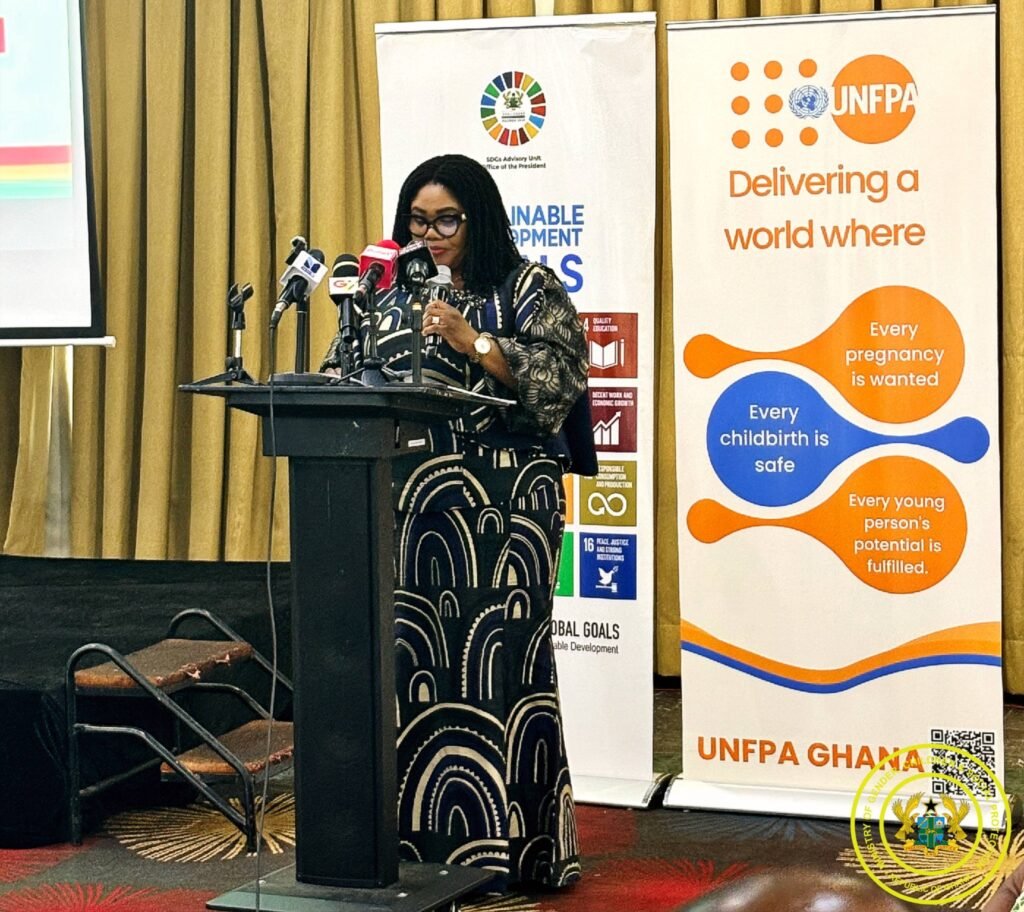
During her address, the Gender Minister challenged the notion that maternal mortality is purely a clinical failure, arguing that the normalization of such deaths in certain communities remains a significant barrier to progress.
To counter this, she called for the implementation of robust community-level accountability mechanisms. These systems would ensure that every maternal death is thoroughly investigated and that the lessons learned are used to prevent future occurrences.


“The Minister maintained that the responsibility for maternal health must be decentralized from the national government to the local level.
“She urged traditional and religious authorities to use their influence to champion the cause of safe motherhood, noting that their voices are often more resonant within the communities than official government directives”
Ministry of Gender, Children and Social Protection
The roundtable served as a platform to redefine maternal health as a shared moral obligation rather than a task relegated solely to the Ministry of Health.
“History will not judge us by the speeches we deliver today, but by the lives we save through the path we take,” Hon. Dr. Lartey stated during the high-level engagement.
Impact of Maternal Survival
Hon. Dr. Lartey further expanded on the broader socioeconomic implications of maternal health. She noted that the death of a mother often triggers a “domino effect of poverty and instability within the family unit.”
When women are protected and provided with the necessary social safety nets, the entire nation benefits through improved child welfare and community prosperity. This perspective aligns with the government’s 2025 agenda to integrate social protection more deeply into the national health framework.
The roundtable concluded with a call for participants to move beyond rhetoric and establish clear timelines for their commitments.
The Minister emphasized that the path forward requires defined responsibilities and a rejection of the status quo, describing the protection of women’s lives as a reflection of Ghana’s core values and a prerequisite for sustainable development.
“When women survive, children are born, families thrive, communities prosper, and nations grow,” the Minister added.
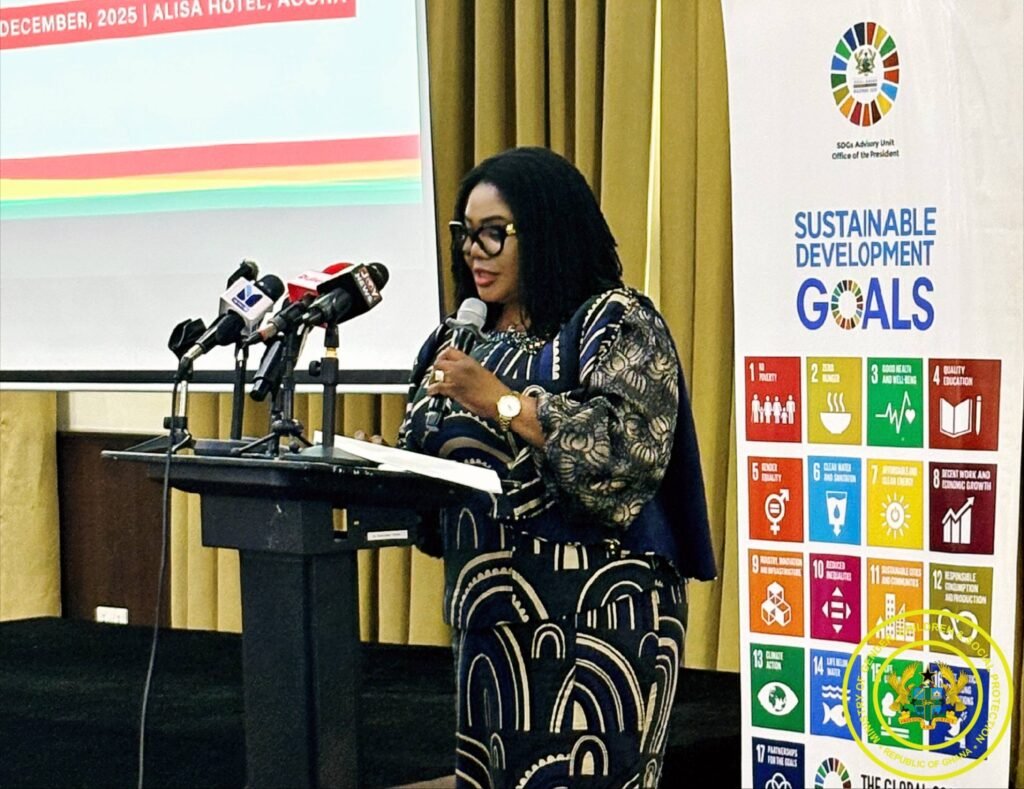
By the close of the session, there was a renewed consensus that saving women is not an act of charity but a requirement of social justice. The Presidential Initiative to Accelerate Reduction in Maternal Mortality is expected to drive more coordinated action between government agencies and development partners throughout 2026.
READ ALSO: China Flexes Military Muscle with Live-Fire Drills Around Taiwan