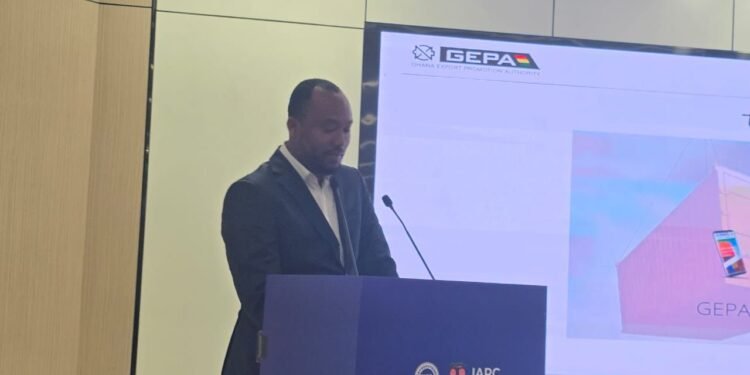
Ghana’s official gold exports from the artisanal and small-scale mining (ASM) sector have increased significantly after the establishment of the Gold Board (GOLDBOD), reigniting debate over the effectiveness and cost of the country’s gold trade reforms.
According to entrepreneur and finance and economic policy analyst Senyo K. Hosi, the sharp increase to improved regulation and a substantial reduction in gold smuggling rather than a sudden surge in production.
“The year 2025 marked the inception of GOLDBOD, and in just one year, Ghana’s ASM gold export value has increased from 63.6 metric tons in 2024 to 101 metric tons.”
Senyo K. Hosi Entrepreneur, Finance & Economic Policy Analyst
Hosi noted that the figures are based on export volumes to avoid distortions from rising global gold prices.
Reduced Smuggling Drives Official Gains

Hosi said the improvement reflects better accounting of Ghana’s gold output following the centralisation of gold trade under GOLDBOD. He stated that the new framework has significantly curtailed informal exports that previously bypassed official channels.
Hosi said, “This is not just a result of a significant surge in production but rather an optimisation of the accounting of Ghana’s gold production by drastically reducing smuggling,” adding that GOLDBOD’s practices have helped optimise the country’s official gold trade.


Prior to the creation of GOLDBOD, Ghana was losing a substantial portion of its ASM gold to smuggling. Hosi cited United Nations COMTRADE data showing that the United Arab Emirates imported gold worth about USD7.1 billion from Ghana in 2022 and 2023, while Ghana’s official export records for the same period stood at USD4.8 billion.
Using the UAE as a benchmark, Hosi said nearly one-third of Ghana’s gold production was leaving the country unrecorded.
Trading Losses Spark Policy Debate

Despite the gains in official exports, GOLDBOD’s operations have come under scrutiny following reports that the Bank of Ghana recorded a trading loss of USD214 million, equivalent to about GHS2.4 billion. According to Hosi, the loss should not be viewed purely as a commercial failure.
“This is undoubtedly an accounting loss,” he said, explaining that it is largely linked to a deliberate pricing strategy designed to discourage smuggling.
Hosi noted that GOLDBOD entered the gold-buying market aggressively by offering miners prices aligned with global market rates. This approach was intended to compete with foreign buyers who had long dominated Ghana’s gold trade by offering prices slightly below international levels.
“The pricing strategy to offer world-market prices to miners for buying their gold output is to incentivise them to sell to GOLDBOD rather than to the foreign gold buyers.”
Senyo K. Hosi Entrepreneur, Finance & Economic Policy Analyst
Exchange Rate Differentials Add to Costs
Hosi further explained that part of the reported losses arises from differences between the Bank of Ghana’s interbank exchange rate and open market rates. To remain competitive, GOLDBOD often adjusts its buying prices to reflect market realities.
“If the Bank of Ghana’s interbank FX rate is set at GHS11 to the dollar and the open market rate stands at GHS12, producers will demand GHS12, not GHS11.”
Senyo K. Hosi Entrepreneur, Finance & Economic Policy Analyst
To prevent miners from selling to smugglers who pay using open market rates, GOLDBOD reportedly offers a bonus that partially bridges the gap.
Hosi said this bonus, which can represent about half of the exchange rate differential, contributes significantly to the reported trading losses and should be seen as a foreign exchange cost incurred to protect official exports.
Broader Economic Rationale
From a policy perspective, Hosi argued that the reported losses must be weighed against the broader economic benefits of retaining gold export earnings within the formal economy.
Hosi said, “The forex inflows from the reduced smuggling can be transformative and more beneficial to the broader economy,” suggesting that the cost of discouraging smuggling may be justified by stronger reserve accumulation and improved balance-of-payments outcomes.
He placed GOLDBOD’s creation within Ghana’s recent macroeconomic challenges, noting that the country had previously relied heavily on external borrowing to build reserves due to weak cocoa exports and the offshore retention of gold export proceeds by foreign mining firms.
GOLDBOD was established with a mandate to generate foreign exchange, support the accumulation of gold reserves by the Bank of Ghana, and centralise gold trading activities. The policy rationale was to optimise forex inflows, strengthen reserves and ensure Ghana derives greater national benefit from its gold resources.
Currently, GOLDBOD sources gold mainly from licensed ASM operators through authorised buyers, pays in cedis based on Bank of Ghana reference rates, and exports the gold or allocates it to the central bank’s reserves.
As debate continues over costs and benefits, the sharp rise in officially recorded gold exports suggests that GOLDBOD is beginning to reshape Ghana’s gold trade, with reduced smuggling emerging as one of its most visible early outcomes.
READ ALSO: Developing Countries Restructure $90bn in Debt — But Rising Costs Spell Trouble for Ghana