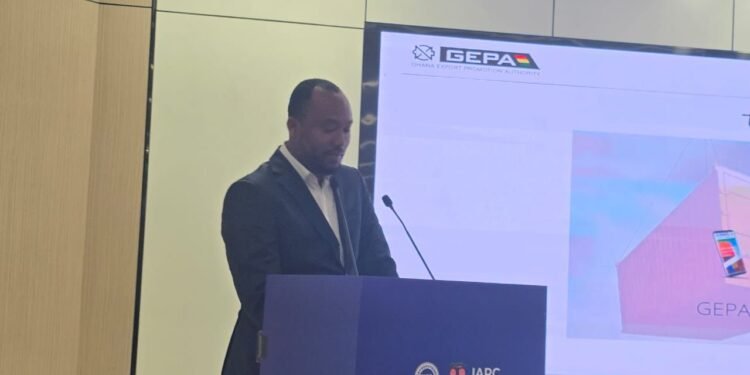
According to Dr. Cassiel Ato Forson, Minister of Finance, the Mahama Administration chose to act upon assuming office almost a year ago, and 2025 will be remembered as the turning point for the Ghanaian economy.
He released a data pack highlighting the government’s achievements over the past year, terming it “data speaks for itself.” He established boldly that Ghana has seen bold reforms and significant progress in a short period.
“We inherited deep fiscal stress, high inflation, rising debt, and non-existent buffers – and we chose to act.
“Through bold reforms and disciplined management, we stabilized the economy, restored confidence, and reignited growth.”
Dr. Cassiel Ato Forson
He further noted that inflation and interest rates fell sharply, debt declined, reserves strengthened, and the Ghanaian Cedi appreciated.
Vital Macroeconomic Feats in 2025
In terms of economic growth, Dr. Ato Forson reported that GDP expanded by 6.1 percent in 2025 Q1-3, compared with 5.7 percent in the same period of 2024. This growth makes the first three quarters of 2025 the fastest since 2019. Non-oil GDP grew by 7.5 percent in 2025 Q1-3, compared with 5.7 percent in 2024. Non-oil GDP reflects the real strength of the economy to create jobs.

Inflation dropped to a single digit, 6.3 percent, in November 2025, a sharp decline from 23.8 percent in December 2024. The government achieved the lowest inflation rate since February 2019, restoring the purchasing power of Ghanaians. Food inflation declined from 27.8 percent in December 2024 to 6.6 percent in November 2025, a 21.2-point drop.
Furthermore, non-inflation dropped from 20.3 percent in December 2024 to 6.21 percent in November 2025, a 14.2-point drop. Locally produced inflation followed suit, recording 6.8 percent in November 2025, down from 26.4 percent in December 2024. Inflation for imported items fell to 5 percent in November 2025, down from 18 percent in December 2024.


According to the Finance Minister, the government’s borrowing cost has fallen sharply, and more credit has been opened for the private sector as treasury bill rates have plunged to about 11 percent, down from over 30 percent at the end of 2024.
The Cedi, as of December 31, 2025, has appreciated by 40.7 percent, 30.9 percent, and 24 percent against the US Dollar, the British Pound, and the Euro, respectively. This is the first recorded appreciation in a long time.
The trade balance recorded a surplus of US$8.5 billion in October 2025, up from US$2.8 billion in the same period of 2024. The current account also posted a surplus of US$3.8 billion in 2025 Q1-3, a massive leap from a US$0.6 billion surplus in 2024 Q1-3. These figures show robust external positioning for the country.
The Gross International Reserves (GIR) stood at US$11.41 billion by the end of October 2025, representing 4.8 months of import cover, compared with US$7.68 billion (3.5 months of import cover) at the end of October 2024 and US$8.98 billion (4 months of import cover) at the end of December 2024.
Over ten months, Ghana’s total public debt has made a significant turnaround, falling from GHȼ726.7 billion (equivalent to 61.8 percent of GDP) in December 2024 to GHȼ630.2 billion (equivalent to a little over 45 percent of GDP) by October 2025.

Dr. Ato Forson again noted that for the first time in years, Fitch, Moody’s, and S&P (three major global rating agencies) upgraded Ghana’s credit ratings, reflecting general confidence in Ghana’s credible fiscal consolidation and restored macroeconomic stability.
In terms of Ghana’s fiscal performance, within the first ten months of 2025, Ghana achieved a primary surplus of 1.9 percent of GDP by the end of October, exceeding the initial target of 0.6 threefold. This was due to effective revenue generation and controlled expenditure.
Key Reforms in 2025
Several key reforms were also implemented in the previous year to support growth in 2025, Dr. Ato Forson remarked. The government implemented major VAT and tax relief measures, including abolishing the COVID-19 Health Recovery Levy, scrapping VAT on mineral reconnaissance and prospecting, restoring full VAT input deductions from GETFund and NHIL, reducing the effective VAT rate from 21.9 percent to 20 percent, raising the VAT registration threshold from GHȼ200,000 to GHȼ750,000, and extending VAT zero-rating on locally manufactured textiles to 2028.

The Public Financial Management (PFM) Act was amended to cap public debt at 45 percent of GDP by 2034 and to mandate a minimum annual primary surplus of 1.5 percent. The Petroleum Revenue Management Act was also amended to channel all budgetary oil revenues into priority infrastructure under the Big Push initiative. Mineral royalties were dedicated to finance strategic projects under the Big Push.
The government also commissioned a nationwide arrears and commitments audit to reconcile, clear illegitimate arrears, and prevent new accumulation.
The Minister again noted that LEAP, Free SHS, and NHIS were scaled up, while targeted food and energy subsidies, No Fees Stress, MahamaCare, and other new interventions were introduced as part of expanding social protection.
The government empowered local government by guaranteeing that at least 80 percent of DACF allocations are transferred directly to MMDAs, with clear utilization guidelines to drive local economic development.
The National Investment Bank was recapitalized with GHȼ1.92 billion, and an overarching reform strategy was developed to recapitalize and strengthen all state-owned and state-interest banks. The government also made a reset in the financial sector, where the capital market rebounded to GHȼ85.53 billion, the equity market surged, and the Fixed Income Market expanded.
READ ALSO: GSE Opens 2026 Flat as Indices Hold Firm and Trading Activity Surges