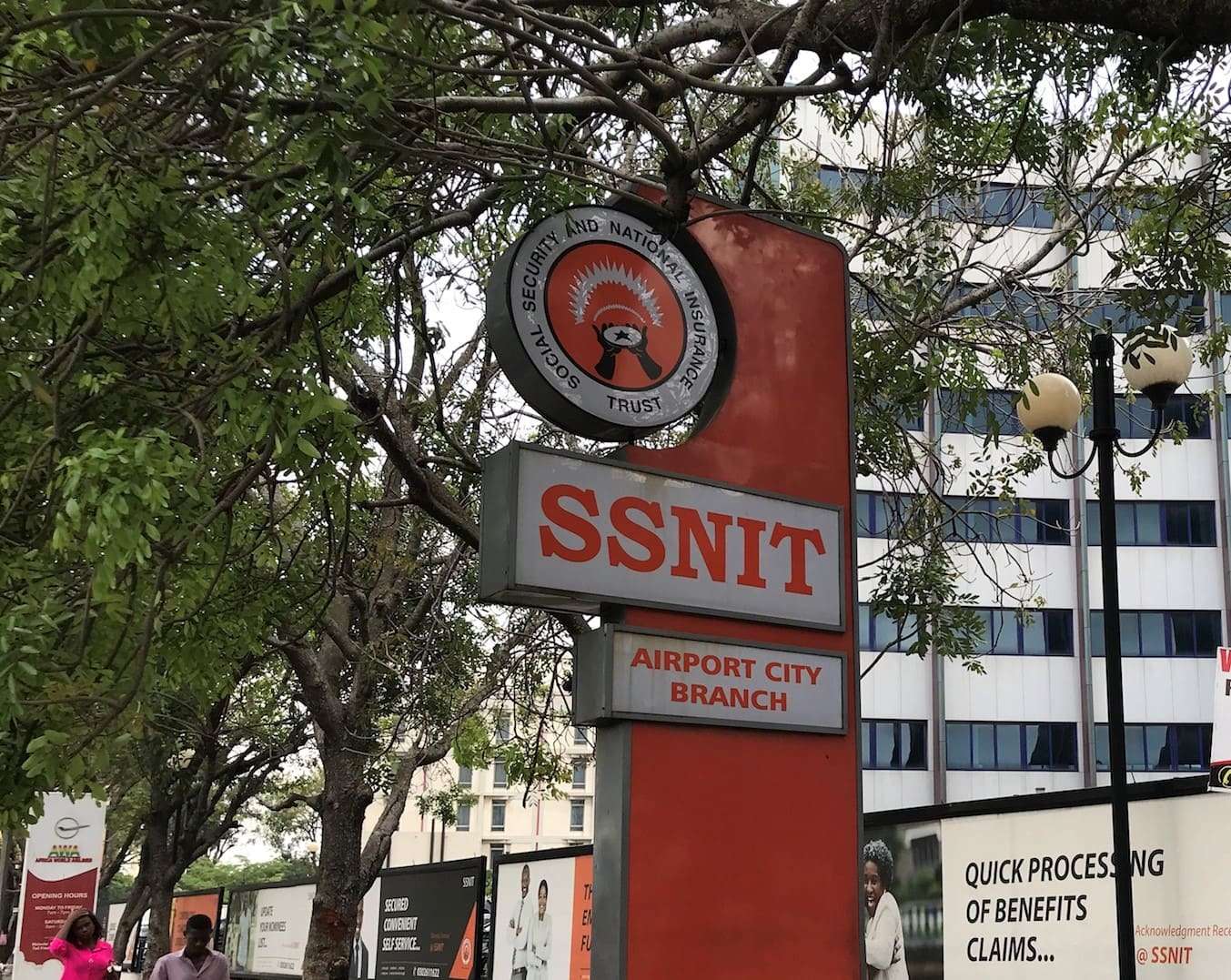
The adjustment, which takes effect from January 2026, reflects SSNIT’s commitment to equity, fairness, and the long-term sustainability of Ghana’s pension system.
The Social Security and National Insurance Trust has announced a 10 percent upward adjustment in monthly pensions for 2026, a move aimed at protecting the purchasing power of retirees while delivering stronger relief to low-income pensioners.
Announcing the increase at a press conference in Accra last Thursday, SSNIT said the new indexation structure was deliberately designed to narrow income disparities among pensioners and cushion those at the lower end of the pension scale amid prevailing economic conditions.
Structure of the 2026 Pension Increase
Under the approved indexation, all pensioners who were on the SSNIT Pension Payroll as of December 31, 2025, will receive a fixed increase of six percent. In addition, a redistributed amount of GH¢91.56 has been allocated from the remaining four percent of the indexation rate. This redistribution mechanism ensures that pensioners on lower incomes receive proportionately higher increases than those on higher pensions.
SSNIT explained that the approach is rooted in the solidarity principle of social security, which seeks to moderate disparities and deliver more meaningful improvements to pensioners whose incomes are most vulnerable to rising living costs.
“With this structure, the lower-income pensioners receive higher effective increases, while those on higher pensions receive relatively lower percentage gains,” the Trust stated.


Significant Gains for Low-Income Pensioners
The impact of the redistribution is most evident among pensioners on the minimum and lower pension brackets. Pensioners who were receiving the minimum pension of GH¢300 in 2025 will now earn GH¢409 a month. This represents an effective increase of 36.52 percent, far above the headline 10 percent adjustment.
Similarly, pensioners in the GH¢500 bracket will see their monthly pensions rise to GH¢621.56, translating into an effective increase of 24.31 percent. Those earning GH¢2,018 a month will now receive GH¢2,220, reflecting the full 10 percent increase, while pensioners on GH¢5,000 will see their payments rise to GH¢5,391.56, an effective increase of 17.83 percent.
At the top end, the highest pensioner, who previously earned GH¢201,792.37 a month, will now receive GH¢213,991.47. This reflects an effective increase of 6.05 percent, underscoring the redistributive nature of the adjustment.
Over 70 Percent to Benefit Above 10 Percent
SSNIT disclosed that about 70 percent of pensioners on its payroll are expected to benefit from the full 10 percent increment or more due to the redistribution mechanism. This outcome, according to the Trust, highlights its deliberate focus on supporting pensioners who are most exposed to economic pressures.
Explaining the structure of the increase, the Chief Actuary of SSNIT, Evelyn Adjei, said the design ensures that pensioners on lower incomes receive greater effective support.
“So if you see, those who are receiving more are receiving less effectively than those who are receiving the minimum pension or the lower bracket pension, and that is to help them get more.”
Evelyn Adjei
Balancing Relief with Fund Sustainability
While welcoming the benefits of the adjustment, SSNIT acknowledged the significant financial implications of annual pension indexation. Mrs Adjei noted that the 10 percent increase would cost the Trust an additional GH¢616 million.
She explained that Section 80 of the National Pensions Act, 2008, Act 766, mandates SSNIT to review pensions in payment annually, taking into account wage inflation or any other rate determined by the Board of Trustees in consultation with the National Pensions Regulatory Authority.
“That’s why we do indexation every year. We do it in line with the law,” she said, adding that sustainability considerations remain central to the Trust’s decisions.
Evelyn Adjei
SSNIT further noted that as a defined benefit scheme, pensions are linked to the salaries on which contributions were paid, making periodic adjustments necessary to maintain their real value over time.
Protecting Pensions Against Inflation
The Director-General of SSNIT, Kwesi Afreh Biney, said safeguarding the real value of pensions remains a core responsibility of the Trust. He noted that with inflation standing at 5.4 percent as of December last year, the 2026 adjustment ensures that pensioners’ incomes are protected against rising prices.
“What that means is that every pensioner on our payrolls pension payments at least has been covered for inflation. Because even for the highest pensioner, it’s about six percent,” Mr Biney said.
Kwesi Afreh Biney
He added that lower-income pensioners benefited even more significantly from the adjustment, recording real income growth well above inflation.
“For those on a lower rate, they have gone as high as 36.52 percent. That’s testament to our commitment to ensure equity, fairness, and to protect those at the lower level. You realise that over 70 percent of our members are above 10 percent. What that means is that at an inflation rate of 5.4 percent, basically, the real growth for each of those factoring inflation is in excess of five percent.”
Kwesi Afreh Biney
SSNIT said the 2026 indexation rate was determined after careful consideration of salary growth among active contributors, projected average inflation of eight percent plus or minus two percent by the end of 2025, and the overall impact on the Fund’s long-term sustainability.
In consultation with the National Pensions Regulatory Authority, the Trust indexed monthly pensions upward in line with the law, reinforcing confidence in the stability and predictability of Ghana’s pension system.
For thousands of retirees, particularly those on lower incomes, the 2026 pension increase represents not just an adjustment, but meaningful relief and renewed assurance that their contributions continue to deliver value in retirement.
READ ALSO: GSE Ends Week on a Mixed Note as MTN Ghana Stands Alone in Gains