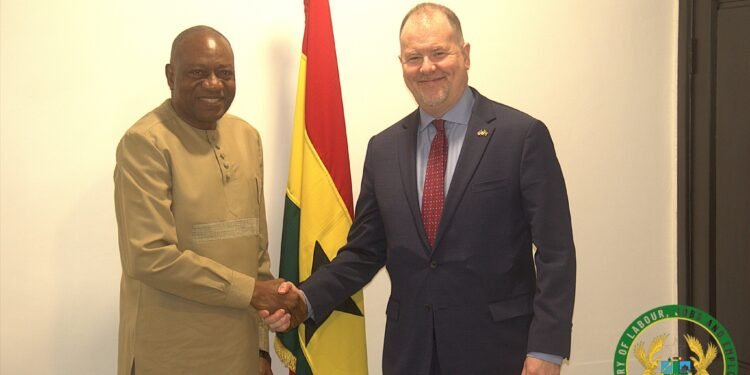
The Minister for Labour, Jobs and Employment, Dr. Rashid Pelpuo, has projected a transformative shift in Ghana’s employment landscape, announcing that the government’s flagship “Big Push” Project is expected to generate approximately 800,000 jobs.
Speaking in an interview, the Minister described the large-scale program, which has seen its 2026 budgetary allocation jump to a record GHS 30.8 billion, as a cornerstone of the administration’s strategy to bridge the national infrastructure deficit while simultaneously tackling unemployment.
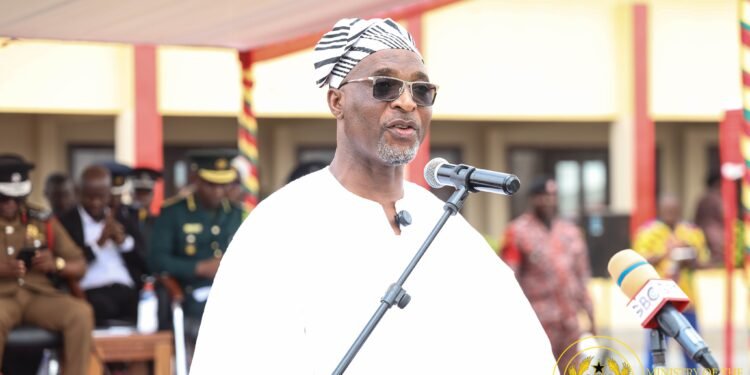
“We also hope that the Big Push programme is going to create a lot of job opportunities. We are estimating about 800,000 people. We are going to have engineers who are going to be used, and their assistants. We are going to have supervisors, and all kinds of people in the big road construction work we are going to do”
Dr. Rashid Pelpuo, Minister for Labour, Jobs and Employment
According to Dr. Pelpuo, the “Big Push” is far more than a simple public works project; it is a national economic reset intended to elevate Ghana to a true middle-income status. He pushed back against critics who have characterized the anticipated employment opportunities as mere “low-level” or temporary roles.
Instead, the Minister emphasized that the project requires a sophisticated workforce, ranging from highly skilled engineers and project supervisors to technical assistants and heavy machinery operators, as it is designed to stimulate economic growth through aggressive investments in roads, rail, and regional connectivity.

Dr. Pelpuo described the scope of the project as unprecedented in Ghana’s history, noting that it will be covering every region and focusing on strategic corridors that have long hindered internal trade. A primary highlight of the initiative is the Accra-Kumasi superhighway, a six-lane expressway designed to slash travel time between the country’s two largest commercial hubs.
Dr. Pelpuo noted that the sheer scale of the road construction alone – estimated to involve over 198 kilometers of modern expressway – will require a massive influx of labor, creating a ripple effect across the construction and logistics sectors.


Beyond the major highways, the Big Push targets the development of “Golden Orbital Motorways” in cities like Kumasi, Takoradi, and Tamale to ease urban congestion. The Minister argued that this nationwide reach ensures that the 800,000 jobs will be distributed across the country, benefiting rural communities and urban centers alike.
Economic Multipliers
Dr. Pelpuo further explained that the benefits of the Big Push extend beyond direct payroll numbers, pointing to the fact that the intensification of construction activity is expected to boost the broader economy by increasing the demand for local materials and heavy machinery.
This surge in procurement and logistics will, in turn, create thousands of indirect jobs in the manufacturing and service industries. The Minister highlighted that increased supervision and activity at local and regional government levels will be necessary to manage the project’s complexity.
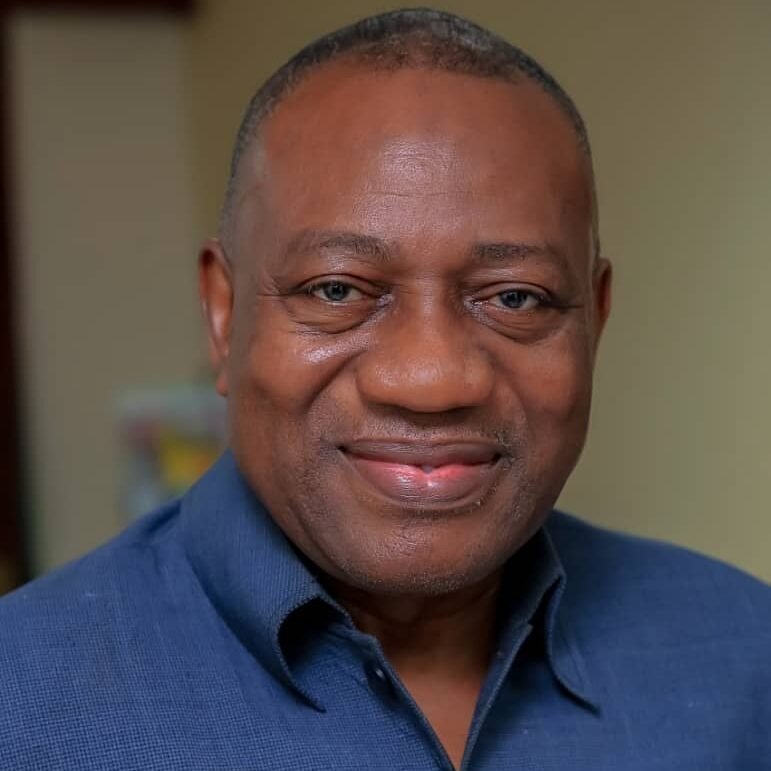
The 2026 fiscal year has been earmarked as a “huge” year for job creation, as the government moves from the stabilization phase of 2025 into full-scale implementation.
With a US$ 10 billion medium-term financing goal, the administration is leveraging petroleum revenues and mineral royalties to ensure the project remains fully funded and independent of unpredictable external aid.
“Imagine the superhighway that is going to be between Accra and Kumasi alone. Imagine the roads connecting every region in this country and the extensive road network that is going to be built to enter everywhere. Everybody is going to benefit from the Big Push”
Dr. Rashid Pelpuo, Minister for Labour, Jobs and Employment
The ultimate aim of the Big Push is to provide the physical backbone for a diversified and resilient economy. Dr. Pelpuo stated that by investing in infrastructure today, the government is laying the groundwork for sustainable growth that will support generations of workers.
He also observed that the project aligns with the broader “24-Hour Economy,” policy, intended to maximize the utility of this new infrastructure by extending productivity hours across the transport and industrial sectors.
As the government begins the first quarter of 2026 with an “implementation first,” mindset, the Minister called for national support for the initiative. He maintained that the success of the Big Push is the key to proving that Ghana can plan, build, and deliver projects of a continental scale.

“The whole idea and aim is to improve the economy of this country. It’s to get the needed infrastructure to put it at the level where Ghana will be a true middle-income country. You will have increased input by contractors, increased workers, and increased purchase of machinery. Everything is going to work”
Dr. Rashid Pelpuo, Minister for Labour, Jobs and Employment
READ ALSO: GIPC Bids Investors Over Ghana’s Solid Macroeconomic Outlook