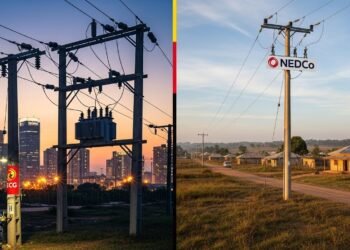
The Africa Sustainable Energy Centre (ASEC) has commended the Government of Ghana for clearing legacy energy sector debts and restoring the World Bank Partial Risk Guarantee, describing the move as a critical milestone in stabilising the country’s power sector.
In a statement reacting to government’s announcement titled “Mahama Administration Pays US$1.470 Billion to Clear Energy Sector Debt and Restore World Bank Guarantee Within First Year,” ASEC said the intervention represents a major step toward reducing systemic risk and rebuilding confidence among investors and international partners.
“ASEC welcomes the clearance of legacy energy sector debts, the restoration of the World Bank Partial Risk Guarantee, and the settlement of outstanding obligations to gas suppliers and Independent Power Producers.”
Africa Sustainable Energy Centre (ASEC)
ASEC noted that the government’s intervention aligns closely with recommendations it has consistently made over the years regarding the dangers posed by the unchecked accumulation of energy sector arrears.
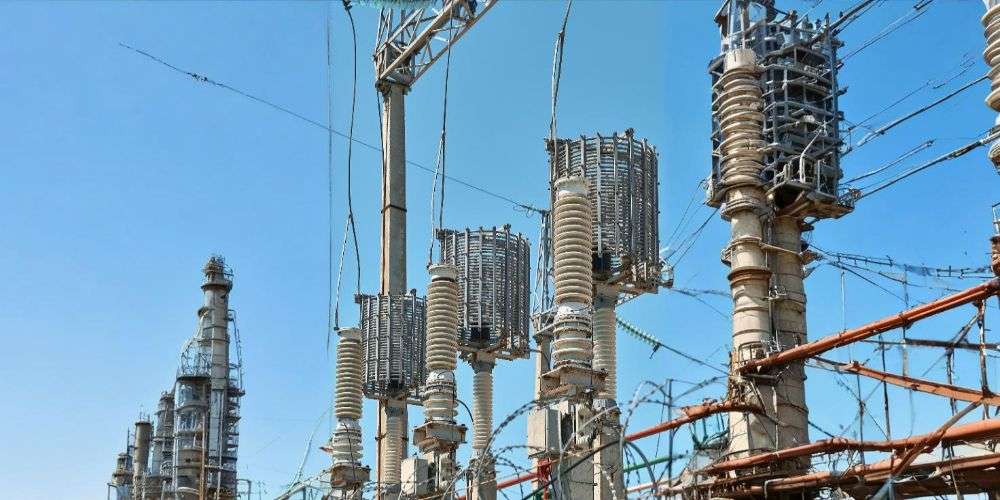
According to the think tank, energy sector debt had become one of the most serious threats to power supply reliability, public finances, and industrial growth.
“ASEC notes that this intervention aligns with several prior calls by ASEC for urgent Government action to address the unsustainable accumulation of energy sector arrears.”
Africa Sustainable Energy Centre (ASEC)
The Centre emphasised that delayed payments across the value chain had weakened utilities, strained relationships with suppliers, and increased the risk of power disruptions.


Restoring Confidence Across the Value Chain

The Centre said the settlement of obligations to gas suppliers and Independent Power Producers, alongside the replenishment of the World Bank Partial Risk Guarantee, has helped restore liquidity and confidence throughout the energy value chain.
ASEC described the restored PRG as especially significant, noting that it had been a key credit enhancement instrument underpinning major investments in gas-to-power infrastructure.
Its depletion, the Centre observed, had undermined investor confidence, while its restoration now signals renewed commitment to contract discipline and payment reliability.
“While commending these achievements, ASEC stresses that the long-term sustainability of these gains depends on resolving the persistent revenue and commercial losses at the Electricity Company of Ghana.”
Africa Sustainable Energy Centre (ASEC)
According to ASEC, ECG’s total system losses, widely estimated at over 30 percent of energy distributed, translate into billions of Ghana cedis in lost revenue each year.
These losses, the Centre warned, undermine the entire power sector value chain and risk recreating the very arrears the government has just cleared.
Call for Accelerated Structural Reforms
ASEC urged government to accelerate the implementation of priority reforms aimed at preventing a recurrence of energy sector debt. Central to these reforms, the Centre said, is a comprehensive overhaul of ECG’s commercial operations.
The Centre called for decisive action by the first quarter of 2026, stressing the need to modernise revenue collection, strengthen governance, and eliminate avoidable leakages.
It argued that without fundamental changes at ECG, the sector risks slipping back into financial distress despite the recent reset.
ASEC also underscored the importance of maintaining strict discipline in the implementation of the Cash Waterfall Mechanism, noting that predictable and timely payments are essential to sustaining confidence across the value chain.
Beyond ECG reforms, ASEC highlighted the need for broader sector-wide measures. It emphasised that electricity tariffs must be aligned with cost-reflective principles to ensure financial sustainability, while vulnerable consumers should be protected through targeted and transparent subsidies.
The Centre also pointed to weaknesses in power procurement and long-term planning, warning that excess capacity costs continue to impose a heavy financial burden on the sector.
According to ASEC, improving planning and procurement discipline is essential to avoiding unnecessary obligations that strain public finances.
Clearing Arrears Only the First Step
ASEC stressed that while clearing inherited arrears is commendable, it should be seen as the beginning rather than the end of reform. “Only deep, institutionalised reforms particularly at ECG, will permanently break the cycle of energy sector debt accumulation,” the Centre cautioned.
It warned that without sustained political commitment to reform, the structural drivers of debt could re-emerge, eroding the gains made through the recent intervention.
Reaffirming its role as a policy advocate, ASEC said it remains committed to supporting government and stakeholders through research, dialogue, and stakeholder engagement.
The Centre said its objective is to help build a financially sustainable, efficient, and resilient energy sector capable of underpinning Ghana’s industrial growth and long-term national development.
According to ASEC, the recent debt clearance marks an important turning point, but the ultimate measure of success will be whether Ghana can translate this fiscal reset into durable institutional reform that secures the energy sector for generations to come.
READ ALSO: Senior NPP Members Have No License For Reckless Commentary – Zaato Slams Frimpong-Boateng