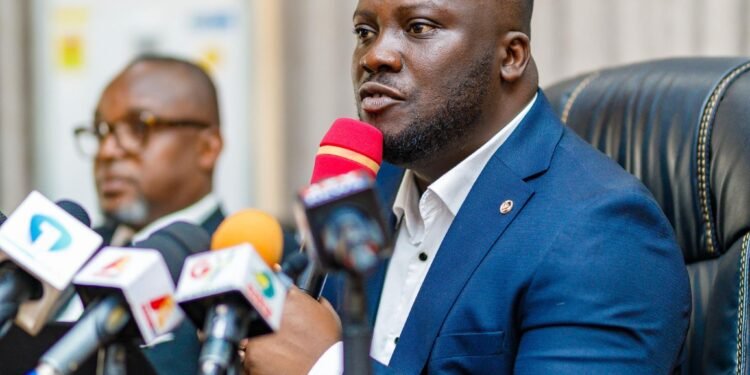
Dr. Tiah Abdul-Kabiru Mahama, the Member of Parliament for Walewale and a member of the Finance Committee, has sounded the alarm regarding the Domestic Gold Purchase Programme (DGPP), characterizing the situation as an “unprecedented and historic mess” that requires immediate legislative intervention.
Following revelations from the International Monetary Fund (IMF) regarding a staggering $214 million loss, Dr. Mahama asserted that despite efforts by some media outlets and political actors to “spin” the narrative with terms like “accounting cost,” the reality remains a “quasi-fiscal loss” that threatens the financial integrity of the Bank of Ghana (BoG).
He argues that the masses are being “fed to stay misinformed” by propaganda and “party fanatics,” but the gravity of the situation necessitates a transparent resolution through a formal Parliamentary Inquiry to prevent the “surgical control of accurate information.”
“According to the IMF, the GoldBod component of the domestic gold purchase program has caused a loss of $214 million and this loss is due to fees, trading activities and exchange rate movement. It is fiscal loss and government will have to finance it in the budget and cannot or ought not to sit as a loss to the BoG. Parliamentary Inquiry is the way to fix this unprecedented and historic mess.”
Dr. Tiah Abdul-Kabiru Mahama
While the IMF acknowledges that the program helped build international reserves and eased foreign exchange pressures during a “difficult period for Ghana,” it explicitly quantified a $214 million loss originating from “trading activities, fees, and exchange rate movement.”
The central point of contention lies in the “quasi-fiscal” nature of these losses; they currently sit on the Central Bank’s balance sheet rather than the government’s direct fiscal balance sheet.
Dr. Mahama emphasized that this is a “fiscal loss” that the government must eventually finance in the budget.


Resolving the Confusion through Legislative Oversight

The “historic mess” identified by Dr. Kabiru Mahama is compounded by the complex “triangular trade” and “statistical mismatches” inherent in Ghana’s gold exports.
Recent research into our extractive data suggests discrepancies in historical trade figures, driven by routing gold through various international hubs, which makes it nearly impossible for the public to discern whether the DGPP is truly strengthening the cedi or “quietly creating new fiscal risks.”
A Parliamentary Inquiry would serve as a forensic tool to “use our heads beyond headlines,” forcing a disclosure of the actual “GoldBod-linked channel” operations and the impact of the fees paid to intermediaries.
By bringing these “quasi-fiscal losses” onto the national balance sheet, an inquiry would ensure the Bank of Ghana remains “well-positioned to deliver on its key price stability mandates” without being burdened by the government’s trading shortfalls.
Strengthening Transparency and Governance Frameworks
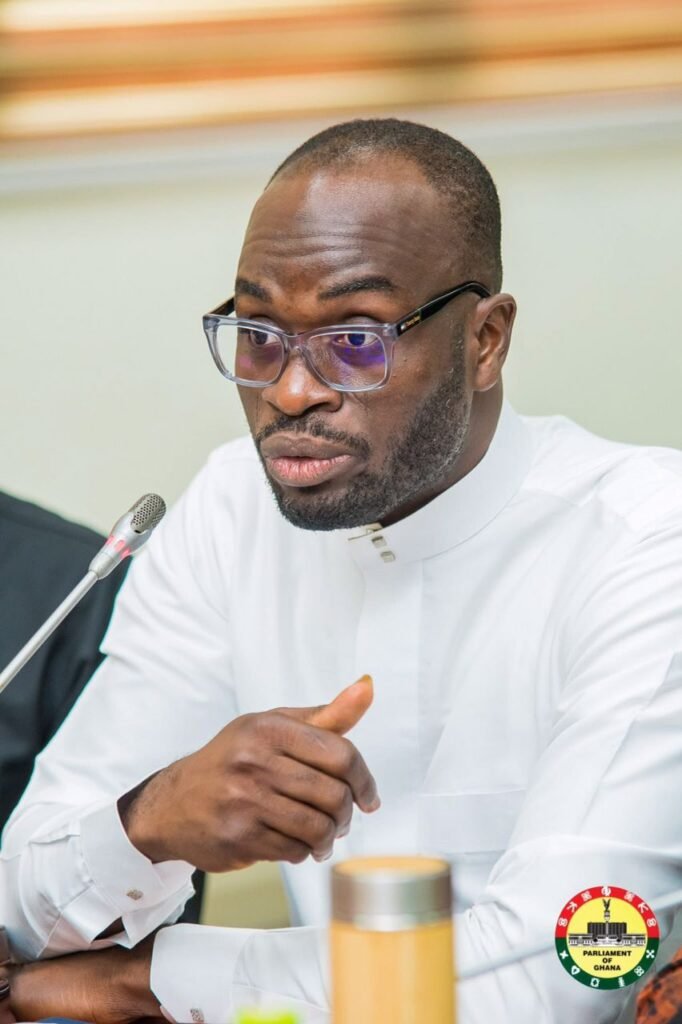
To move past the current state of “sorry delusion” and misinformation, the extractive industry requires a robust governance framework that the current DGPP structure lacks.
The IMF has specifically recommended “strengthening transparency, governance, and risk management” for the GoldBod-linked channels to ensure institutional integrity.
Dr. Mahama’s call for a bipartisan probe is not merely a political move but a necessary step to align the program with international standards of mineral resource management.
An inquiry would provide the platform to scrutinize why these “trading activities” led to such massive deficits and why the entity now operates with such high “quasi-fiscal” overheads.
Fixing this “mess” requires moving these losses from the shadows of the BoG’s books into the light of the national budget, ensuring that the “surgical control” of information is broken in favor of authentic accountability.
Institutional Credibility and the Path Forward

Ultimately, the credibility of Ghana’s financial and extractive institutions hangs in the balance as we navigate this economic recovery.
The IMF’s warning that the DGPP “poses risks to the financial sustainability of the BoG” cannot be ignored or papered over with “paid headlines” and “unambiguous” spin.
Dr. Kabiru Mahama insisted that “no amount of spin” can change the fact that a $214 million hole exists due to “exchange rate movement” and operational inefficiencies.
By establishing a Parliamentary Inquiry, the state can move beyond the “perceptively anaemic” arguments currently dominating the airwaves.
READ ALSO: Standard Chartered Tops Ghana’s Retail Banking CX Rankings for Second Straight Year