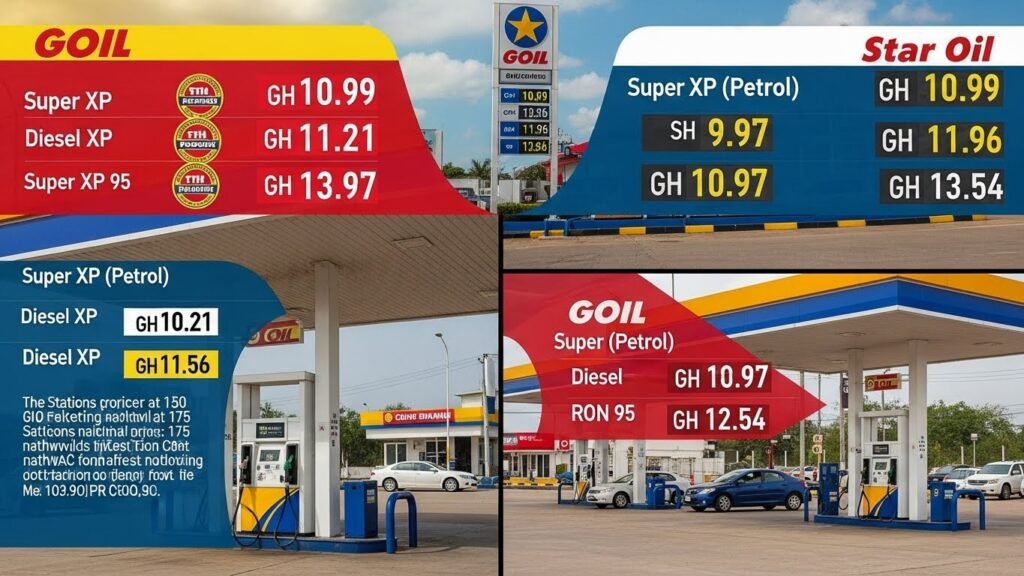
As fuel price wars intensify across Ghana’s downstream petroleum sector, former Minister of Power, Dr Kwabena Donkor, has cautioned that some of the pricing strategies being deployed by Oil Marketing Companies (OMCs) may be unlawful.
While acknowledging the relief cheaper fuel brings to consumers, he warned that selective discounting at specific filling stations threatens a core principle underpinning Ghana’s petroleum pricing framework.
Dr Donkor argued that Ghana’s petroleum pricing regime is anchored in a legal requirement for uniform prices across an OMC’s entire network. According to him, discounting fuel at selected outlets while maintaining higher prices elsewhere breaches that principle.
“What some OMCs are doing breaks the law and that is a law on uniform petroleum prices and that getting that law is that you must sell at the same price across your network.”
Dr Kwabena Donkor, former Minister of Energy
He explained that while OMCs are free to reduce prices, such reductions must be applied uniformly.
“You can decide, if you decide to discount, you should discount across the whole network. You cannot discount on select filling station.”
Dr Kwabena Donkor, former Minister of Energy
Risk of Undermining a National Policy
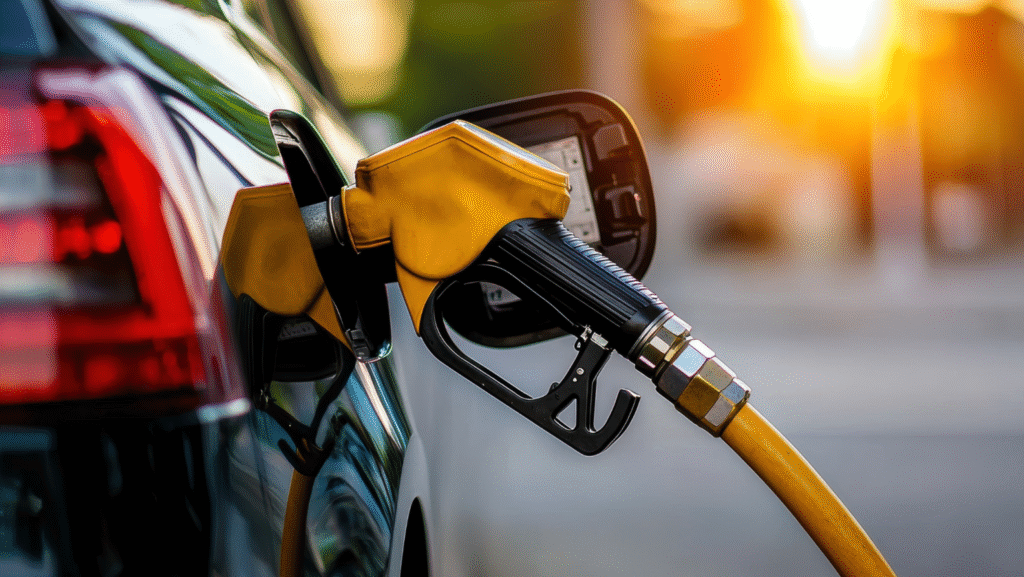
Beyond legal concerns, the former minister warned that short-term competitive tactics could erode a foundational national policy that has guided petroleum pricing for decades.


He described the uniform pricing system as a deliberate policy choice designed to ensure fairness and equity for consumers across the country.
Dr Donkor’s comments come amid growing public excitement over falling pump prices, driven by aggressive competition among OMCs seeking to attract customers.
Dr Donkor anchored his warnings in his long involvement in Ghana’s petroleum sector, noting that he has been part of pricing decisions for decades. “I’ve been involved in this,” he said, recalling his role in shaping petroleum pricing policy.
“Indeed, when I was Chief Executive of BOST in the late 90s, I was responsible for petroleum pricing and I’ve been involved since then.”
Dr Kwabena Donkor, former Minister of Energy
His experience, he argued, gives him insight into why uniform pricing was adopted and why it remains relevant.
“This country decided a map of national policy that petroleum prices should be saved across the country irrespective of geographical location.”
Dr Kwabena Donkor, former Minister of Energy
Uniform Price Mechanism
The former minister highlighted that uniform pricing is sustained through dedicated funds contributed by consumers and industry players.
“That is the underlying principle of the uniform petroleum price and funds that we contribute to in order to maintain this policy of having the same price across the country.”
Dr Kwabena Donkor, former Minister of Energy
He warned that selective discounting could weaken the financial base of this system, potentially leading to regional price disparities and supply challenges in the future.
Dr Donkor also revisited Ghana’s decision to deregulate petroleum pricing, noting that deregulation does not imply the absence of rules. Instead, it places a greater burden on regulators to enforce fair play.
“I was also involved in deregulation. When you deregulate, that is when you need a strong regulator to put in the checks,” he said. According to him, the regulator’s role is to protect both consumers and the industry from harmful practices.
He stressed that competition must not come at the expense of market stability or legal compliance, warning that weak enforcement could encourage a race to the bottom.
Why Fuel Prices Are Falling
While criticising selective discounting, Dr Donkor acknowledged that consumers are benefiting from lower fuel prices and said he personally welcomes the relief. “Reducing prices, I am a consumer and I am extremely happy that prices are coming down,” he noted.
However, he clarified that the current downward trend in prices is largely driven by broader economic factors rather than aggressive discounting alone. According to him, two key developments are responsible.
“One, rising on the international market is coming down and two, we have a strong cedi now.
“The combination of the two automatically results in a downward trend in prices.”
Dr Kwabena Donkor, former Minister of Energy
As fuel price wars continue to dominate public conversation, Dr Donkor’s intervention highlights the tension between market competition and long-standing policy safeguards.
His warning suggests that while consumers may enjoy short-term gains, unchecked discounting could undermine legal frameworks designed to ensure fairness, stability, and nationwide equity in fuel pricing.
With regulators under pressure to respond, the debate is increasingly shifting from how low prices can go to how competition can be balanced with compliance in Ghana’s deregulated petroleum market.
READ ALSO: UK Defends Chagos Islands Deal Amid Trump Criticism