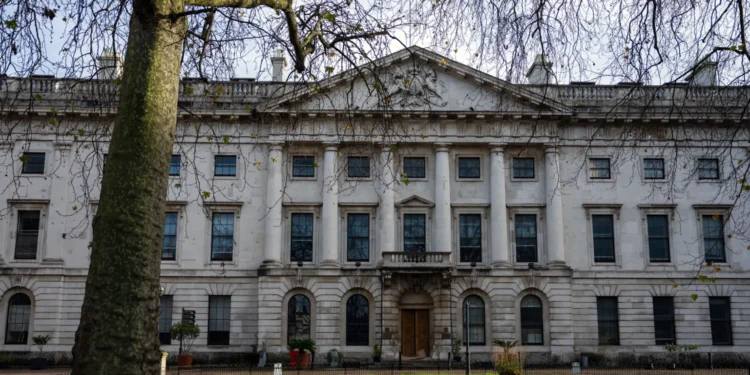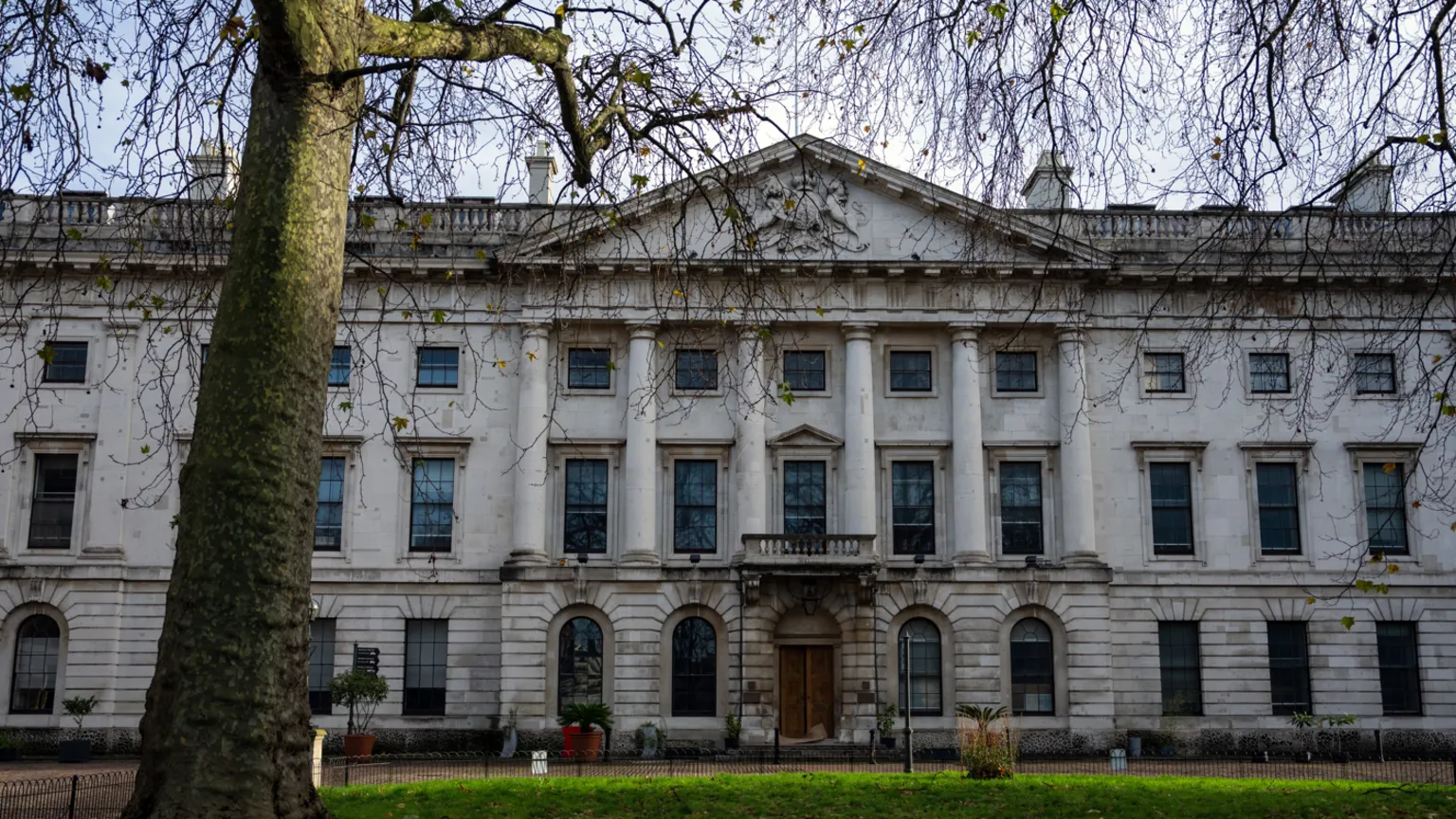
UK’s government has approved plans for China to build a mega embassy close to London’s financial district.
This comes despite warnings from lawmakers, residents and Chinese dissidents-in-exile that the sprawling complex could pose security risks.
The planning decision, a 240-page document, concluded that “the proposal complies with the development plan when taken as a whole,” and as such “planning permission and listed building consent should be granted.”
China bought the site at Royal Mint Court, where Britain used to strike coins, for around $312 million in 2018. However, a decision on the plans for the new 20,000 square-meter (215,000 square-foot) embassy – which would become China’s largest diplomatic outpost in Europe – was delayed three times before the government granted approval today.
The delays are a measure of the British government’s uncertainty about its approach to China. Britain wants China’s money and diplomatic goodwill, but has long been wary about allowing Beijing to build an embassy that would sit near fiber-optic cables carrying sensitive data for financial firms, and which some fear could be used to spy on Chinese nationals living in London.

Days before the government’s approval, a British newspaper, published what it said were unredacted plans showing that China intends to build a complex of 208 rooms underneath the embassy.


One of the rooms, the paper said, would sit directly alongside and only a few feet away from fiber-optic cables that carry millions of British people’s email traffic and financial data.
Alicia Kearns, the Shadow National Security Minister for the opposition Conservative Party, warned last week that, if granted, the plans “would give the Chinese Communist Party a launchpad for economic warfare against our nation” and “create a daily headache for our security services.”
The Heads of MI5 and GCHQ said that measures put in place to deal with the security risks posed by the Chinese “super-embassy” approved for the centre of London are “professional and proportionate.”
In a joint letter to Shabana Mahmood, the Home Secretary, and Yvette Cooper, the Foreign Secretary, submitted as part of the government’s consideration of the application, they say that it is not realistic to remove every risk.
However, they suggest that the level of risk is acceptable. Sir Ken McCallum, the MI5 Director General, and Anne Keast-Butler, the GCHQ Director, said that the MI5 has over 100 years of experience managing national security risks associated with foreign diplomatic premises in London.
“For the Royal Mint Court site, as with any foreign embassy on UK soil, it is not realistic to expect to be able wholly to eliminate each and every potential risk. (And even if this were a practicable goal, it would be irrational to drive ‘embassy-generated risk’ down to zero when numerous other threat vectors are so central to the national security risks we face in the present era.)”
Sir Ken McCallum, the MI5 Director General, and Anne Keast-Butler, the GCHQ Director
They added that however, the collective work across UK intelligence agencies and HMG departments to formulate a package of national security mitigations for the site has been, in their view, expert, professional and proportionate.
Mitigations In Place To Deal With National Security Issues
Referring to the steps that have been taken to reduce the risks, McCallum and Keast-Butler noted that as detailed in classified briefings given to the intelligence and security committee of parliament, the package of mitigations deals acceptably with a wide range of sensitive national security issues, including cabling.
They added that these mitigations will be subject to regular review through a cross-government process, led at senior level in the Home Office.
Further, they stressed that it is worth reiterating that the new embassy will replace seven different diplomatically-accredited sites across London which China currently operates; “this consolidation should bring clear security advantages.”
At the Downing Street lobby briefing, the Prime Minister’s Spokesperson said that the risks around secret rooms in the Chinese mega embassy planned for London are being appropriately managed.
The Spokesperson added that ministers have seen the unredacted plans for the embassy.
READ ALSO: Ghana Gospel Icon Yaw Sarpong Dead