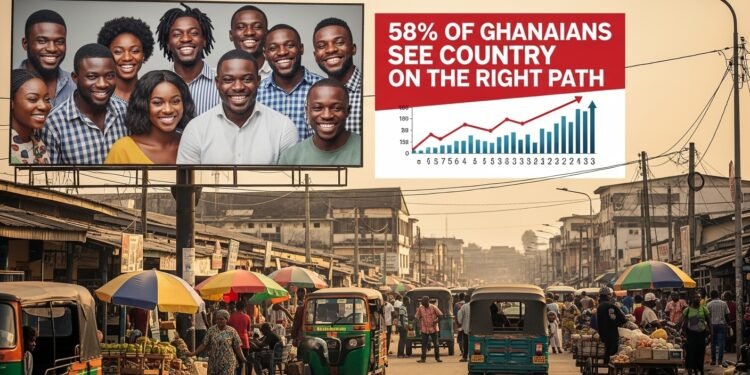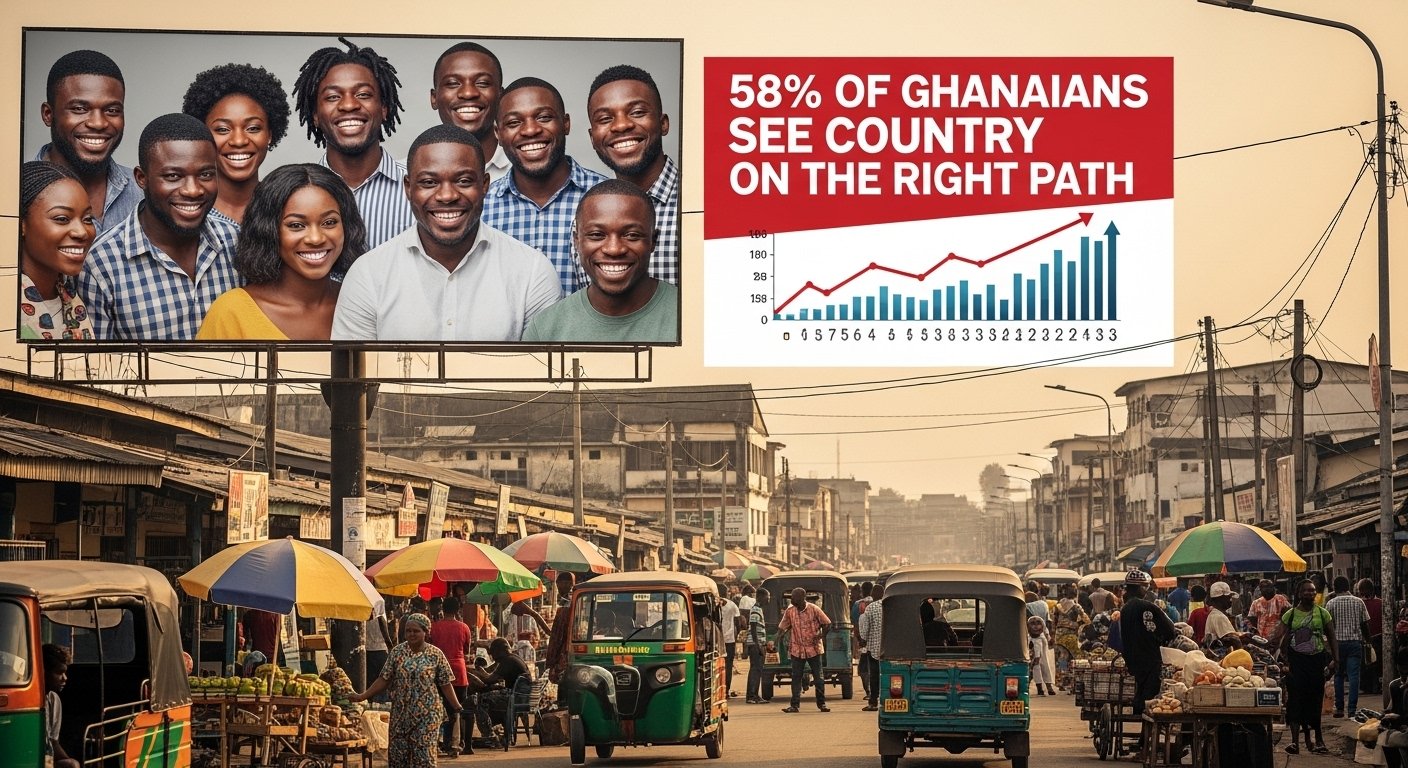
Most Ghanaians believe the country is headed in the right direction, according to a new nationwide survey conducted by the Institute of Economic Affairs (IEA).
The findings reflect growing public optimism following political transition and notable macroeconomic improvements recorded in 2025, even as significant socioeconomic challenges persist. The survey, released on 21 January 2026, comes against the backdrop of a change in government and improving economic indicators.
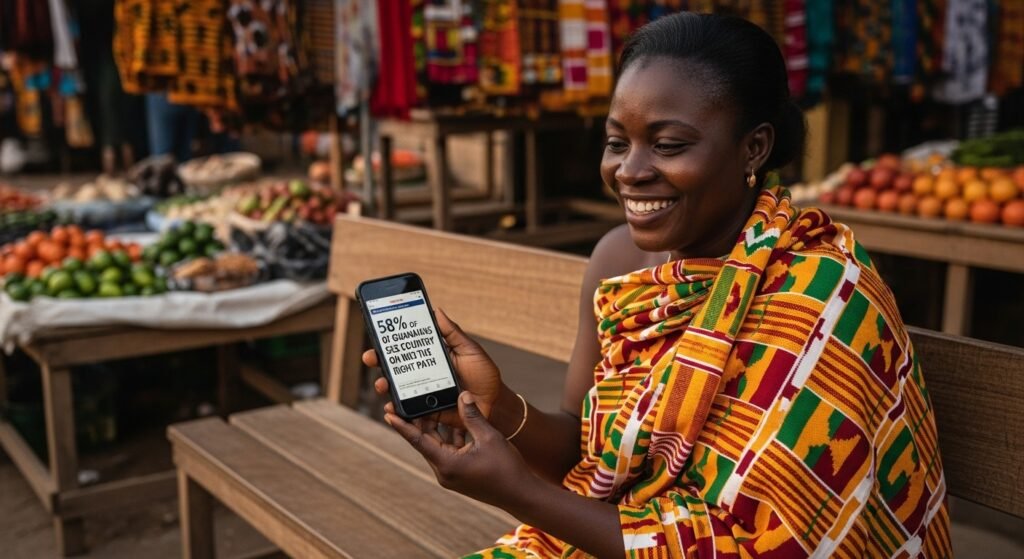
Based on the responses, the survey found that a majority of Ghanaians are broadly satisfied with the country’s trajectory. “Most Ghanaians (58%) are happy with the direction of the country,” the IEA reported.
The IEA poll was conducted across all 16 regions of Ghana between 20 and 28 December 2025, capturing responses from 1,022 respondents.
The objective was to assess public perceptions of national progress and whether citizens feel the country is moving in the right direction under the new administration.


“Ghana experienced significant changes in 2025.
“A new government took office, and the macroeconomic environment improved significantly, though many socioeconomic challenges remain.”
Institute of Economic Affairs (IEA)
Public Opinion on New Government’s Direction

According to the think tank, the arrival of a new government brought fresh economic and development policies as well as a leadership style that has sparked nationwide debate.
Against this background, respondents were asked directly whether they were happy with how things were going in Ghana.
The survey showed that while 58 per cent of respondents expressed satisfaction, 34 per cent said they were unhappy with the direction of the country, and 8 per cent were undecided.
The results suggest cautious optimism among the population, with a clear majority expressing confidence, but a sizeable minority remaining unconvinced.
“This result is not surprising, considering the macroeconomic gains recorded in 2025,” the report stated, noting that the cedi appreciated by about 32 per cent against the US dollar between 2024 and 2025.
The strengthening of the local currency, combined with broader macroeconomic stability, helped to ease inflationary pressures. This was reflected in falling fuel prices at the pump and reduced costs of some imported consumer goods.
As a result, inflation declined sharply from 23.8 per cent in 2024 to 5.4 per cent in 2025, a turnaround that appears to have resonated strongly with households and businesses alike.
Debt, Lending Rates and Recovery Efforts
Beyond currency and inflation trends, the IEA pointed to other positive economic indicators that may have influenced public perception.
These include a sharp decline in the country’s debt-to-GDP ratio, which fell from 61.8 per cent at the end of December 2024 to 45 per cent by the end of October 2025.
Over the same period, average lending rates declined from 30.2 per cent to 22.2 per cent, easing the cost of borrowing for businesses and individuals.
The Institute also noted a gradual recovery from the effects of the Domestic Debt Exchange Programme, which had previously strained household finances and investor confidence.
According to the IEA, “confidence is gradually returning to, and many Ghanaians are increasingly hopeful for a better tomorrow under the new government.”
Despite the positive outlook, the IEA cautioned that optimism remains fragile. The 34 per cent of respondents who said they were unhappy with the direction of the country represent a significant portion of the population.
“Notwithstanding the positives, the proportion of people who indicated they are not happy with the way things are going in Ghana shows that a sizeable minority of the population remains discontented about national progress.”
Institute of Economic Affairs (IEA)
The Institute stressed that this dissatisfaction underscores the importance of addressing bread-and-butter issues that directly affect everyday life, including employment, cost of living, and access to essential services.
Opportunity for Bold Reforms
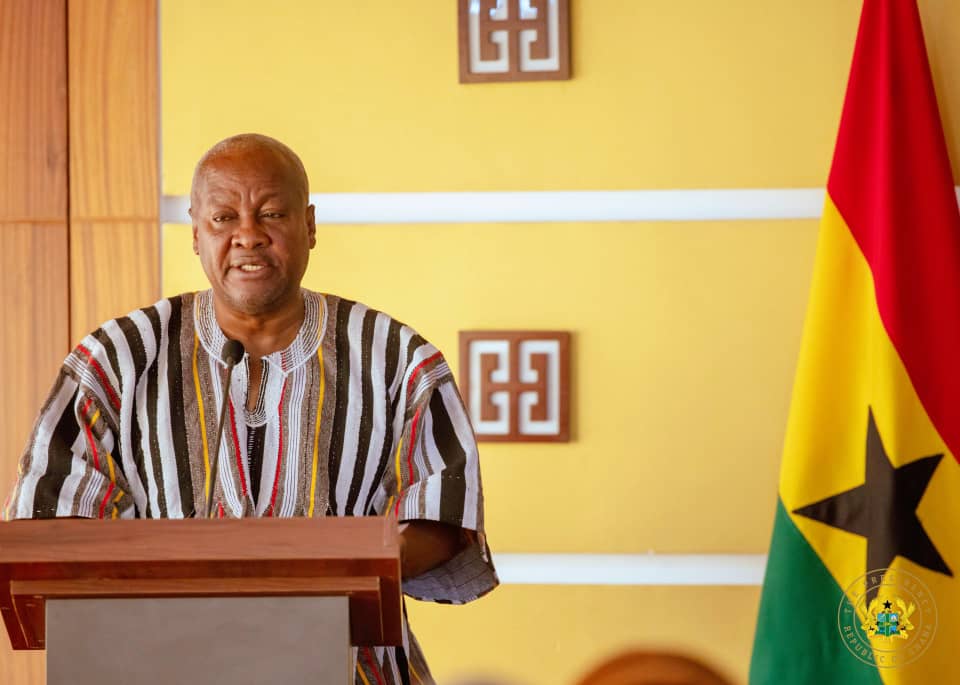
In its conclusion, the IEA said the survey results present both encouragement and responsibility for the new government. While most Ghanaians currently feel positive about the country’s direction, sustaining that optimism will require deliberate policy choices.
“The survey results show that most Ghanaians are happy with the direction of the country,” the Institute said, attributing the sentiment to government policies that have improved economic conditions and inspired hope.
According to the IEA, this renewed confidence offers a unique opportunity for the government to pursue bold structural reforms to consolidate gains and build a more resilient and inclusive economy.
As Ghana journeys 2026, the survey suggests that while public confidence is recovering, maintaining trust will depend on translating macroeconomic progress into tangible improvements in the daily lives of citizens.
READ ALSO: Frontier Market Struggles Threaten Ghana’s Economic Transformation Agenda