The Institute for Energy Security (IES) has expressed concern over Star Oil’s decision to suspend its membership of the Chamber of Oil Marketing Companies (COMAC), warning that the move risks weakening the industry’s collective voice at a critical moment.
The development comes as oil marketing companies prepare for renewed engagement with the National Petroleum Authority (NPA) over the controversial price floor policy outlined in the 2024 petroleum products pricing guidelines.
Reacting to the announcement, Senior Research and Policy Analyst at IES, Derrick Xatse, said the decision does not benefit either party and could undermine coordinated industry advocacy, particularly given Star Oil’s position as a leading player in the downstream petroleum sector.
“To a larger extent, none of them benefit,” he said, noting that the situation ultimately places Star Oil at a disadvantage.
“Especially it goes to the disadvantage of Star Oil because if you take all the oil marketing companies, we have over 144 active oil marketing companies across board.”
Derrick Xatse, Senior Research and Policy Analyst at IES
Market Leadership Does Not Equal Market Control

Mr Xatse sought to place Star Oil’s influence within the broader market context, explaining that while the company is a leader, it does not dominate the sector to the extent that it can act alone without consequence.


According to him, Star Oil accounts for about 10.7 percent of the market, while the top 20 oil marketing companies collectively control roughly 80 percent.
“So you have a chunk of oil marketing companies, about maybe 100 plus, that are almost serving just the 20% of the market.”
Derrick Xatse, Senior Research and Policy Analyst at IES
In his view, this structure makes collective action through COMAC more effective than individual positioning, even for market leaders.
He argued that COMAC, as an industry body representing more than 80 percent of market share, holds greater leverage in regulatory engagements.
Exit Diminishes COMAC, But Hurts Star Oil More
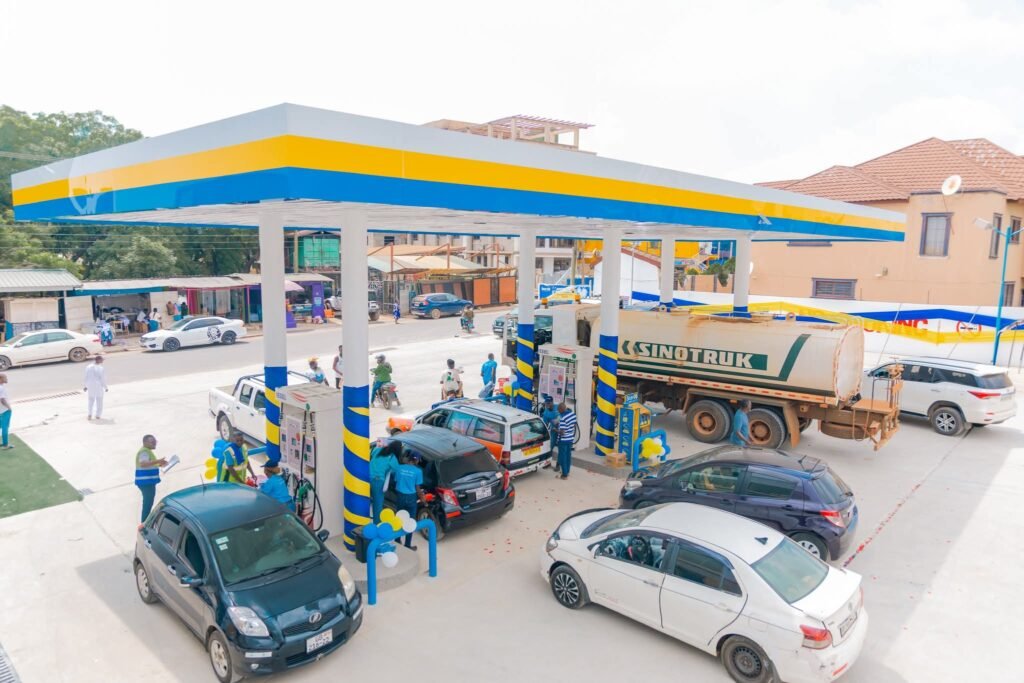
While acknowledging that Star Oil’s absence slightly weakens COMAC’s voice, Xatse stressed that the bigger loss is for the company itself.
“Even though if the leader of the industry, that is Star Oil, had added their voice to COMAC, it would have driven home the point that they wanted to achieve.”
Derrick Xatse, Senior Research and Policy Analyst at IES
“But now that they are out of it, it lessens the voice of COMAC a little bit. But the more disadvantaged one is Star Oil,” he added, underscoring the importance of unity ahead of discussions with the regulator.
Star Oil announced on Wednesday, January 21, that it had suspended its COMAC membership with immediate effect.
The company cited dissatisfaction with how the Chamber has handled opposition to the fuel price floor policy, which has divided opinion within the industry.
Call for Dialogue and Compromise

Mr Xatse urged Star Oil not to adopt what he described as an entrenched position, stressing the importance of dialogue and compromise in resolving internal disagreements.
“For it to get to the point that one of their members who wants to pull out, especially not just an ordinary member, but a leader in the Ghanaian downstream industry… is quite unfortunate.”
Derrick Xatse, Senior Research and Policy Analyst at IES
He emphasised that speaking with “one voice” is essential for effective engagement with the NPA and for advancing the broader interests of the sector.
“It is high time that we expect that they come back together and have a uniform voice,” he added, urging Star Oil to reconsider its stance in the interest of industry cohesion.
Meanwhile, COMAC is expected to hold a board meeting today to forge a unified position on the fuel price floor policy.
Star Oil’s suspension is expected to feature prominently on the agenda as the Chamber seeks to manage internal divisions and prepare for further engagement with the regulator.
IES hopes the meeting will pave the way for reconciliation and a consensus-driven approach.
According to Mr Xatse, resolving the disagreement internally would allow the industry to engage the NPA more constructively and ensure that policy outcomes reflect both market realities and long-term sector stability.
As debates over fuel pricing continue, the unfolding relationship between Star Oil and COMAC is being closely watched, with many in the industry hoping for a resolution that restores unity at a time when collective action matters most.
READ ALSO: Government Begins Process to Implement Constitutional Review Proposals