Financial analyst Senyo Hosi has entered the intensifying debate over fuel pricing in Ghana’s downstream petroleum sector, insisting that recent criticisms directed at Star Oil Chief Executive Officer Philip Tieku are rooted in a fundamental misunderstanding of his remarks.
According to Hosi, the controversy has unfairly portrayed the Star Oil boss as seeking to undermine regulation, when his real concern was the rigidity of existing pricing mechanisms.
“I have spoken to Philip. I want to believe he has been misunderstood,” Hosi said, stressing that Tieku’s comments were misinterpreted in the heat of public discourse. “What he wanted to say… was that there are intertemporal opportunities to respond to the market—to price changes.”
At the heart of Hosi’s explanation is the impact of foreign exchange movements on fuel pricing. He pointed to periods in which the Ghanaian cedi strengthened rapidly against the US dollar, arguing that such shifts should allow fuel prices to adjust downward more quickly for the benefit of consumers.
He noted that Tieku’s argument was not a call for deregulation or market anarchy, but rather a plea for greater flexibility within the existing regulatory framework to reflect real-time economic conditions.
Price Floor at Centre of Controversy
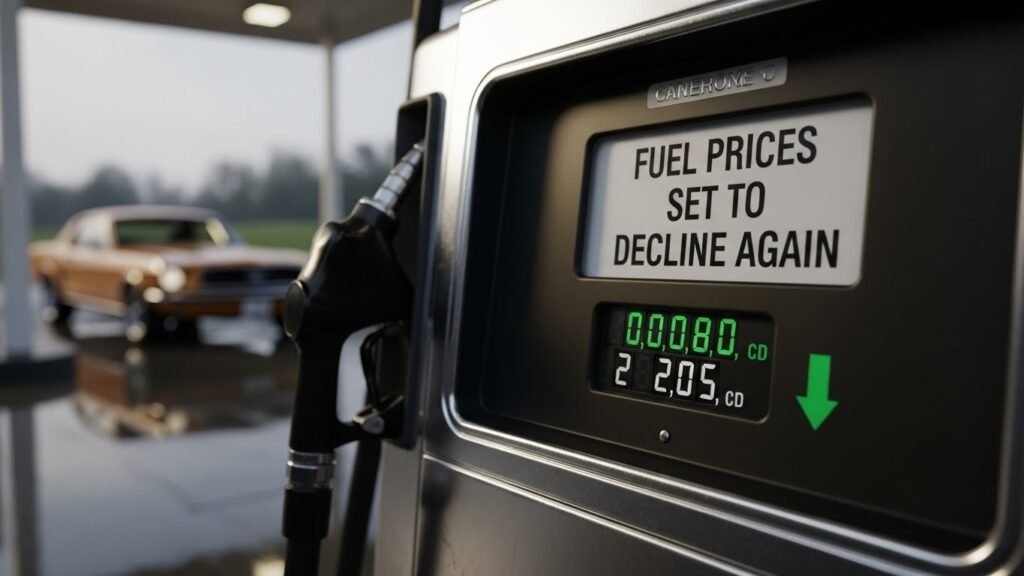


The debate revolves around the National Petroleum Authority’s Petroleum Price Floor Programme, introduced in April 2024. The policy sets a minimum retail price every two weeks, a measure the NPA says is designed to curb predatory pricing, protect government tax revenues, and ensure fair competition among oil marketing companies.
However, Hosi argued that the 14-day pricing window has become a rigid constraint that can trap potential savings when exchange rates move favorably within that period.
“Because Bulk Import, Distribution, and Export Companies price their products in US dollars, the exchange rate is the biggest driver of pump prices.
“The BDCs’ price is ultimately in dollars; they convert it into cedis at an exchange rate.”
Financial analyst Senyo Hosi
According to Hosi, once a price floor is set for a two-week window, oil marketing companies are effectively barred from responding to positive currency movements that occur mid-cycle.
Even if the cedi appreciates significantly, companies are unable to pass on those savings to consumers until the next pricing window opens.
He described this rigidity as an unintended consequence of regulation, particularly problematic at a time when policymakers are seeking to ease cost-of-living pressures.
Industry Divisions Laid Bare

The controversy escalated early last week when Star Oil announced the suspension of its membership in the Chamber of Oil Marketing Companies (COMAC). The company accused the industry body of failing to fairly represent its position amid the public backlash.
Some critics alleged that Star Oil was attempting to use its market dominance to undercut competitors. Hosi rejected this claim outright, pointing to the company’s pricing record.
“Look, take out the price floor. Would he have gone down?
“He has a price floor today. He hasn’t sold yet below the price floor or even matched the price floor. Not for once.”
Financial analyst Senyo Hosi
The dispute has exposed deep fault lines within the petroleum downstream sector. While the NPA and COMAC continue to defend the price floor as a necessary safeguard against predatory pricing and tax evasion, policy think tanks have become increasingly critical.
The Africa Centre for Energy Policy (ACEP), among others, has described the policy as a “lazy solution,” arguing that it penalizes efficient operators who could otherwise offer lower prices through better cost management and economies of scale.
Regulation Versus Consumer Welfare

As the largest player in the market, Star Oil’s position has amplified the debate. Hosi suggested that the real issue is not whether the sector should be regulated, but whether current regulations are optimally designed to protect consumers without stifling efficiency.
He warned that a well-intentioned policy could inadvertently act as an extra cost burden during periods of economic recovery, when consumers should ideally feel relief from improving macroeconomic indicators.
With fuel prices continuing to play a critical role in inflation and household spending, the pressure on regulators to strike the right balance is mounting. Hosi’s intervention has reframed the controversy, shifting attention from personalities to policy design.
As discussions continue, the central question remains whether Ghana’s fuel pricing framework can evolve to reflect market realities without sacrificing oversight, ensuring that gains from currency stability translate into tangible relief at the pump.
READ ALSO: More Than 9,000 Flights Canceled Across US