Ghana’s cocoa industry has received a major boost following the endorsement by the Bank of Ghana of a $134 million risk-sharing agreement between Access Bank Ghana PLC and the International Finance Corporation.
The intervention comes at a critical moment for Licensed Buying Companies, which have been grappling with severe liquidity constraints ahead of the 2025/2026 cocoa season. With cocoa remaining a cornerstone of Ghana’s export earnings and rural employment, the deal signals renewed confidence in private sector-led solutions to stabilise the value chain.
The agreement is designed to unlock much-needed working capital for LBCs, which serve as the primary link between smallholder farmers and the international cocoa market. Without adequate financing, these companies risk failing to purchase beans on time, a situation that could disrupt farmer incomes and weaken national export performance.
Liquidity Pressures Facing Licensed Buying Companies
Licensed Buying Companies have come under intense financial strain following delays in COCOBOD’s traditional syndicated loan arrangements. These syndicated facilities have historically provided the backbone of financing for cocoa purchases at the farm gate. However, timing challenges and tighter global financial conditions have left LBCs struggling to secure funds to operate smoothly.
The liquidity crunch has threatened the ability of buyers to pay farmers promptly, raising concerns about reduced participation in cocoa production and potential smuggling across borders. In this context, the Access Bank and IFC facility is being viewed as a critical stopgap that protects both livelihoods and the integrity of Ghana’s cocoa purchasing system.
BoG Frames LBC Support as National Priority
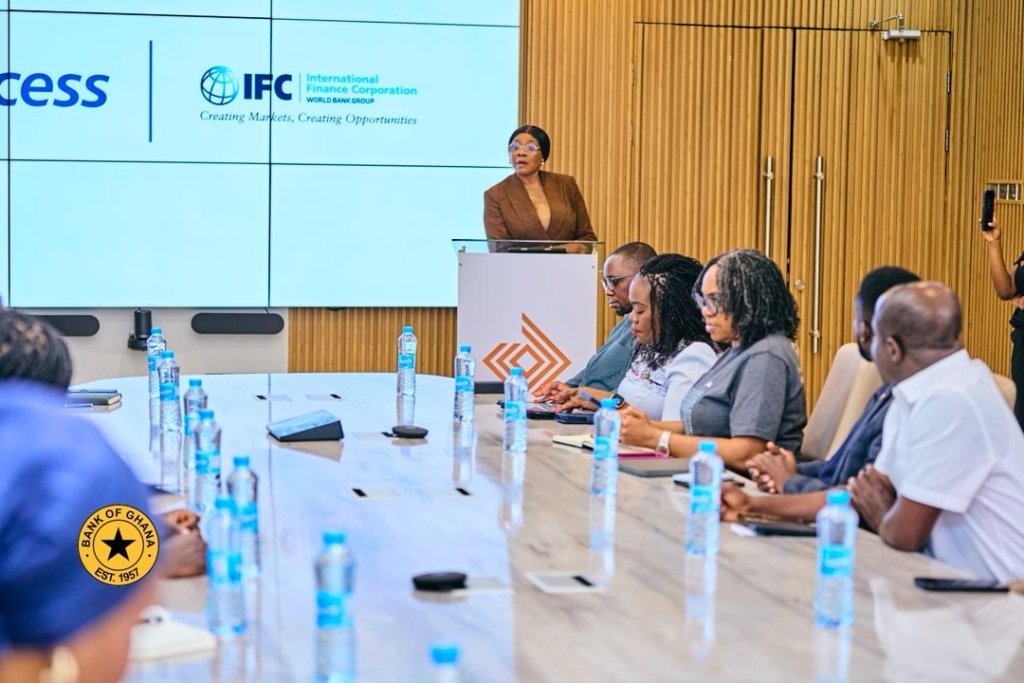
Speaking at the signing ceremony, the Second Deputy Governor of the Bank of Ghana, Mrs. Matilda Asante-Asiedu, stressed that the intervention goes beyond commercial considerations. According to her, Licensed Buying Companies play a strategic role in sustaining rural economies and maintaining confidence across the cocoa value chain.


She noted that ensuring liquidity for LBCs is essential to safeguarding rural livelihoods, stabilising export earnings, and strengthening exchange rate resilience. In her view, a stable cocoa sector is inseparable from broader macroeconomic stability, given cocoa’s contribution to foreign exchange inflows and fiscal revenues.

Risk-Sharing Structure Unlocks Cheaper Credit
At the core of the $134 million agreement is a risk-sharing mechanism that allows the IFC to provide an unfunded guarantee covering up to 50 percent of the risk on loans extended by Access Bank to eligible LBCs. This structure significantly reduces the bank’s exposure and enables it to lend more confidently within a challenging operating environment.
By lowering risk, the facility allows Access Bank to offer financing at more competitive rates and on more flexible terms than would typically be available under purely commercial lending conditions. This approach ensures that funding reaches the farm gate quickly, enabling LBCs to pay farmers promptly and maintain steady cocoa flows throughout the season.
Targeted Support for Key Cocoa Buyers
The facility targets six major Licensed Buying Companies, including AgroECOM, Nyonkopa of the Barry Callebaut Group, and FedCo. These firms account for a substantial share of cocoa purchases nationwide and play a critical role in aggregating beans from smallholder farmers across cocoa-growing regions.
By focusing on established players with strong operational capacity, the initiative aims to maximise impact while minimising credit risk. The targeted nature of the support also ensures that the benefits of the financing cascade directly to farmers through timely payments and sustained demand for cocoa beans.
Alignment with Macroeconomic Recovery
The endorsement of the deal comes against the backdrop of what the Bank of Ghana describes as a restoration of macroeconomic stability. Mrs. Asante-Asiedu pointed to January 2026 inflation data of 5.4 percent, the lowest level since 2022, as evidence that disciplined monetary and fiscal policies are yielding results.
She explained that restoring price stability and investor confidence creates the enabling environment needed for private capital to support critical sectors such as cocoa. In this sense, the $134 million facility is both a product of and a contributor to Ghana’s broader economic recovery.
The Access Bank and IFC partnership reflects a gradual shift away from state-dominated financing models in the cocoa sector. For decades, government-backed arrangements have been the primary source of funding for cocoa purchases. While effective in the past, these models have become increasingly vulnerable to external shocks and timing challenges.
By leveraging private sector balance sheets and multilateral risk guarantees, the new approach introduces greater flexibility and resilience into cocoa financing. Mrs. Asante-Asiedu noted that this aligns with the government’s wider economic diversification agenda and the drive towards a 24-Hour Economy, where private capital plays a leading role in driving growth.
The $134 million risk-sharing agreement endorsed by the Bank of Ghana if successfully implemented, the facility could set a precedent for future partnerships that blend banking expertise with development finance to support key sectors of the economy.
READ ALSO:IMF Crowns Ghana Cedi Africa’s Best