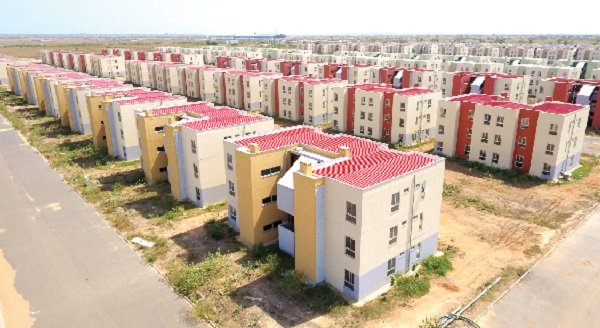
The Government of Ghana has taken a decisive step toward resolving one of the country’s most prolonged housing challenges, following the conclusion of a joint venture arrangement to complete the stalled Saglemi Affordable Housing Project.
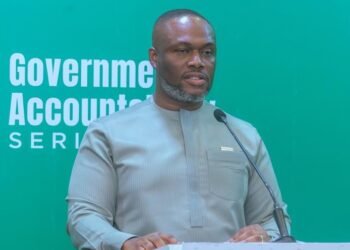
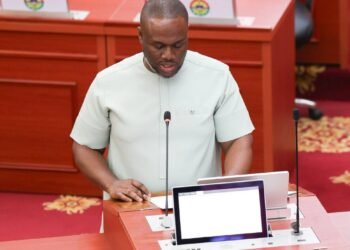
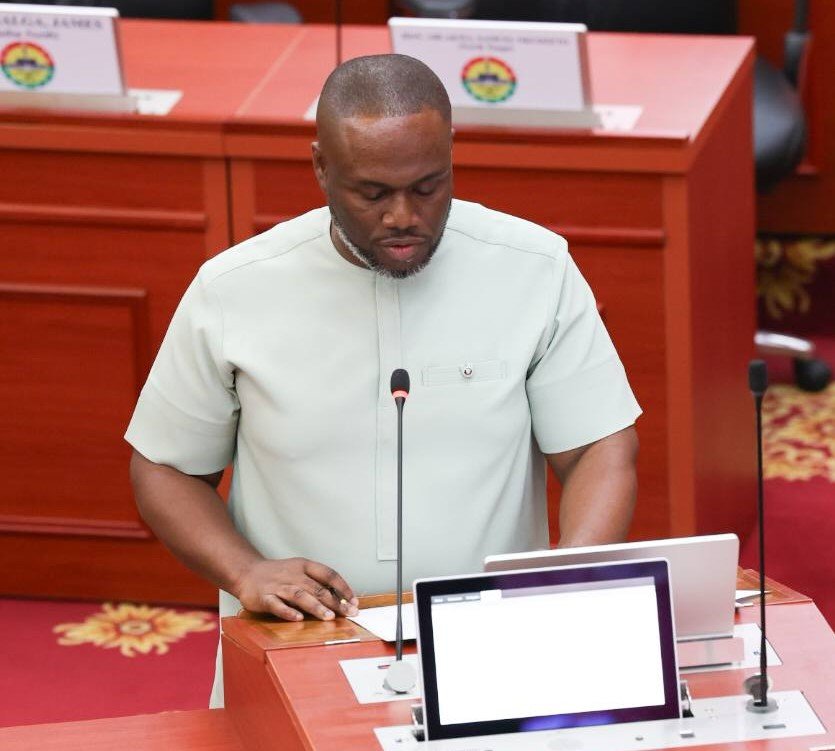
The Minister for Works, Housing and Water Resources, Hon. Kenneth Gilbert Adjei, announced the development during the Government Accountability Series at the Jubilee House, describing it as a major breakthrough in the effort to restore confidence in public housing delivery.
“The joint venture arrangement was concluded among all parties, and the shareholders’ agreement was drafted and mutually agreed upon. The document is currently with the Attorney General for review and finalisation.”
Minister for Works, Housing and Water Resources, Hon. Kenneth Gilbert Adjei
Once approved, construction work at the Saglemi site is expected to resume without further delay. He explained that the process followed extensive engagements with a selected private developer after a competitive and transparent selection process overseen by Deloitte Ghana.
Hon. Adjei stated that the heads of terms governing the partnership have been signed, and the shareholders’ agreement drafted and mutually accepted. He noted that the project has now moved beyond years of uncertainty that were marked by litigation, political transitions, and stalled infrastructure development.
Project Awaits Full Implementation
The Attorney General’s review, he said, represents the final procedural step before full implementation begins. The Saglemi Affordable Housing Project, located on a 300-acre site in the Ningo Prampram District of the Greater Accra Region, was originally launched in 2012 under the first administration of President John Dramani Mahama.
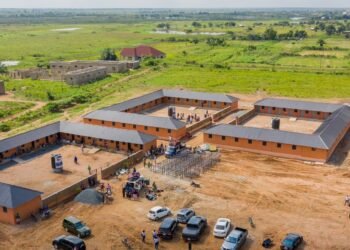
It was envisioned as a flagship intervention to provide 5,000 affordable housing units for low and middle-income Ghanaians, financed through a 200 million dollar facility from Credit Suisse. However, by 2017, the project had stalled after only 1,502 housing units were partially constructed.


The suspension of work was driven by a combination of political changes, legal disputes, and the absence of essential infrastructure such as water, electricity, and sewage systems.
Over time, the abandoned structures became symbolic of failed public housing initiatives and a source of public frustration. The situation was further complicated by legal proceedings involving former officials, which were eventually discontinued by the Attorney General in February 2025.
Government’s Equity in a Special Purpose Vehicle
Under the new arrangement, the government has adopted a fundamentally different strategy. Rather than committing additional public funds, existing structures at the site are being treated as government equity in a Special Purpose Vehicle established for the project.
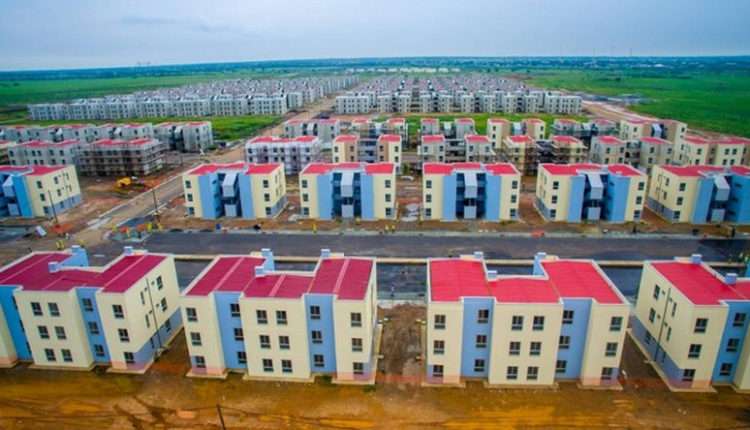
This vehicle will operate under a joint venture agreement with the selected private developer, the Quarm LMI Consortium, which has been tasked with completing the project within approximately 485 days.
The Minister explained that this model reflects a broader policy shift toward leveraging private sector efficiency while protecting public interest. He stressed that the government’s role is now anchored in oversight, regulation, and equity participation, rather than direct financing.
This approach, he said, ensures value for money while avoiding further fiscal pressure on the state. Once completed, the Saglemi development is expected to emerge as a mixed use satellite city comprising one to three bedroom flats and townhouses.
The housing mix will integrate low-income, middle-income, and higher-end units within a single planned community. Supporting infrastructure such as roads, utilities, and social amenities are expected to be delivered alongside the housing units to avoid the challenges that undermined the initial phase.
Hon. Adjei acknowledged that maintaining affordability remains a key concern, particularly given rising construction costs and private sector involvement. While the original vision projected unit prices around 40,000 dollars, he noted that balancing affordability with commercial viability requires careful negotiation.
Commitment to Accessibility
Nonetheless, he assured that the government remains committed to ensuring that a significant portion of the completed units are accessible to ordinary Ghanaians. The Minister also addressed recent setbacks at the site, including a fire incident in December 2024 that destroyed storage containers holding construction materials.
He said damage assessments were conducted promptly and have been factored into the revised implementation plan, with assurances from the developer that the incident will not derail the overall completion timeline.
Beyond Saglemi, Hon. Adjei positioned the project as a test case for future public private partnerships in the housing sector. He noted that lessons learned from the stalled development have informed new safeguards around project structuring, risk allocation, and legal due diligence.
These measures, he said, are essential to restoring public trust and ensuring sustainability in large scale housing delivery. As the government awaits final clearance from the Attorney General, expectations are high that physical works will resume in the coming weeks.
For thousands of prospective homeowners and for a housing sector grappling with a deficit exceeding 1.8 million units, the revival of the Saglemi Housing Project represents more than the completion of abandoned buildings. It signals a renewed commitment to pragmatic solutions, institutional learning, and the delivery of dignified housing through accountable partnerships.
READ ALSO: Government to Generate 27000 Jobs via New Major Factories