Ghana’s external sector recorded a historic improvement as the country’s current account surplus surged beyond $9 billion by the end of 2025, reflecting a powerful combination of export growth, resilient remittance inflows, and a strengthened trade balance.
According to the latest Summary of Macroeconomic and Financial Data released by the Bank of Ghana, the development marks one of the most significant turnarounds in the nation’s balance of payments performance in recent years.
The current account balance, which stood at a deficit position earlier in the cycle, climbed steadily through 2024 and 2025 to reach $9.08 billion by December 2025. As a share of gross domestic product, the surplus expanded to 8.1 percent, underscoring the depth of the external recovery.
Exports Drive the Turnaround
At the heart of the improved current account position was a remarkable expansion in export earnings. Total exports rose sharply from $19.16 billion in December 2024 to $31.11 billion by the end of 2025. This surge reflected strong performance across Ghana’s major export commodities, particularly gold, crude oil, and cocoa.
Gold exports remained the dominant contributor, increasing from $10.31 billion in December 2024 to nearly $21.0 billion by December 2025. The sustained rise in global gold prices, coupled with increased production volumes, significantly boosted foreign exchange inflows. Oil exports also recorded notable growth, climbing from $3.87 billion to $2.62 billion over the same period, while cocoa exports expanded from $1.94 billion to $3.86 billion, supported by improved output and pricing conditions.
Other non traditional exports added further momentum, reflecting gradual diversification efforts within the export sector.


Trade Balance Strengthens Significantly
The strong export performance translated into a widening trade surplus, which rose from $3.77 billion at the end of 2024 to $13.66 billion by December 2025. As a proportion of GDP, the trade balance increased sharply to 12.1 percent, reinforcing the strength of Ghana’s merchandise trade position.
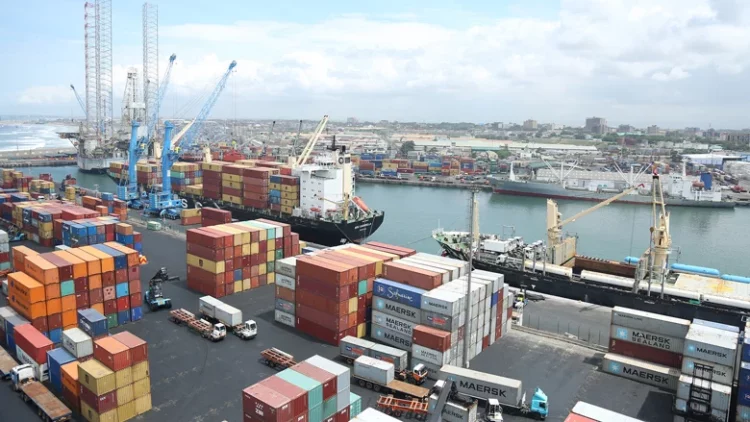
While imports also rose during the period, reflecting increased economic activity and demand for intermediate and capital goods, the pace of export growth far outstripped import expansion. Total imports increased from $15.39 billion in December 2024 to $17.45 billion by December 2025, with oil and non oil imports both recording moderate increases.
The resulting surplus provided a strong cushion for the balance of payments and reduced pressure on the foreign exchange market.
Private inward transfers, which include remittances from Ghanaians living abroad, continued to play a critical stabilizing role in the current account. Inflows rose from $7.10 billion in December 2024 to $7.79 billion by the end of 2025.
These steady inflows provided a reliable source of foreign exchange, supporting household consumption and helping to smooth external financing needs. The resilience of remittances amid global economic uncertainty highlights the importance of the diaspora to Ghana’s external stability.
Financial Account Records Strong Inflows
The financial account also posted robust gains, with net inflows excluding reserve assets rising to $5.09 billion by December 2025. Direct investment liabilities increased significantly, reaching $1.92 billion, reflecting renewed investor confidence in the Ghanaian economy.
Portfolio investment flows, which had been volatile earlier in the period, also showed improvement toward the end of 2025, indicating a gradual return of foreign investors to domestic financial markets.
Together, these inflows complemented the current account surplus and contributed to the overall strengthening of the balance of payments position.
Foreign Reserves Reach New Highs
As a direct consequence of the strong external inflows, Ghana’s gross international reserves rose to $13.83 billion by December 2025, up from $9.11 billion a year earlier. Import cover improved to 5.7 months, providing a comfortable buffer against external shocks.
Net international reserves also expanded sharply to $17.15 billion, while the value of gold holdings increased to $2.68 billion. These developments reflect the central bank’s success in rebuilding reserve buffers and enhancing external resilience.

The surge in the current account surplus signals a significant improvement in Ghana’s macroeconomic fundamentals. A strong external position reduces vulnerability to currency volatility, supports exchange rate stability, and enhances investor confidence.
However, analysts caution that sustaining these gains will depend on maintaining export momentum, managing import growth, and continuing structural reforms to diversify the economy. Global commodity price fluctuations and external financing conditions remain key risks that could influence future performance.
Nonetheless, the latest data suggest that Ghana has entered 2026 with a far stronger external footing, positioning the economy to better absorb shocks and support long term growth objectives.
READ ALSO:GSA Strengthens Port Vigilance to Protect Consumers