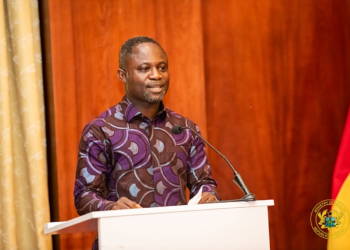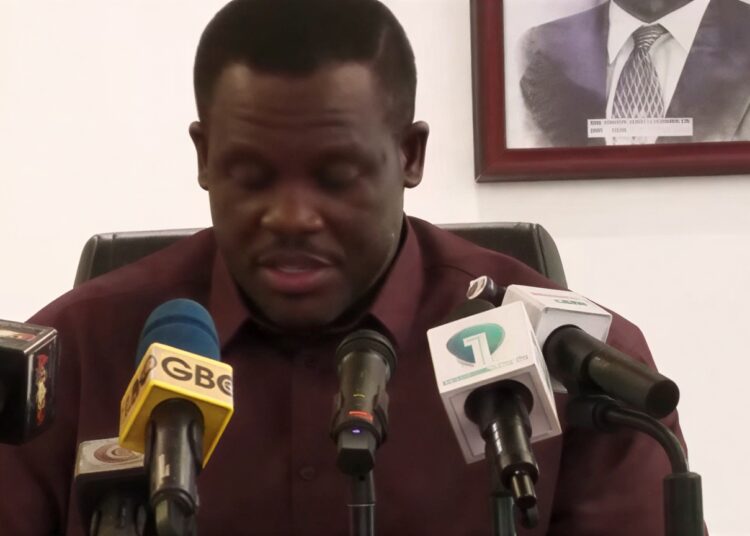
The Minister for Communication, Digital Technology and Innovations, Honourable Samuel Nartey George, has announced plans to modernise ageing telecommunications infrastructure in rural communities to improve access to high speed digital services. He said the initiative would focus on upgrading existing 2G and 3G sites to 4G and 5G capable infrastructure as part of efforts to bridge Ghana’s digital divide.
Speaking at the Government Accountability Series, Honourable Nartey emphasised that having a mobile signal alone could no longer be considered sufficient access in an increasingly digital economy. He explained that many rural communities still depend on older networks which could support voice calls and text messages but were inadequate for services such as mobile money, digital agriculture, e learning and telemedicine.
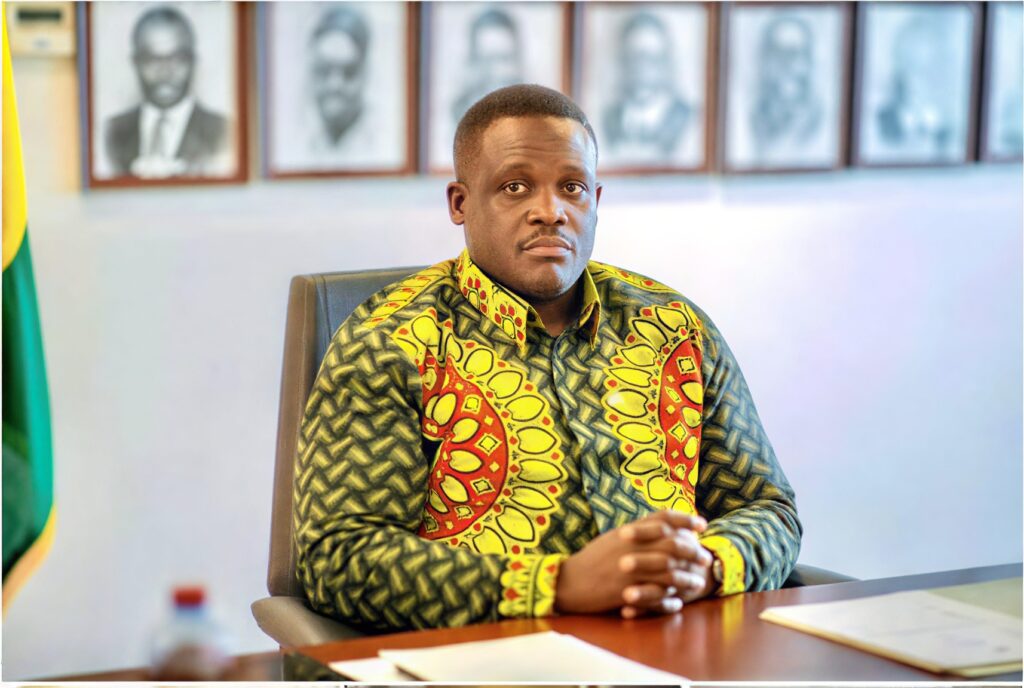
“A farmer in a 2G community can call the market to ask about prices, but she cannot on that same connection list her products on a digital marketplace.”
Honourable Samuel Nartey George
The Ningo Prampram MP added that the Ministry is determined to close the gap between basic network availability and meaningful digital participation within the next year. He indicated that the programme would involve collaboration with the National Communications Authority, the Ghana Investment Fund for Electronic Communications and mobile network operators.
Furthermore, Honourable Nartey explained that the upgrade would not be limited to replacing equipment on existing masts. The programme would also provide the fibre and microwave backhaul required to ensure that upgraded sites deliver genuine broadband capacity to users in underserved districts.
According to the Minister, the intervention responds to a growing demand for digital services among rural residents whose economic activities increasingly depend on reliable connectivity. He noted that farmers, students, traders and other users require stronger networks to participate fully in services that are becoming essential to everyday economic and social activity.
The Minister of Communications acknowledged that network congestion and coverage gaps remain widespread in parts of the country. He attributed the situation partly to years of policy and regulatory decisions that did not adequately compel operators to increase investment as Ghana moved from a voice centred telecommunications market to one increasingly driven by data.
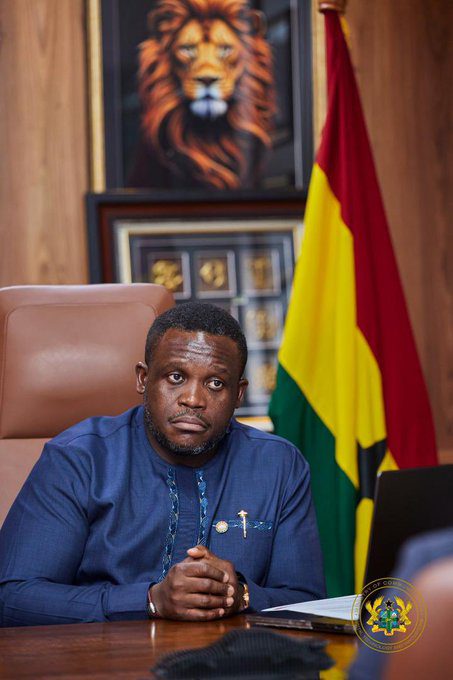
However, he revealed that the government has begun correcting the infrastructure deficit through regulatory reforms and increased investment. The Ningo Prampram MP stressed that the objective is to ensure communities have infrastructure capable of supporting modern digital services.
He therefore positioned rural network modernisation as a key component of the Ministry’s digital transformation agenda. Honourable Nartey said the coming year would see greater emphasis on improving the quality and technological capacity of rural infrastructure so that location would no longer determine the level of digital opportunities available to Ghanaians.
5G Reform Opens Door To Wider Network Investment
The Minister for Communication, Digital Technology and Innovations, Honourable Samuel Nartey George, also highlighted regulatory reforms and private sector investment as key drivers of Ghana’s expanding telecommunications infrastructure. He said the government’s approach was creating conditions for operators to invest more heavily in network coverage, high speed broadband and next generation mobile services.
Honourable Nartey revealed that the National Communications Authority has removed the wholesale 5G exclusivity framework following regulatory, economic and legal assessments. He explained that the reform had opened spectrum in the 700 MHz, 2.3 GHz and 3 GHz bands to new investment and greater competition.
The Minister added that the regulatory changes are encouraging significant commitments from telecommunications companies. He disclosed that MTN Ghana has committed more than US$1.1 billion over the next three years, including about US$380 million for investment during the current year.
As part of that expansion, MTN is undertaking its largest annual cell site build in a decade, with 800 new sites planned across the country. Honourable Nartey revealed that the government has worked with Members of Parliament to identify areas experiencing the greatest network difficulties, with 180 of the new sites already active and carrying traffic.

The Ningo Prampram MP also cited increased investment by Telecel Ghana as evidence of renewed activity within the sector. He said the company had increased its capital investment by 60 percent between 2023 and 2026 compared with the preceding four year period, while its 2026 plan targets 2,698 sites, of which 1,890 were already operational.
Meanwhile, the Minister pointed to rising smartphone ownership as another reason for sustained investment in network capacity. He disclosed that smartphone penetration had reached 71.8 percent by June 2026, compared with 27.5 per cent a decade earlier.
Beyond Ghana’s domestic network expansion, Honourable Nartey said government is also pursuing regional initiatives aimed at reducing communication costs across West Africa. He noted that the free roaming agreement with The Gambia is fully operational, while agreements with Liberia and Sierra Leone have been signed and technical testing is underway with Burkina Faso.
The Minister of Communications further linked the reforms to improved digital access for citizens and businesses. He argued that the growing dependence on mobile connectivity for work, commerce and public services made continued investment essential to sustaining Ghana’s digital transformation.
READ ALSO: Government To Adopt Digital Platforms For Virtual Meetings — Deputy Chief Of Staff