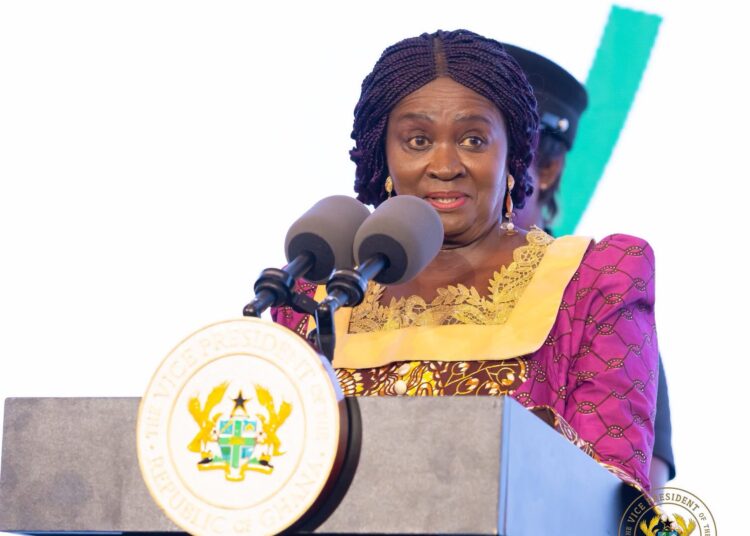
Vice President Professor Jane Naana Opoku-Agyemang has called for sustained investment, stronger public institutions and deeper international cooperation to address malnutrition and micronutrient deficiencies, warning that nutrition remains closely linked to human development and the strength of food systems.
She made the call when she opened the Micronutrient Forum’s 7th Global Conference in Accra. The four day conference, which runs from September 28 to October 1 under the theme “Nutrition at the Frontiers of a Changing Environment,” brings together policymakers, researchers, development partners and experts from the nutrition, agriculture, food, climate and humanitarian sectors.
The Vice President said malnutrition remains one of the persistent barriers to human development and requires a coordinated response that goes beyond the health sector.
“Malnutrition remains one of the most persistent challenges facing human development. Its consequences can extend from childhood into adulthood and affect the health and development of future generations. We must therefore approach nutrition as a collective responsibility that requires sustained action across sectors.”
Vice President of Ghana, Prof, Jane Naana Opoku-Agyemang
Her comments place agriculture and food production at the centre of efforts to improve nutrition, as access to sufficient, diverse and nutritious food is closely connected to the performance of agricultural and food systems.
The conference is bringing global attention to the relationship between nutrition and a changing environment, including climate shocks, food-system disruptions, conflicts and declining development financing. The Micronutrient Forum says micronutrient malnutrition affects one in two children and two in three women worldwide, highlighting the scale of the challenge facing governments and development institutions.
For the agricultural sector, the challenge is not only to produce more food but also to improve the quality, diversity, affordability and accessibility of foods available to consumers.
Professor Opoku-Agyemang noted that Ghana has made progress in addressing nutrition challenges but still faces difficulties, particularly regarding anaemia among women and adolescent girls, dietary diversity and breastfeeding.
She said nutrition outcomes are influenced by several factors, including household incomes, food availability, school feeding, information available to parents and access to healthcare.
This means agricultural investment must increasingly consider nutritional outcomes alongside production and productivity.
“Agriculture must be connected to nutrition if we are to build resilient food systems. Our farmers and food producers are not only producing commodities; they are contributing to the health and wellbeing of our population. We therefore need policies and investments that make nutritious foods available, accessible and affordable.”
Vice President of Ghana, Prof. Jane Naana Opoku-Agyemang
The connection between agriculture and nutrition is receiving significant attention at the Accra conference. The programme includes sessions examining agriculture and broader food-system solutions to micronutrient gaps, as well as the availability and affordability of fruits and vegetables and their relationship with local production.
This approach has implications for farmers and agribusinesses because stronger demand for diverse and nutritious foods can create opportunities across production, processing, storage, distribution and retail.
Examining Large Scale Food Fortification
The conference is also examining large scale food fortification, which can provide another link between agriculture, food processing and public health. Discussions are focusing on evidence, financing, regulation, compliance and innovation in food fortification programmes.
Ghana’s school feeding programme was another area highlighted by the Vice President. She said the programme now reaches more than 4. 5 million children, while efforts are being made to strengthen nutritional standards, caterer training and monitoring.
The scale of the programme creates an important connection between public food procurement and agriculture. Where school feeding programmes source food locally, they can potentially create predictable markets for farmers and stimulate demand for nutritious agricultural products.
The Micronutrient Forum has similarly highlighted the potential of school meals to connect nutrition with agriculture. According to the Forum, school meals can create predictable demand that supports local farmers while providing children with nutritious foods.
Professor Opoku-Agyemang also called for stronger public institutions and collaboration among governments, businesses, development partners and international organisations.
She said domestic financing and international assistance must complement each other, particularly because countries facing high levels of malnutrition are also dealing with fiscal pressures, climate shocks and pressure on health systems.
Vice President of Ghana, Prof. Jane Naana Opoku-Agyemang
“Domestic resources must remain at the heart of sustainable nutrition financing. International cooperation is equally important, particularly for countries facing fiscal constraints and climate-related pressures. What we need is a partnership that brings together financial resources, scientific expertise, innovation and strong institutions to achieve lasting results.”
A Call for Investment for Nutrition
The call for greater investment comes at a time when the global nutrition sector is dealing with reductions in development financing and increasing pressure from climate change and other disruptions.
The organisers of the conference say climate shocks, conflicts and changes in development financing have threatened gains made in tackling malnutrition, making stronger collaboration and new approaches increasingly important.
For Ghana, the discussions provide an opportunity to link its agricultural transformation agenda with nutrition objectives. Investments in irrigation, improved seeds, food processing, storage, transport and market infrastructure can influence both agricultural incomes and the availability of nutritious foods.
The private sector also has a role to play through investment in food processing, fortification, cold chain systems, logistics and distribution.
The conference is attracting about 1,500 participants from nutrition, food, agriculture, climate, development and humanitarian fields, with more than half expected to come from Africa and other low- and middle-income countries.
The Vice President said Ghana’s hosting of the global conference demonstrates the importance of placing nutrition at the centre of national and international development discussions.
As the conference continues in Accra, stakeholders are expected to explore practical ways to strengthen food systems, mobilise financing and improve cooperation so that agricultural production translates more effectively into healthier diets and better economic and social outcomes.
READ ALSO:Minority Files Motion For Probe Into Major Narcotics Seizures