Chinese President Xi Jinping has called for stronger cooperation and mutual trust between China and Australia, describing the two countries as natural partners with no historical grievances or fundamental conflicts of interest.
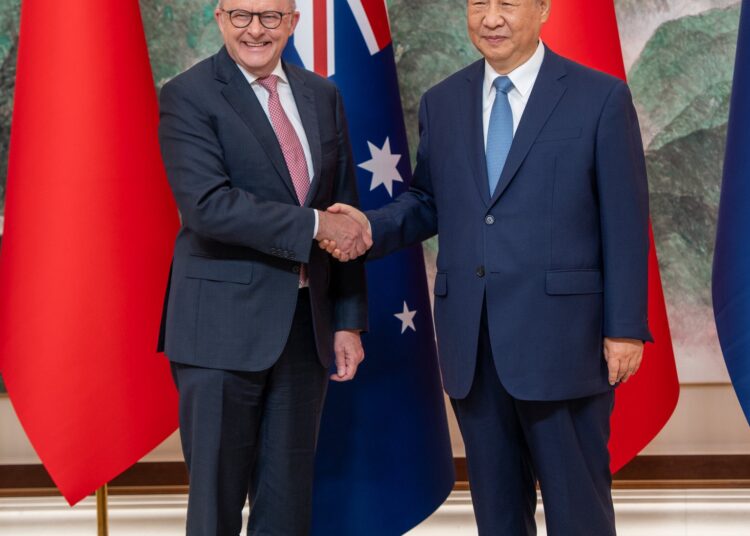
Xi made the remarks during a meeting with Australian Prime Minister Anthony Albanese in Shenzhen, Guangdong Province, where he said that relations between the two countries were currently stable.
He urged both sides to build on the progress made in their relationship by respecting each other’s core interests, addressing mutual concerns and maintaining what he described as the right direction of friendship and cooperation.
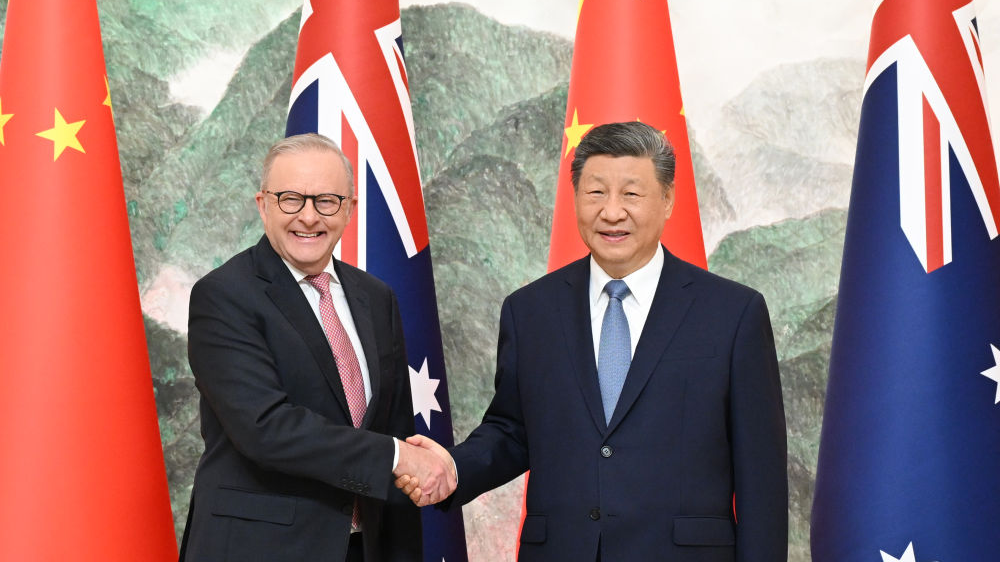
Xi asserted that the two countries should enhance mutual trust, accommodate each other’s core interests and major concerns, and keep to the right direction of friendship and cooperation.
The meeting focused on strengthening economic ties, expanding cooperation in emerging industries and improving people-to-people exchanges, as Beijing and Canberra seek to sustain their diplomatic engagement.
Also, Xi encouraged China and Australia to deepen mutually beneficial cooperation in support of their respective development goals.
He called for continued collaboration in traditional areas of economic engagement, particularly agriculture, energy and minerals, while identifying opportunities to expand into emerging sectors. These include the green economy, new energy, digital industries, artificial intelligence and climate change response.
The Chinese President stated that cooperation across these areas could help both countries pursue their development priorities while strengthening their economic relationship.
His remarks also showed the importance of maintaining stable diplomatic relations amid wider international uncertainty.
In a separate post on X, Chinese Foreign Ministry Spokesperson Mao Ning stated that Xi had noted that 2027 would mark the 55th anniversary of diplomatic relations between China and Australia.

She said that the two countries should use the milestone as a new starting point for advancing bilateral relations based on equality, mutual understanding and cooperation.
According to Mao, Xi called for both sides to treat each other as equals, seek common ground while reserving differences and pursue mutually beneficial cooperation.
2027 Designated Year Of Tourism
Tourism and people-to-people exchanges also featured prominently in the discussions, with Xi highlighting their importance in strengthening friendship between the two countries.
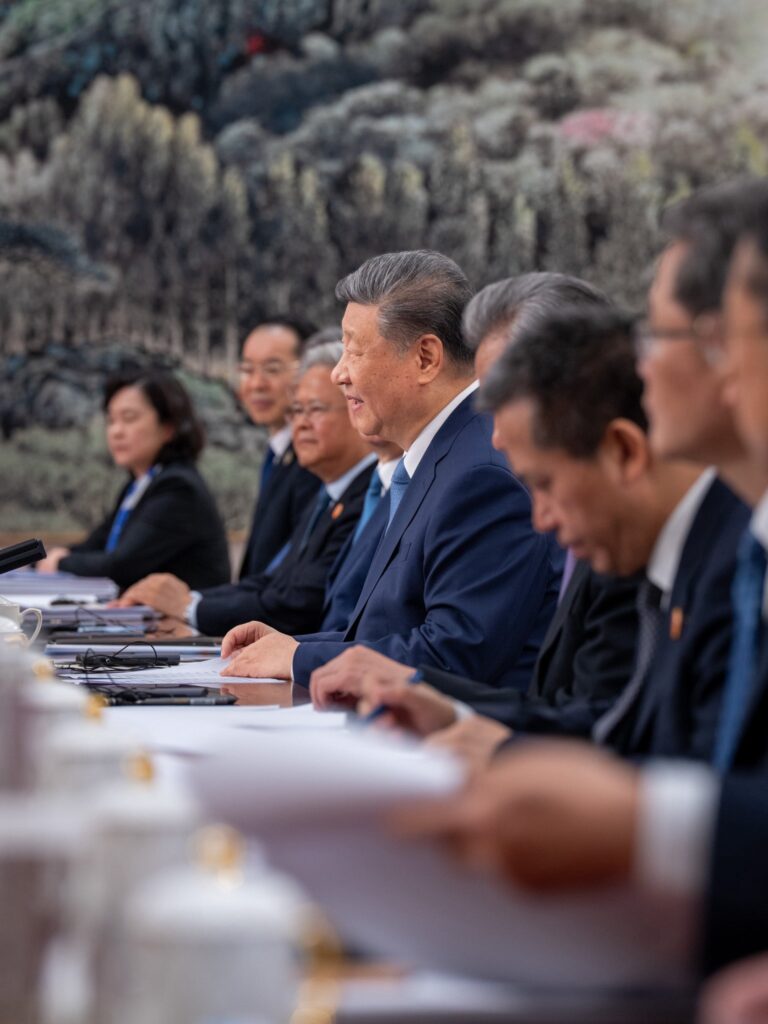
He said that both governments had agreed to designate 2027 as the China-Australia Year of Tourism, creating opportunities to expand travel and cultural engagement.
The initiative is expected to support closer connections between their populations while providing opportunities for businesses in the tourism and hospitality sectors.
Albanese welcomed the agreement, saying that it could create jobs in Australia and support further economic opportunities.
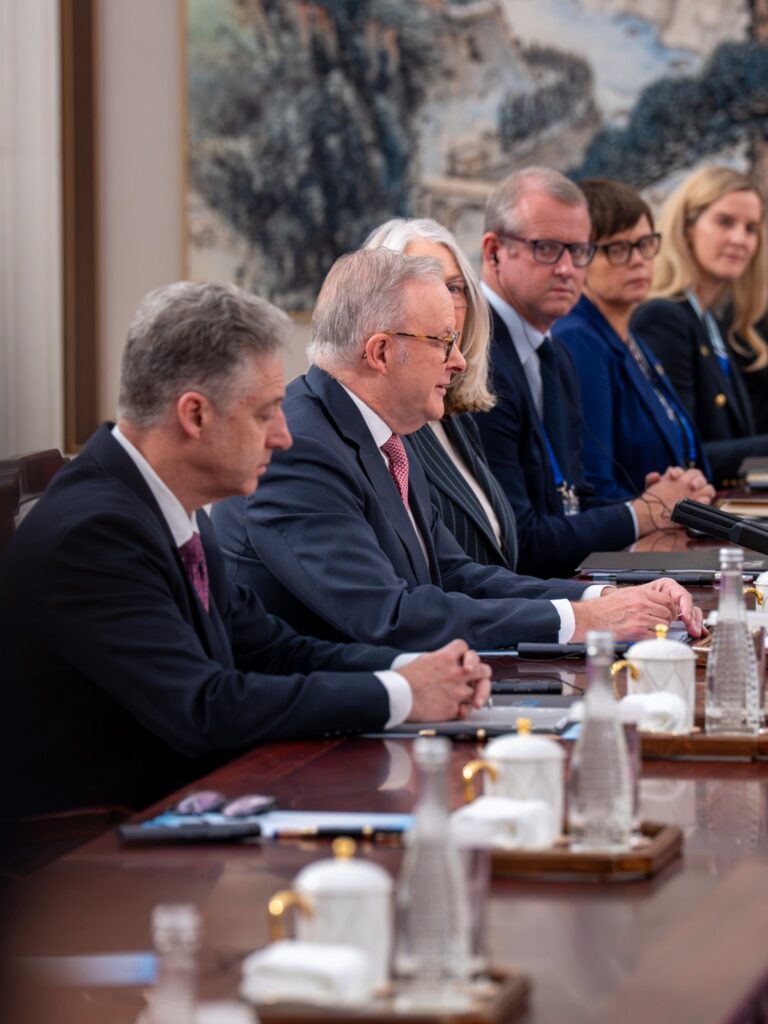
In a post on X after the meeting, the Australian Prime Minister noted that relations with China remained important. “Australia’s relationship with China matters for our economy, our security and stability in our region,” Albanese wrote.
He added that direct engagement with Beijing allowed Australia to advance its national interests while pursuing opportunities for its businesses. “Our exports to China continue to grow, and we’ll keep working to open more doors for Australian businesses,” he said.
Albanese also welcomed the tourism initiative, saying, “President Xi has agreed 2027 as the Australia-China Year of Tourism, creating jobs back home.”
He described the discussions as constructive and thanked Xi for the meeting.
Leaders Emphasise Regional And Multilateral Cooperation
Beyond their bilateral relationship, Xi called on China and Australia to strengthen coordination in addressing international challenges.
He urged both countries to support the development of an Asia-Pacific community and uphold the international system centred on the United Nations.
Xi also emphasised the importance of maintaining an international order based on international law, pointing to the need for cooperation on issues that extend beyond the interests of individual countries.
The meeting reflects efforts by Beijing and Canberra to maintain stable relations while expanding cooperation in trade, technology, tourism and regional affairs.
For Australia, China remains an important trading partner, while Albanese has emphasised the need for direct engagement to protect Australian economic and security interests.
The discussions in Shenzhen therefore combined economic priorities with broader diplomatic concerns, as both leaders sought to build on existing areas of cooperation and identify opportunities for further engagement.
With 2027 marking 55 years of diplomatic relations and the planned Year of Tourism providing an additional framework for exchanges, the two countries have outlined areas in which they intend to strengthen their partnership.
READ ALSO: Majority Chief Whip Reaffirms Parliament’s Support For Detained MP