• About
  • Advertise
  • Privacy Policy
  • Contact
Friday, May 15, 2026
  • Login
The Vaultz News
  • Top Stories
  • News
    • General News
    • Education
    • Health
    • Opinions
  • Economics
    • Economy
    • Finance
      • Banking
      • Insurance
      • Pension
    • Securities/Markets
  • Business
    • Agribusiness
    • Vaultz Business
    • Extractives/Energy
    • Real Estate
  • World
    • Africa
    • America
    • Europe
    • UK
    • USA
    • Asia
    • Around the Globe
  • Innovation
    • Technology
    • Wheels
  • Entertainment
  • 20MOBPL2DNew
  • Jobs & Scholarships
    • Job Vacancies
    • Scholarships
No Result
View All Result
The Vaultz News
  • Top Stories
  • News
    • General News
    • Education
    • Health
    • Opinions
  • Economics
    • Economy
    • Finance
      • Banking
      • Insurance
      • Pension
    • Securities/Markets
  • Business
    • Agribusiness
    • Vaultz Business
    • Extractives/Energy
    • Real Estate
  • World
    • Africa
    • America
    • Europe
    • UK
    • USA
    • Asia
    • Around the Globe
  • Innovation
    • Technology
    • Wheels
  • Entertainment
  • 20MOBPL2DNew
  • Jobs & Scholarships
    • Job Vacancies
    • Scholarships
No Result
View All Result
The Vaultz News
No Result
View All Result
in Finance, Insurance, Sub Top Stories, Sub Top Stories1

Kejetia Market Fire: Pay Small Premiums In Exchange For Comprehensive Cover- IBAG President

M.Cby M.C
March 17, 2023
Reading Time: 5 mins read
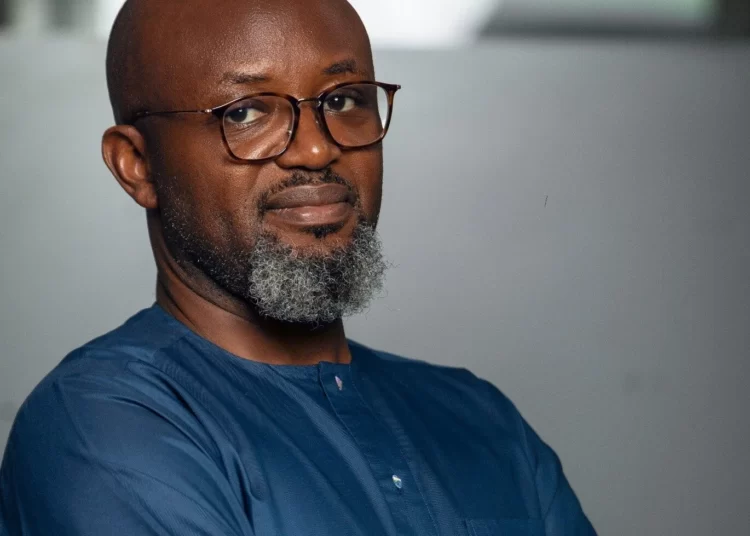
Shaibu Ali, President of the Insurers Brokers Association of Ghana

Shaibu Ali, President of the Insurers Brokers Association of Ghana

Shaibu Ali, President of the Insurance Brokers Association of Ghana (IBAG) has urged the traders of the new Kejetia Market which was recently caught up in fire to pay small premiums in exchange for comprehensive cover for the content in their shops.

According to the IBAG President, government should not be entirely blamed and held accountable for the loses at the recent Kejetia flare-up as occupants should have insured their wares against the inferno.

 “I am sure government or the Metropolitan Authorities own the market and all of that but individuals have rented stores in this market to sell their wares.”

Shaibu Ali

5aec64169b9d8d0f
Kejetia Inferno

Mr. Ali explained that insuring the market remains the responsibility of the owner, which is the government or the Metropolitan Authorities howbeit, insuring the content of the shops remains the sole responsibility of individuals who have rented shops within the market for business purposes. “So it is pretty straightforward. Government can make a decision that all the market should be insured and they will be done.”

The insurance market or industry in Ghana can insure all the markets put together, meanwhile in addressing the issue of government insuring the contents of these individuals, he expressed confusion about why individuals in Makola, Kejetia, Takoradi market and other business centers decide to operate their businesses without insurance. This he said is “unthinkable in this day and age”, thus, emphasizing the need of these traders to take full responsibility for the content lost.

ADVERTISEMENT

“Look at the incidence. It happens very often. Insurers are ready to give them cover. The reason why they are not doing it, only God knows. And the premium for these content insurances are not much. They are very very affordable.

“The types of monies that these shop owners make, they can pay for the premiums for a year out of a day’s sales. So there’s no reason why these things should not be insured. Technically, I can say that…the guy was saying that the fire started from maybe a chemical shop. So that will be a little technical but insurers will still give them cover, subject to their preparedness to pay the right price.”

Shaibu Ali

Mr. Ali further noted that the rampancy of fired, particularly market fires has become a usual occurrence that is unavoidable, adding that “we cannot stop them but nothing stops us from insuring them”.

roundtable
Insurance Brokers Association of Ghana

“We should transfer the risk from the owners of the shops  and the owners of the markets to the insurance companies. Pay small premiums in exchange for comprehensive cover when these fires happen…”

Shaibu Ali

Meanwhile the 8th edition of the IBAG Educational Conference and Exhibition is slated for the 21st to Saturday the 25th of March, 2023 in Sunyani in the Bono Region with over 200 players in the insurance industry expected to be in attendance to discuss the effects of global economic challenges and the Domestic Debt Exchange Programme (DDEP) on the sector.

Ghana’s insurance industry is under a big threat

Seeing the recent happenings globally, with the devaluation of currencies, inflation, with everything going up out of the roof, the President of IBAG, Shaibu Ali mentioned how these factors indirectly pose a big threat to the insurance industry.

Mr. Ali, thus, called for immediate measures to be taken to avert the probable effects of these factors on the insurance sector.

DSC08059
During on of IBAG’s Educational Conferences

“If we don’t start to think about how we can come out of this situation, and we fold our hands and sit down, things might get out of hand.

“Now we have Domestic Debt Exchange Programmes, where insurers cannot get their funds for some period of time and all that – these are funds that they would have relied upon to pay claims to claimants. If these funds are inaccessible, what happens? Where do they get monies to pay claims? That is what is engineering this discussion. Let’s get together, sit down, talk and see the way forward…”

Shaibu Ali

Ghana has been on the trajectory of growth as far as confidence in insurance is concerned, he said. According to the IBAG President, years back, people did not have any confidence in the industry but said the confidence has grown significantly in recent times.

“And so once we are able to get the industry back on stream, once the insurance companies are able to figure out a way; how they are going to deal with their claimants and all that, that should, to a large extent impact the confidence of the market.”

Shaibu Ali

READ ALSO: UMB Celebrates The Recent Successes Of BOST With A Recognition And Courtesy Event

Sign Up to Our Newsletter

Fresh updates, Straight to your inbox

Tags: Insurers Brokers Association of GhanaKejetia Market FireKejetia Market TradersShaibu AliThe Insurance Industry in Ghana
Share1Tweet1ShareSendSend
Please login to join discussion
Previous Post

Dr. Acheampong Challenges President Akufo-Addo’s IMF March Deadline

Next Post

The Media Is Not Above Reproach, The Tyranny And Media Terrorism By Some Must Stop- Koku Anyidoho

Related Posts

Fidelity Demands Africa Own Its Digital Future At a time when Africa’s digital economy is accelerating at an unprecedented pace, Fidelity Bank Ghana has delivered one of the strongest messages yet on the continent’s technological future. The bank made a bold and urgent case for Africa to stop depending on foreign controlled digital systems and begin building its own infrastructure capable of retaining value, strengthening currencies, and driving long term economic sovereignty. As one of the key sponsors of the 3i Africa summit, Fidelity Bank did not just show up to participate. It arrived with a message that resonated deeply across conference halls and policy discussions. Fidelity Bank emerged as one of the loudest voices championing a future where African nations control the very digital rails that power their economies. Digital Infrastructure Is The New Economic Power One of the defining moments of the summit came during a high level panel discussion on digital public infrastructure, where Adeline Aryee delivered a statement that immediately captured the attention of participants. She declared that if Africa builds its own digital rails, it naturally retains the value created by those systems. Her message was clear and uncompromising. In previous decades, national infrastructure was measured by roads, bridges, ports, and airports. Today, the true engines of economic power are payment platforms, identity systems, financial technology ecosystems, and digital marketplaces. According to Aryee, digital public infrastructure is no longer a luxury. It is now a strategic national asset. Her remarks struck at the heart of one of Africa’s most pressing economic concerns. Despite growing digital adoption, many transactions across the continent still pass through foreign payment systems, resulting in value leakage and continued pressure on local currencies. Ghana’s Success Story Becomes A Continental Blueprint Aryee highlighted Ghana’s progress in financial inclusion, mobile payments, and digital banking, describing the country as an emerging model for other African economies. Over the years, Ghana has invested heavily in domestic payment systems such as GhIPSS and its flagship platform, Gh-link. These systems have significantly expanded access to financial services while promoting digital transactions across urban and rural communities. Yet Aryee argued that inclusion alone is no longer enough. The next chapter for Africa, she insisted, must focus on ownership. She questioned why local transactions continue to depend on foreign rails when domestic infrastructure already exists. According to her, such dependence creates unnecessary external exposure and limits the continent’s ability to fully capture the economic benefits of its growing digital market. Her comments triggered intense debate among summit participants, many of whom acknowledged the urgent need for policy reforms and infrastructure investments. Market Driven Innovation Takes Center Stage Beyond infrastructure, Fidelity Bank also made a strong case for innovation that begins with real market needs. During the Ecosystem Roundtable on platforms, talent, and digital markets, Prince Osei Hyeaman-Addai shared insights from the bank’s years of digital financial innovation. He stressed that successful digital products are not built in boardrooms or based on assumptions. Instead, they are created by listening carefully to the market and understanding customer pain points. According to him, the market itself reveals the problems that need solving, the type of platform required, and the path toward scalable growth. His comments reflected a growing shift in African fintech circles, where customer centered design is becoming essential for product adoption and long term relevance. Trust And Credibility Remain The Real Currency Prince also emphasized that technology alone does not guarantee success. In his view, trust, credibility, and strong operational structures remain the real foundations of successful innovation. He noted that while investor interest in African fintech continues to rise, startups must prove they can deliver sustainable solutions, maintain transparency, and build products that respond to local realities. This perspective reflects Fidelity Bank’s own journey in digital transformation. Over the years, the bank has built strategic collaborations with leading fintech players, including IT Consortium, helping pioneer wallet to bank integrations and mobile financial solutions in Ghana. These partnerships have helped position Fidelity as one of Ghana’s most innovation driven financial institutions. A Defining Moment For Africa’s Digital Future Fidelity Bank’s participation at the 3i Africa Summit 2026 was more than a corporate appearance. It was a strategic declaration. At a time when Africa is racing to build competitive digital economies, the bank’s message was impossible to ignore. Africa cannot simply consume technology created elsewhere. It must own the infrastructure, shape the platforms, and capture the value generated by its digital future. As conversations from the summit continue to ripple across financial and policy circles, one thing is becoming increasingly clear. Africa’s next economic revolution may not be built on oil, gold, or minerals. It may be built on digital rails designed, owned, and powered by Africans. READ ALSO: IMF Ghana Review Ends in Dramatic Cliffhanger Fidelity Demands Africa Own Its Digital Future At a time when Africa’s digital economy is accelerating at an unprecedented pace, Fidelity Bank Ghana has delivered one of the strongest messages yet on the continent’s technological future. The bank made a bold and urgent case for Africa to stop depending on foreign controlled digital systems and begin building its own infrastructure capable of retaining value, strengthening currencies, and driving long term economic sovereignty. As one of the key sponsors of the 3i Africa summit, Fidelity Bank did not just show up to participate. It arrived with a message that resonated deeply across conference halls and policy discussions. Fidelity Bank emerged as one of the loudest voices championing a future where African nations control the very digital rails that power their economies. Digital Infrastructure Is The New Economic Power One of the defining moments of the summit came during a high level panel discussion on digital public infrastructure, where Adeline Aryee delivered a statement that immediately captured the attention of participants. She declared that if Africa builds its own digital rails, it naturally retains the value created by those systems. Her message was clear and uncompromising. In previous decades, national infrastructure was measured by roads, bridges, ports, and airports. Today, the true engines of economic power are payment platforms, identity systems, financial technology ecosystems, and digital marketplaces. According to Aryee, digital public infrastructure is no longer a luxury. It is now a strategic national asset. Her remarks struck at the heart of one of Africa’s most pressing economic concerns. Despite growing digital adoption, many transactions across the continent still pass through foreign payment systems, resulting in value leakage and continued pressure on local currencies. Ghana’s Success Story Becomes A Continental Blueprint Aryee highlighted Ghana’s progress in financial inclusion, mobile payments, and digital banking, describing the country as an emerging model for other African economies. Over the years, Ghana has invested heavily in domestic payment systems such as GhIPSS and its flagship platform, Gh-link. These systems have significantly expanded access to financial services while promoting digital transactions across urban and rural communities. Yet Aryee argued that inclusion alone is no longer enough. The next chapter for Africa, she insisted, must focus on ownership. She questioned why local transactions continue to depend on foreign rails when domestic infrastructure already exists. According to her, such dependence creates unnecessary external exposure and limits the continent’s ability to fully capture the economic benefits of its growing digital market. Her comments triggered intense debate among summit participants, many of whom acknowledged the urgent need for policy reforms and infrastructure investments. Market Driven Innovation Takes Center Stage Beyond infrastructure, Fidelity Bank also made a strong case for innovation that begins with real market needs. During the Ecosystem Roundtable on platforms, talent, and digital markets, Prince Osei Hyeaman-Addai shared insights from the bank’s years of digital financial innovation. He stressed that successful digital products are not built in boardrooms or based on assumptions. Instead, they are created by listening carefully to the market and understanding customer pain points. According to him, the market itself reveals the problems that need solving, the type of platform required, and the path toward scalable growth. His comments reflected a growing shift in African fintech circles, where customer centered design is becoming essential for product adoption and long term relevance. Trust And Credibility Remain The Real Currency Prince also emphasized that technology alone does not guarantee success. In his view, trust, credibility, and strong operational structures remain the real foundations of successful innovation. He noted that while investor interest in African fintech continues to rise, startups must prove they can deliver sustainable solutions, maintain transparency, and build products that respond to local realities. This perspective reflects Fidelity Bank’s own journey in digital transformation. Over the years, the bank has built strategic collaborations with leading fintech players, including IT Consortium, helping pioneer wallet to bank integrations and mobile financial solutions in Ghana. These partnerships have helped position Fidelity as one of Ghana’s most innovation driven financial institutions. A Defining Moment For Africa’s Digital Future Fidelity Bank’s participation at the 3i Africa Summit 2026 was more than a corporate appearance. It was a strategic declaration. At a time when Africa is racing to build competitive digital economies, the bank’s message was impossible to ignore. Africa cannot simply consume technology created elsewhere. It must own the infrastructure, shape the platforms, and capture the value generated by its digital future. As conversations from the summit continue to ripple across financial and policy circles, one thing is becoming increasingly clear. Africa’s next economic revolution may not be built on oil, gold, or minerals. It may be built on digital rails designed, owned, and powered by Africans. READ ALSO: IMF Ghana Review Ends in Dramatic Cliffhanger Fidelity Demands Africa Own Its Digital Future
Banking

Fidelity Demands Africa Own Its Digital Future

May 15, 2026
Ing. Kenneth Ashigbey, the Chief Executive Officer of the Ghana Chamber of Mines.
Extractives/Energy

Chamber of Mines Warns Against State Ownership Failures Amidst IEA Policy Dispute

May 14, 2026
Dr. Kenneth Ashigbey, the Chief Executive Officer of the Ghana Chamber of Mines.
Extractives/Energy

Let Data and Science Drive Ghana’s Mining Policy Debate – Kenneth Ashigbey

May 14, 2026
Absa Bank Ghana Empowers Academic City University College With Money Skills
Banking

Absa Bank Ghana Empowers Academic City University With Money Skills

May 14, 2026

Sign Up to Our Newsletter

Fresh updates, Straight to your inbox

Recent News

Professor Ernest Kofi Davis, Acting Director-General, Ghana Education Service

GES Assures Placement for All Qualified BECE Candidates

May 15, 2026
UK Prime Minister, Keir Starmer

UK Bars Far-Right Agitators as Starmer Vows Zero Tolerance

May 15, 2026
Fidelity Demands Africa Own Its Digital Future At a time when Africa’s digital economy is accelerating at an unprecedented pace, Fidelity Bank Ghana has delivered one of the strongest messages yet on the continent’s technological future. The bank made a bold and urgent case for Africa to stop depending on foreign controlled digital systems and begin building its own infrastructure capable of retaining value, strengthening currencies, and driving long term economic sovereignty. As one of the key sponsors of the 3i Africa summit, Fidelity Bank did not just show up to participate. It arrived with a message that resonated deeply across conference halls and policy discussions. Fidelity Bank emerged as one of the loudest voices championing a future where African nations control the very digital rails that power their economies. Digital Infrastructure Is The New Economic Power One of the defining moments of the summit came during a high level panel discussion on digital public infrastructure, where Adeline Aryee delivered a statement that immediately captured the attention of participants. She declared that if Africa builds its own digital rails, it naturally retains the value created by those systems. Her message was clear and uncompromising. In previous decades, national infrastructure was measured by roads, bridges, ports, and airports. Today, the true engines of economic power are payment platforms, identity systems, financial technology ecosystems, and digital marketplaces. According to Aryee, digital public infrastructure is no longer a luxury. It is now a strategic national asset. Her remarks struck at the heart of one of Africa’s most pressing economic concerns. Despite growing digital adoption, many transactions across the continent still pass through foreign payment systems, resulting in value leakage and continued pressure on local currencies. Ghana’s Success Story Becomes A Continental Blueprint Aryee highlighted Ghana’s progress in financial inclusion, mobile payments, and digital banking, describing the country as an emerging model for other African economies. Over the years, Ghana has invested heavily in domestic payment systems such as GhIPSS and its flagship platform, Gh-link. These systems have significantly expanded access to financial services while promoting digital transactions across urban and rural communities. Yet Aryee argued that inclusion alone is no longer enough. The next chapter for Africa, she insisted, must focus on ownership. She questioned why local transactions continue to depend on foreign rails when domestic infrastructure already exists. According to her, such dependence creates unnecessary external exposure and limits the continent’s ability to fully capture the economic benefits of its growing digital market. Her comments triggered intense debate among summit participants, many of whom acknowledged the urgent need for policy reforms and infrastructure investments. Market Driven Innovation Takes Center Stage Beyond infrastructure, Fidelity Bank also made a strong case for innovation that begins with real market needs. During the Ecosystem Roundtable on platforms, talent, and digital markets, Prince Osei Hyeaman-Addai shared insights from the bank’s years of digital financial innovation. He stressed that successful digital products are not built in boardrooms or based on assumptions. Instead, they are created by listening carefully to the market and understanding customer pain points. According to him, the market itself reveals the problems that need solving, the type of platform required, and the path toward scalable growth. His comments reflected a growing shift in African fintech circles, where customer centered design is becoming essential for product adoption and long term relevance. Trust And Credibility Remain The Real Currency Prince also emphasized that technology alone does not guarantee success. In his view, trust, credibility, and strong operational structures remain the real foundations of successful innovation. He noted that while investor interest in African fintech continues to rise, startups must prove they can deliver sustainable solutions, maintain transparency, and build products that respond to local realities. This perspective reflects Fidelity Bank’s own journey in digital transformation. Over the years, the bank has built strategic collaborations with leading fintech players, including IT Consortium, helping pioneer wallet to bank integrations and mobile financial solutions in Ghana. These partnerships have helped position Fidelity as one of Ghana’s most innovation driven financial institutions. A Defining Moment For Africa’s Digital Future Fidelity Bank’s participation at the 3i Africa Summit 2026 was more than a corporate appearance. It was a strategic declaration. At a time when Africa is racing to build competitive digital economies, the bank’s message was impossible to ignore. Africa cannot simply consume technology created elsewhere. It must own the infrastructure, shape the platforms, and capture the value generated by its digital future. As conversations from the summit continue to ripple across financial and policy circles, one thing is becoming increasingly clear. Africa’s next economic revolution may not be built on oil, gold, or minerals. It may be built on digital rails designed, owned, and powered by Africans. READ ALSO: IMF Ghana Review Ends in Dramatic Cliffhanger Fidelity Demands Africa Own Its Digital Future At a time when Africa’s digital economy is accelerating at an unprecedented pace, Fidelity Bank Ghana has delivered one of the strongest messages yet on the continent’s technological future. The bank made a bold and urgent case for Africa to stop depending on foreign controlled digital systems and begin building its own infrastructure capable of retaining value, strengthening currencies, and driving long term economic sovereignty. As one of the key sponsors of the 3i Africa summit, Fidelity Bank did not just show up to participate. It arrived with a message that resonated deeply across conference halls and policy discussions. Fidelity Bank emerged as one of the loudest voices championing a future where African nations control the very digital rails that power their economies. Digital Infrastructure Is The New Economic Power One of the defining moments of the summit came during a high level panel discussion on digital public infrastructure, where Adeline Aryee delivered a statement that immediately captured the attention of participants. She declared that if Africa builds its own digital rails, it naturally retains the value created by those systems. Her message was clear and uncompromising. In previous decades, national infrastructure was measured by roads, bridges, ports, and airports. Today, the true engines of economic power are payment platforms, identity systems, financial technology ecosystems, and digital marketplaces. According to Aryee, digital public infrastructure is no longer a luxury. It is now a strategic national asset. Her remarks struck at the heart of one of Africa’s most pressing economic concerns. Despite growing digital adoption, many transactions across the continent still pass through foreign payment systems, resulting in value leakage and continued pressure on local currencies. Ghana’s Success Story Becomes A Continental Blueprint Aryee highlighted Ghana’s progress in financial inclusion, mobile payments, and digital banking, describing the country as an emerging model for other African economies. Over the years, Ghana has invested heavily in domestic payment systems such as GhIPSS and its flagship platform, Gh-link. These systems have significantly expanded access to financial services while promoting digital transactions across urban and rural communities. Yet Aryee argued that inclusion alone is no longer enough. The next chapter for Africa, she insisted, must focus on ownership. She questioned why local transactions continue to depend on foreign rails when domestic infrastructure already exists. According to her, such dependence creates unnecessary external exposure and limits the continent’s ability to fully capture the economic benefits of its growing digital market. Her comments triggered intense debate among summit participants, many of whom acknowledged the urgent need for policy reforms and infrastructure investments. Market Driven Innovation Takes Center Stage Beyond infrastructure, Fidelity Bank also made a strong case for innovation that begins with real market needs. During the Ecosystem Roundtable on platforms, talent, and digital markets, Prince Osei Hyeaman-Addai shared insights from the bank’s years of digital financial innovation. He stressed that successful digital products are not built in boardrooms or based on assumptions. Instead, they are created by listening carefully to the market and understanding customer pain points. According to him, the market itself reveals the problems that need solving, the type of platform required, and the path toward scalable growth. His comments reflected a growing shift in African fintech circles, where customer centered design is becoming essential for product adoption and long term relevance. Trust And Credibility Remain The Real Currency Prince also emphasized that technology alone does not guarantee success. In his view, trust, credibility, and strong operational structures remain the real foundations of successful innovation. He noted that while investor interest in African fintech continues to rise, startups must prove they can deliver sustainable solutions, maintain transparency, and build products that respond to local realities. This perspective reflects Fidelity Bank’s own journey in digital transformation. Over the years, the bank has built strategic collaborations with leading fintech players, including IT Consortium, helping pioneer wallet to bank integrations and mobile financial solutions in Ghana. These partnerships have helped position Fidelity as one of Ghana’s most innovation driven financial institutions. A Defining Moment For Africa’s Digital Future Fidelity Bank’s participation at the 3i Africa Summit 2026 was more than a corporate appearance. It was a strategic declaration. At a time when Africa is racing to build competitive digital economies, the bank’s message was impossible to ignore. Africa cannot simply consume technology created elsewhere. It must own the infrastructure, shape the platforms, and capture the value generated by its digital future. As conversations from the summit continue to ripple across financial and policy circles, one thing is becoming increasingly clear. Africa’s next economic revolution may not be built on oil, gold, or minerals. It may be built on digital rails designed, owned, and powered by Africans. READ ALSO: IMF Ghana Review Ends in Dramatic Cliffhanger Fidelity Demands Africa Own Its Digital Future

Fidelity Demands Africa Own Its Digital Future

May 15, 2026
Bruno Fernandes has won Manchester United's Player of the Year award twice in succession

Fernandes Crowned Manchester United Player of the Year Again After Remarkable Season

May 15, 2026
Chief Executive of the NHIA, Dr. Victor Asare Bampoe

NHIA Pays Over GHC157 Million in Claims

May 15, 2026
Next Post
Koku Anyidoho

The Media Is Not Above Reproach, The Tyranny And Media Terrorism By Some Must Stop- Koku Anyidoho

The Vaultz News

Copyright © 2025 The Vaultz News. All rights reserved.

Navigate Site

  • About
  • Advertise
  • Privacy Policy
  • Contact

Follow Us

Welcome Back!

Login to your account below

Forgotten Password?

Retrieve your password

Please enter your username or email address to reset your password.

Log In
No Result
View All Result
  • Top Stories
  • News
    • General News
    • Education
    • Health
    • Opinions
  • Economics
    • Economy
    • Finance
      • Banking
      • Insurance
      • Pension
    • Securities/Markets
  • Business
    • Agribusiness
    • Vaultz Business
    • Extractives/Energy
    • Real Estate
  • World
    • Africa
    • America
    • Europe
    • UK
    • USA
    • Asia
    • Around the Globe
  • Innovation
    • Technology
    • Wheels
  • Entertainment
  • 20MOBPL2D
  • Jobs & Scholarships
    • Job Vacancies
    • Scholarships

Copyright © 2025 The Vaultz News. All rights reserved.

This website uses cookies. By continuing to use this website you are giving consent to cookies being used. Visit our Privacy and Cookie Policy.

Discover the Details behind the story

Get an in-depth analysis of the news from our top editors

Enter your email address