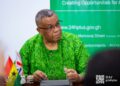
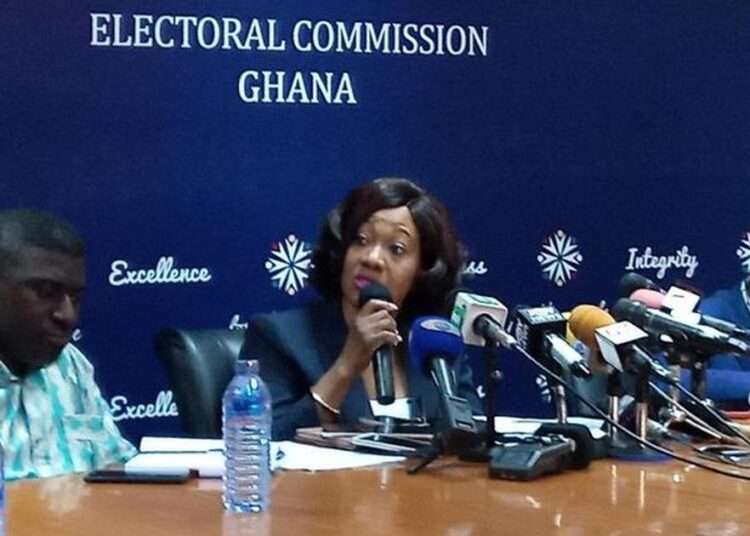
In the wake of mounting apprehension surrounding the impartiality and independence of the Electoral Commission (EC) of Ghana, Dr. John Osae-Kwapong, a distinguished Research Fellow at the Ghana Center for Democratic Development (CDD-Ghana), has urged the Commission to take urgent measures to restore public trust and confidence in the discharge of its mandate.
Expressing grave concerns over the perceived diminishing trust of the public in the electoral body, the renowned political scientist underscored the urgent need for the Electoral Commission to bolster its commitment to conducting free and fair elections, particularly in anticipation of the upcoming December polls.
Dr. Osae-Kwapong further asserted that with the pivotal role that the Electoral Commission plays in ensuring the democratic principles of the country, any erosion of public trust in its independence and impartiality could pose significant challenges to the country’s democratic governance practice.
“…I am hoping that between now and December the actions and the inactions of the EC would reassure not even just our political parties but also reassure the citizens that they are independent, impartial fair arbiters of this election”
Dr John Osae-Kwapong
In his message, Dr. Osae-Kwapong emphasized the imperative for the EC to proactively address the perceived lost of confidence in the electoral body and reassure the populace of its unwavering dedication to upholding the country’s democratic values.
He urged the Commission to embark on concrete measures aimed at reaffirming its commitment to conducting transparent, credible, and inclusive elections.
Transparent Communication to Foster Public Confidence
Key among the recommendations put forth by Dr. Osae-Kwapong is the necessity for the EC to engage in transparent communication with its stakeholders and the public, providing clarity on its operational processes and decision-making mechanisms.
This, he argued, would foster greater understanding and confidence among citizens regarding the integrity of the electoral process.

Furthermore, Dr. Osae-Kwapong stressed the importance of implementing robust mechanisms for accountability and oversight within the Electoral Commission.
He emphasized that by ensuring transparency in its activities and inviting scrutiny from relevant stakeholders, the Commission can effectively demonstrate its commitment to upholding democratic principles and safeguarding the integrity of the electoral process.
The urgency of such move according to Dr. Osae-Kwapong is as a result of the critical juncture that Ghana finds itself, particularly in relation to the December 7 polls.
However, in a scathing critique of the Electoral Commission’s (EC) handling of the ongoing limited voter registration exercise, the Member of Parliament for Odododiodoo Constituency, Honorable Nii Lante Vanderpuye, has chastised the electoral body for what he perceives as the Commission’s poor performance and readiness ahead of the December general election.
The National Democratic Congress lawmaker speaking with conviction, asserted that the ongoing voter registration exercise has laid bare significant deficiencies within the EC’s operations, raising serious concerns about its preparedness for the upcoming electoral process.
He emphasized that the EC’s performance should be a matter of concern for all citizens, stating that operating within the framework of the law, it is evident to almost every Ghanaian that the EC’s delivery in the ongoing limited voters registration exercise falls far short, barely reaching even 30% of what it is expected of the Commission.
Honorable Vanderpuye thus expressed deep concerns over what he describes as the widespread dissatisfaction with the electoral body’s conduct.
He criticized the Electoral Commission’s initial insistence on utilizing the national ID card as the sole identification document for voter registration, despite opposition from the minority in parliament.
He noted that the EC’s failure to secure the necessary Constitutional Instrument (CI) to enforce this directive was indicative of its flawed approach.
The Odododiodio Member of Parliament further posited that the Electoral Commission lack of cooperation and reluctance to listen to public opinion in the discharge of its mandate underscored the Commission, under the current leadership’s disregard for the rational concerns of the Ghanaian populace.
READ ALSO: Attitudinal Change: a Prerequisite for National Development