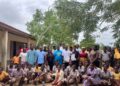

Peasant farmers have cautioned that Ghana’s food import bill, already exceeding $3.5 billion annually, risks surging further if the fight against illegal mining is not intensified. Their concerns were heightened by a new report exposing widespread contamination of food and water sources in mining communities.
The study, conducted jointly by Pure Earth and the Environmental Protection Agency (EPA), revealed alarming levels of mercury, arsenic, lead, and other heavy metals across artisanal and small-scale gold mining areas – findings which present severe dangers to both food security and public health.
The Executive Director of the Peasant Farmers Association of Ghana, Bismark Nortey, warned that the impact could cripple local agriculture and escalate the country’s dependence on imports.
“I urge all ministries and government agencies responsible to use this report as a benchmark to protect our farmers. If the situation continues and farmers are forced to abandon production, the impact on our nation will be catastrophic.
“The current amount we spend on food imports, which we have already complained about, could escalate even more if nothing is done – especially as Ghanaian consumers become increasingly cautious about the safety of locally produced food”
Bismark Nortey, Executive Director of the Peasant Farmers Association of Ghana
The year-long study, Mercury and Other Heavy Metals Impact Assessment, was carried out from August 2024 to September 2025 in six regions: Ashanti, Eastern, Central, Western, Western North, and Savannah. It found heavy contamination in soil, water, air, fish, and crops.

In Konongo Zongo in the Ashanti Region, mercury in soil reached 1,342 ppm (parts per million), more than 130 times the safe limit, while airborne “mercury levels in Wassa Kayianko in the Western Region peaked at 150 μg/m³,” 150 times Ghana’s permissible level.
Arsenic contamination was equally alarming. Soil samples in Konongo Zongo contained 10,060 ppm, 4000% above safe limits, while water in Konongo Odumase recorded 3.3 mg/L, far exceeding drinking standards.
Lead was found in food and fish across affected areas. Fish from Akwaboso in the Central Region and Konongo Zongo exceeded World Health Organization safety limits, with some samples at 2.8 mg/kg. Vegetables such as pumpkin leaves in the Western North contained lead as high as 3.1 mg/kg.
Crops including “kontomire, tomatoes, cereals, legumes, and tubers were also found contaminated,” with several samples surpassing international thresholds. Boreholes and streams, vital drinking water sources for communities, showed lead and arsenic levels above WHO guidelines.
The study warns of chronic exposure to these pollutants through inhalation, ingestion, and skin contact, threatening child development, kidney function, and the nervous system.
According to the report: “Urgent multi-sectoral action is needed, including remediation pilots in hotspots such as Konongo Zongo using low-cost technologies like phytoremediation.”

UTAG-KNUST President Criticises Political Parties
The issue of illegal mining continues to spark fierce debate.
The President of the University Teachers Association of Ghana (UTAG) at the Kwame Nkrumah University of Science and Technology (KNUST), Professor Eric K. K. Avabare, launched a stinging criticism of both the governing National Democratic Congress (NDC) and the opposition New Patriotic Party (NPP).
Prof. Avabare accused the NPP of hypocrisy in its renewed concern over galamsey, insisting the party worsened the crisis when it was in power.
“They were terribly worse than the devil himself. They passed the mining law LI 2462, oversaw the building of chanfangs, and issued more mining licenses than all previous administrations combined since independence”
Professor Eric K. K. Avabare, KNUST UTAG President
He extended his criticism to both parties.
“These two destructive parties have destroyed Ghana in a literal sense because they are clueless about what they are doing. I blame Ghanaians squarely for knowing what they know about these two parties and still queuing to vote for them, while drinking poisoned water”
Professor Eric K. K. Avabare, KNUST UTAG President

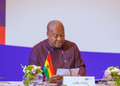
The academic also singled out President John Dramani Mahama, accusing him of failing to deliver on promises to tackle galamsey. For him, the President’s reason for not “stopping the destruction of water bodies, forest reserves, and farmlands,” by declaring a state of emergency was a “weak excuse.”
Prof. Avabare further criticised the Ghanaian public, arguing that their complacency allowed the situation to worsen. He compared the largely reserved posture of Ghanaians to the radical nature of Kenyans, and wondered how bad things needed to get for the citizens to resort to civil disobedience as an effective means of protest against galamsey.
“The inertness of the Ghanaian makes them complicit in this destruction because they also benefit from it,” he said.
He concluded by invoking the memory of the late Major Maxwell Mahama and others killed in galamsey-related violence, stressing that Ghanaians cannot absolve themselves of the consequences.
READ ALSO: African Music Set to Drive the Continent’s Renewal