The 2026 Budget Statement made expenditure allocations to different portfolios, of which GH¢90.8 billion was assigned to compensation of employees.
Every budget makes allocations to guide government disbursement and spending to promote fiscal discipline, predictability, and consistency.
“Compensation of Employees, covering wages, salaries, pensions, gratuities, and social security contributions, is projected at GH¢90.8 billion (5.7 percent of GDP), reflecting the 9% negotiated increase in base pay for public servants under the Single Spine Salary Structure (SSSS).”
2026 Budget Statement
According to the 2026 Budget, Total Expenditure on a commitment basis for 2026 was pegged at GH¢302.5 billion, representing 18.9 percent of GDP, and an increase of 20.1 percent over the 2025 projection of GH¢251.7 billion (17.8 percent of GDP).
This means that the total amount of legally committed government obligation in 2026 is GH¢302.5 billion. Dr. Ato Forson explained that this specific allocation was deliberate to ensure a balance between fiscal consolidation and strategic investment in infrastructure, human capital, and social protection.
The Finance Minister, Dr. Ato Forson, again made a projected allocation of GH¢244.7 billion, equivalent to 15.3 percent of GDP, for primary expenditure. This also means that the total government spending excludes interest payments. The primary expenditure is used to check government spending without factoring in debt servicing.
2026 Expenditure Allocation Components
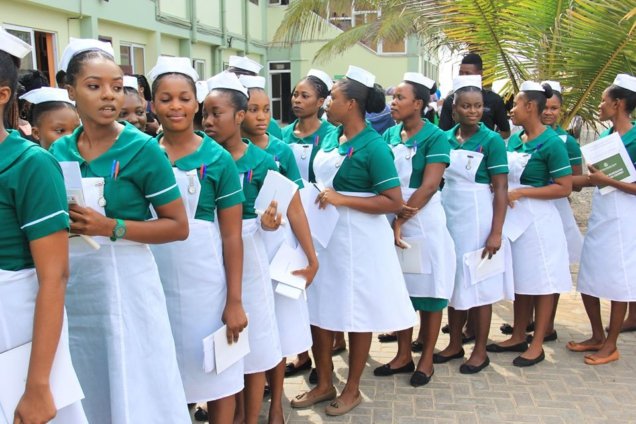
When it comes to the individual components of the expenditure allocations, compensation of employees, that is, the amount to be used to pay government workers for the year 2026, is projected at GH¢90.8 billion. This is the highest among the six-allocation portfolios made by the Ministry of Finance, constituting about 30 percent of the total expenditure on commitment, almost one-third of the total expenditure allocated.
Another component of the expenditure allocations is the Use of goods and services projected at GH¢13.2 billion (0.8 percent of GDP) to enhance efficiency in service delivery across the Ministries, Departments, and Agencies (MDAs).
Grants to Other Government Units, which comprise transfers to earmarked funds such as GETFund, NHIF, and DACF, are estimated at GH¢63.6 billion (4.0 percent of GDP).
Interest Payments are projected at GH¢57.7 billion (3.6 percent of GDP), of which GH¢50.1 billion represents domestic interest and GH¢7.6 billion external interest. As debt restructuring and liability management continue, the interest burden over the medium term will further reduce.
Capital Expenditure (CAPEX) is projected at GH¢57.5 billion (3.6 percent of GDP), reflecting the government’s commitment to growth-driving investments. Of this, GH¢45.5 billion (2.8 percent of GDP) represents domestically financed capex, comprising GH¢15.5 billion for MDAs and GH¢30.0 billion for the Big Push Infrastructure Program. Foreign-financed capex, mainly project loans and grants, is projected at GH¢12.0 billion (0.8 percent of GDP).
The last component is Other Expenditures, which includes ESLA transfers, payments to Independent Power Producers (IPPs), and is estimated at GH¢19.7 billion (1.2 percent of GDP).
Aside from the Compensation of employees, the allocations in order of most assigned are Grant to other government units, interest payments, capital expenditure, other expenditure, and use of goods and services.
Compensation to Employees: Concerns
The Finance Minister, in an interview after the 2026 Budget reading, confirmed that the huge wage bill for public sector workers is a concern, as a significant amount of the government’s revenue goes into wage paying. The other worrying fact he raised was the fact that the public sector is not part of the traditional productive sectors of the economy.
Therefore, he admitted that the government is aware and taking steps to address the issue. According to him, this issue is part of the reason the government has invested in the economy to create a conducive environment for the private sector to thrive.

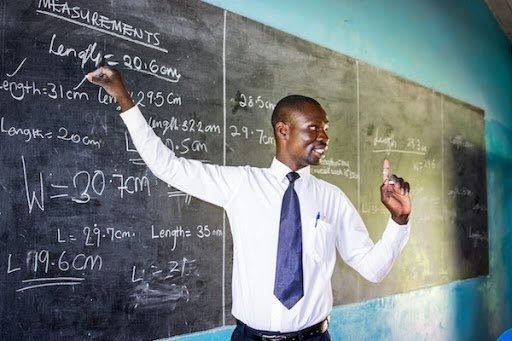
He clarified that in the case where the private sector expands and absorbs the unemployed, then the government can focus on employing service workers like health workers, teachers, and security services, among others. The pressures that come to the government to employ more people contribute to the government’s overspending.
The government is also embarking on many investment initiatives, especially in the agriculture sector, to reduce the growing unemployment and improve the livelihood of Ghanaians. He emphasized that the government acknowledges the fact that employment beyond what exists currently in the public sector is not possible.
He therefore urged the media and all Ghanaians to support the government’s efforts to change the narrative when it comes to government spending and unemployment in Ghana.
Experts have also called for the diversification of the economy to support the productive sectors and shift the concentration of government employing people after school to entrepreneurship and private sector-driven growth and development.
READ ALSO: Accra–Kumasi Expressway to Usher Ghana into a New Era of Connectivity